
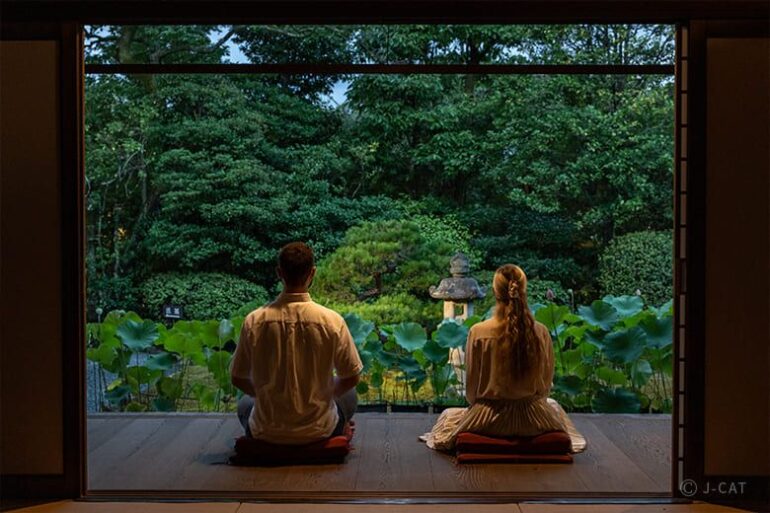
Wabunka offers a rare chance to step inside one of Japan’s largest Zen temple complexes for a private tour, zazen meditation, and a glimpse of a national treasure — all before the crowds arrive.
Most visitors to Kyoto experience its temples in a hurry. They queue for the golden pavilion, jostle for photos at Fushimi Inari, and leave with a hundred images but little sense of what Zen actually feels like. The Wabunka experience at Taizo-in, a sub-temple of the vast Myoshin-ji complex, is designed for travellers who want something different: stillness, context, and the undivided attention of a Zen priest who has spoken at Davos and met a former Pope.
A Temple Within a Temple
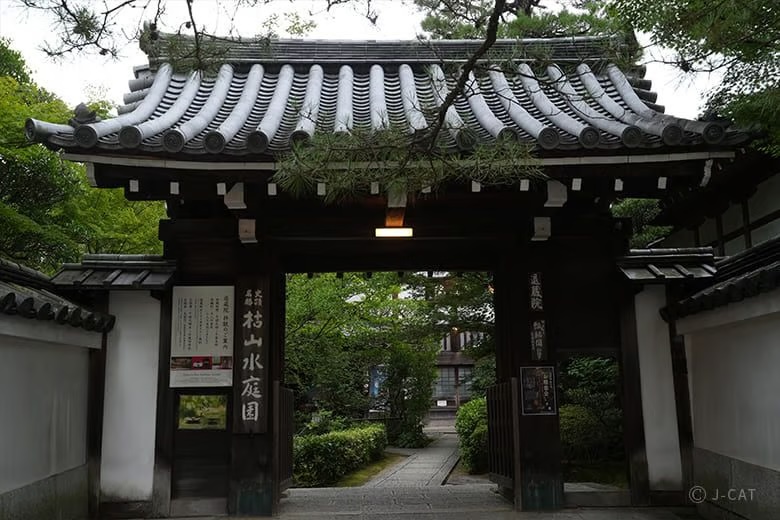 Myoshin-ji sprawls across 31 hectares of mountainous terrain in northwest Kyoto, home to 46 sub-temples and recognised as the head temple of the Rinzai sect of Zen Buddhism. Taizo-in, built in the early 15th century, is among its oldest and most storied sub-temples.
The experience begins with Deputy Head Priest Daiko Matsuyama leading a private tour of the temple grounds and its three distinct gardens. The first, Motonobu’s Garden, is a traditional dry landscape garden themed around immutability. The second, created in 1965, has earned fame in its own right. The third, Yoko-en or “The Fragrant Garden,” is a strolling water garden centred on a gourd-shaped pond — a deliberate echo of the temple’s most treasured artwork.
A National Treasure and a Zen Riddle
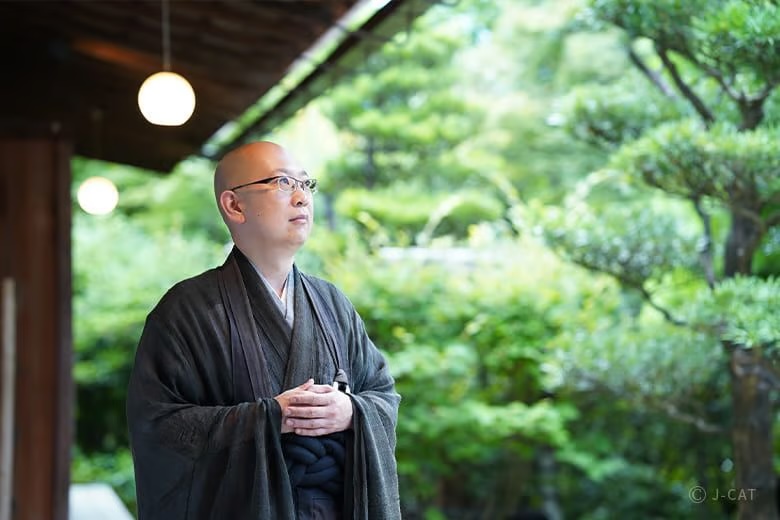
With his soft smile and calm tone, Deputy Head Priest Daiko Matsuyama exudes a solemn but warm gravitas
Inside the abbot’s quarters, normally off-limits to the public, Matsuyama unveils Hyonenzu, or “Catching a Catfish with a Gourd.” Painted in the 15th century by the artist-monk Josetsu, it is considered the oldest surviving ink wash painting of its kind and is designated a national treasure. The painting depicts a Zen koan — a riddle designed to short-circuit logical thinking — alongside responses from thirty-one different Zen masters written as Chinese poetry.
Matsuyama doesn’t simply explain the artwork. He unravels it, connecting the koan to the practice of zazen and to the broader question of how we perceive reality. “Sightseeing in Kyoto has evolved over the past 30 years from a focus on seeing to a focus on doing,” he says. “More and more people today are in search of spirituality, as our information society leaves us with fewer and fewer ways to be mindfully present in our lives through all five senses”.
Zazen in the Early Morning or Evening
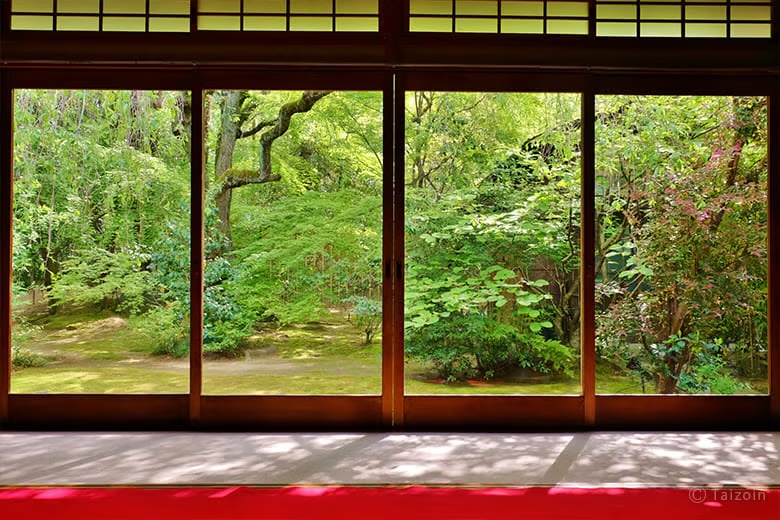 The heart of the experience is zazen meditation, practised either before the temple opens to the public or after it closes. Sitting on the veranda of the abbot’s quarters, with the garden stretching out and the sounds of insects or wind filling the silence, participants are guided through the fundamentals of posture, breathing, and state of mind.
For Matsuyama, this is the point. “Through zazen meditation, I hope you will rediscover that the ‘information’ we encounter living in our ‘information society’ is not reality, and reacquaint yourself with the world through your own senses”. It is a philosophy that resonates with travellers seeking more than a checklist of sights.
Matcha, Sweets, and a Sense of Season

Take in the temple’s legendary garden alongside silky-smooth matcha tea
The experience concludes with matcha and traditional Japanese confections, served while taking in the garden. During peak seasons — from late September through early December — an optional extension pairs the temple visit with a lesson in traditional sweet-making led by a professional confectioner, allowing guests to craft their own seasonal wagashi.
Practical Considerations
The Wabunka Taizo-in experience lasts approximately 90 minutes.
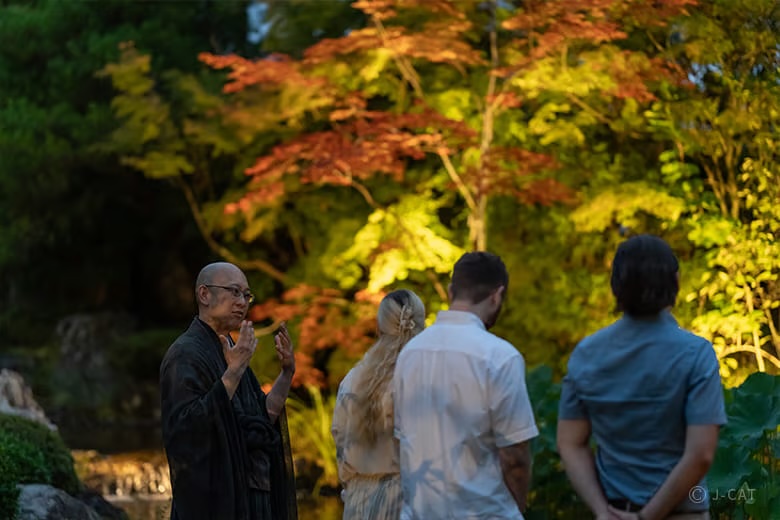
Admire an illuminated night view of the temple’s gorgeous gardens and sumptuous natural scenery (in after-hours plan)
It is entirely private, designed for one group at a time, and conducted in English with Matsuyama as the guide. The before-hours option offers the quietest start to a Kyoto day; the after-hours version trades morning stillness for the atmosphere of an illuminated temple garden.
For travellers planning a trip to Japan’s ancient capital, this is not simply another temple visit. It is an invitation to slow down, to ask different questions, and to leave with something more enduring than photographs.
Find out more or book the experience through Wabunka’s official website.


