
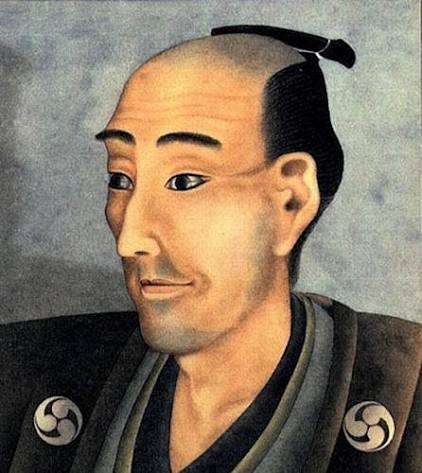
If you close your eyes and picture Japan, what do you see? Likely, it is a vision created by a man who died over 170 years ago. You see the snow-capped peak of Mount Fuji, standing stark against a red sky. You see the terrifying, claw-like foam of a great wave threatening to swallow boats near Kanagawa. You see the quiet elegance of geishas or the surprising scurry of urban life in Edo.
This is the Japan of Katsushika Hokusai. But as any traveler knows, the reality behind the postcard is always more complex, more chaotic, and infinitely more interesting than the image.
The Man Who Couldn’t Sit Still
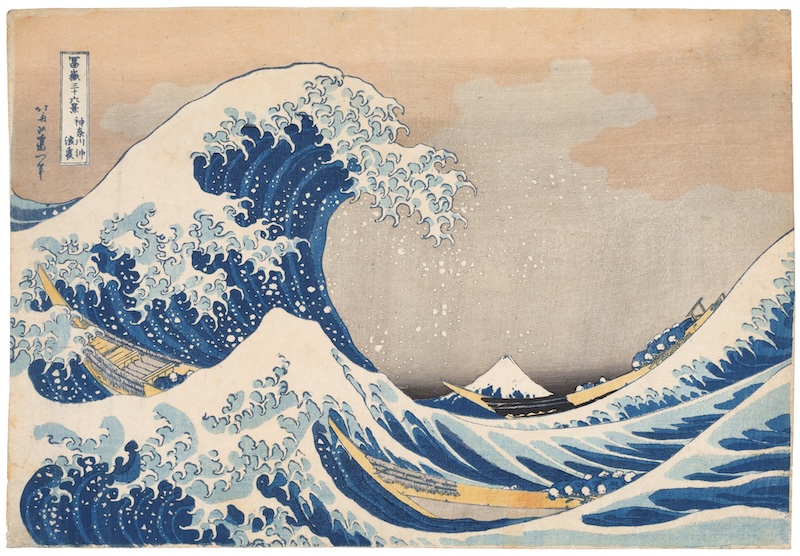
Katsushika Hokusai (1760-1849), Kanagawa oki nami ura (Under the well of the Great Wave off Kanagawa)
When you travel through Japan today, you might meet artisans who have spent decades perfecting a single craft in a single studio. Hokusai was the opposite. If he were alive today, he’d likely be the type of traveler with a worn-out passport and a dozen SIM cards. According to curators and historians, Hokusai changed his name at least 30 times during his life—roughly once a decade. He wasn’t just reinventing his brand; he was reinventing his soul. He moved house over 90 times.
Imagine the logistics of that! But for Hokusai, movement was life. He once wrote, “From the time I was six, I was in the habit of sketching things I saw around me.” He didn’t just observe Japan; he devoured it.
A Rebel with a Brush
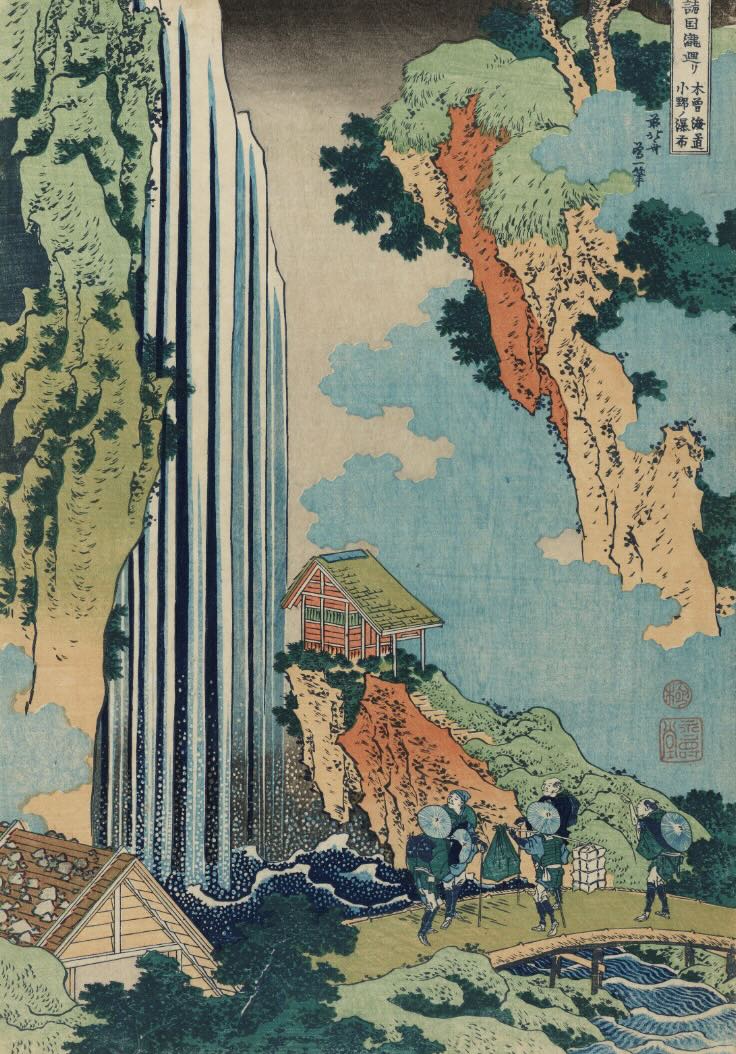
Katsushika Hokusai (1760-1849), Kisokaido Ono no bakufu (The waterfall at Ono on the Kisokaido Road).
For a traveler interested in the counter-culture of the Edo period, Hokusai is your guy. He was a rebel. At 14, he was apprenticed to a wood carver, and later joined the Katsukawa school. But he was too curious for their rigid traditions.
At a time when Japan was isolationist, Hokusai was secretly studying Western art—specifically French and Dutch engravings that had been smuggled into the country. He incorporated Western perspective and shading into traditional ukiyo-e (pictures of the floating world), revolutionizing the art form.
His rebellion cost him. He was eventually expelled from the Katsukawa school by his master’s successor. But, as he later reflected, “What really motivated the development of my artistic style was the embarrassment I suffered at Shunko’s hands.”
The “Old Man Mad About Painting”
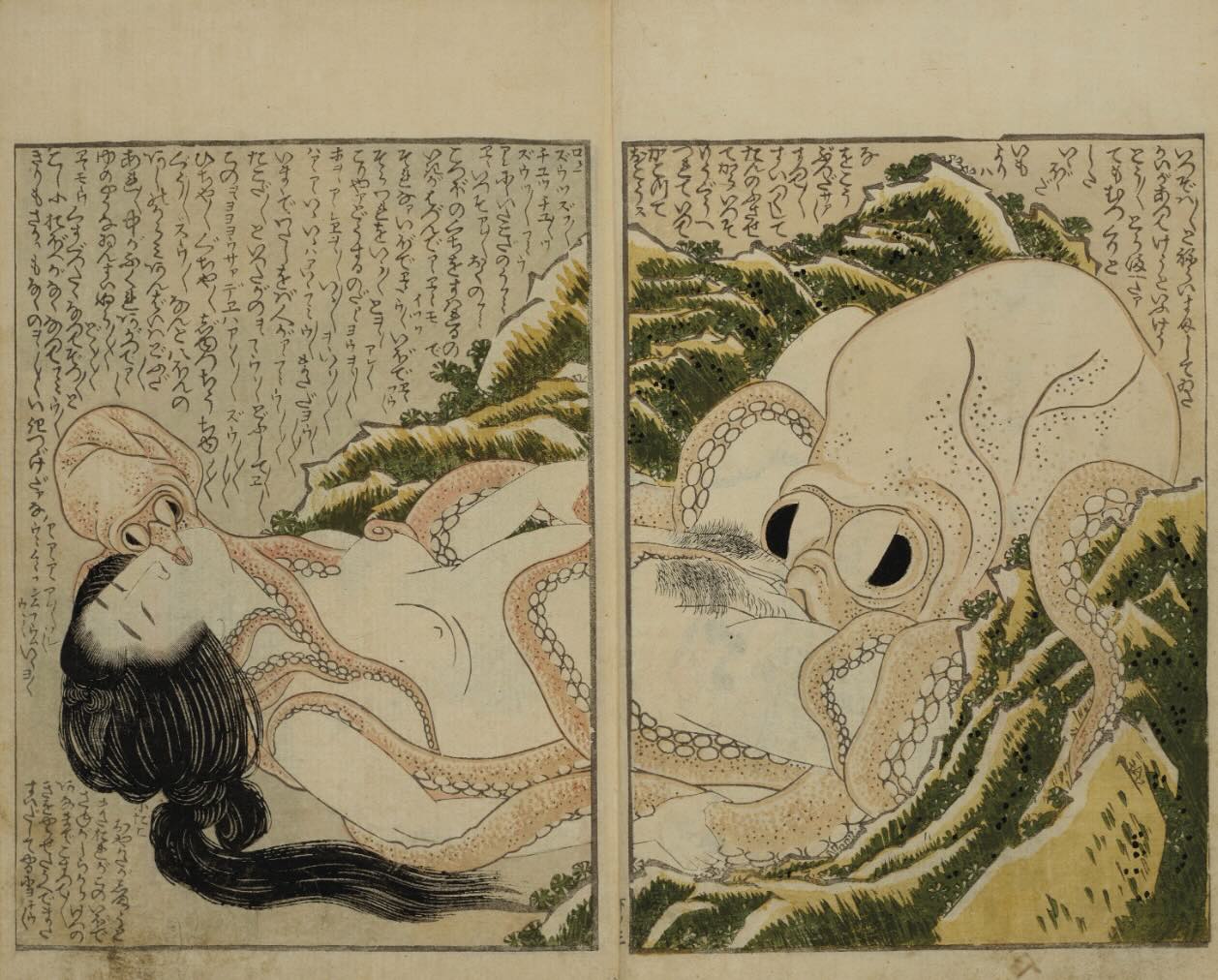
Katsushika Hokusai (1760-1849), Kinoe no Komatsu (Pining for love).
If you visit the museums of Tokyo or the prints shops of Kyoto, you will inevitably stumble upon his most famous work: Thirty-six Views of Mount Fuji. Created when he was in his 70s, this series gave the world “Red Fuji” and, of course, “The Great Wave.”
But to understand the traveler’s spirit of Hokusai, you have to understand his obsession with time. He wasn’t afraid of getting old; he was impatient for it.
In a quote that reads like a manifesto for lifelong learning, Hokusai said:
“When I was 50 I had published a universe of designs, but all I have done before the age of 70 is not worth bothering with. At 75, I’ll have learned something of the pattern of nature… At 100 I shall be a marvellous artist. At 110, everything I create — a dot, a line — will jump to life as never before.”
He died at 88, reportedly on his deathbed sighing, “If only Heaven will give me just another 10 years… Just another five more years, then I could become a real painter.”
The Graphic Novel Perspective
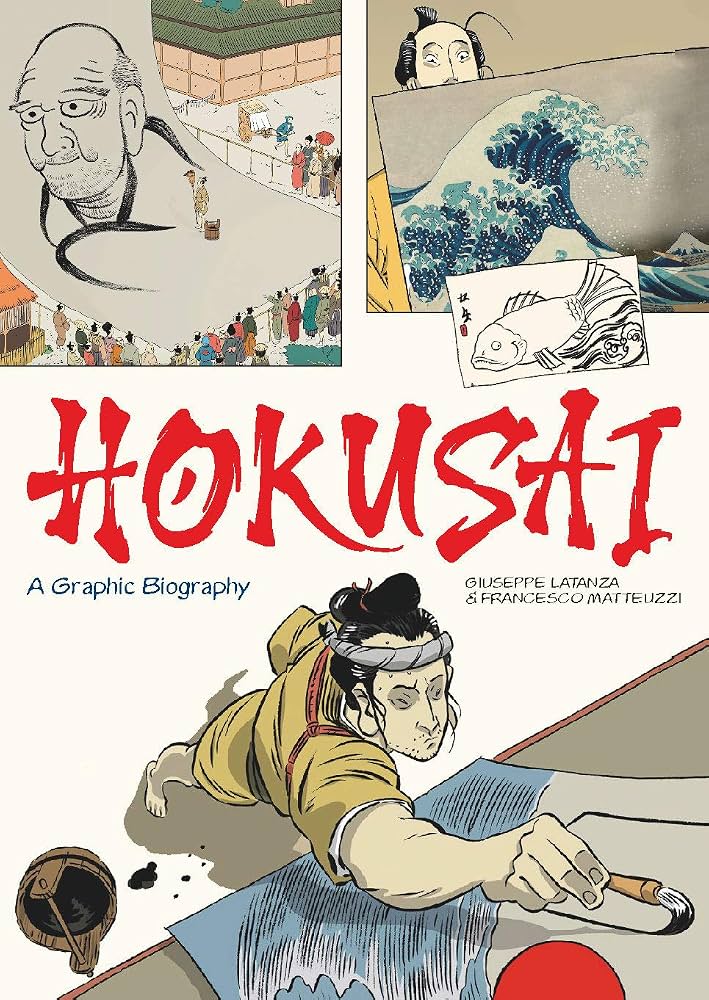 As noted in the recent graphic novel Hokusai – a graphic biography, there is a powerful myth surrounding the artist. The book reflects on how Hokusai transformed his existence into an “immortal work.”
The text asks a poignant question: Who is Hokusai? Is he the sum of the legends—the man who painted a giant Daruma with a broom, or chased a chicken with red feet across paper to create a “maple leaf” river? Or is he simply the man who fled a fire, not caring about his possessions, but clutching his brushes tightly to his chest?
The text suggests that while many anecdotes might be invented or embellished, they serve a purpose: they illustrate a man who protected his art above all else. Even when his studio burned down in 1839, destroying much of his work, he didn’t stop. He picked up a brush and kept going.
The Takeaway for the Traveler
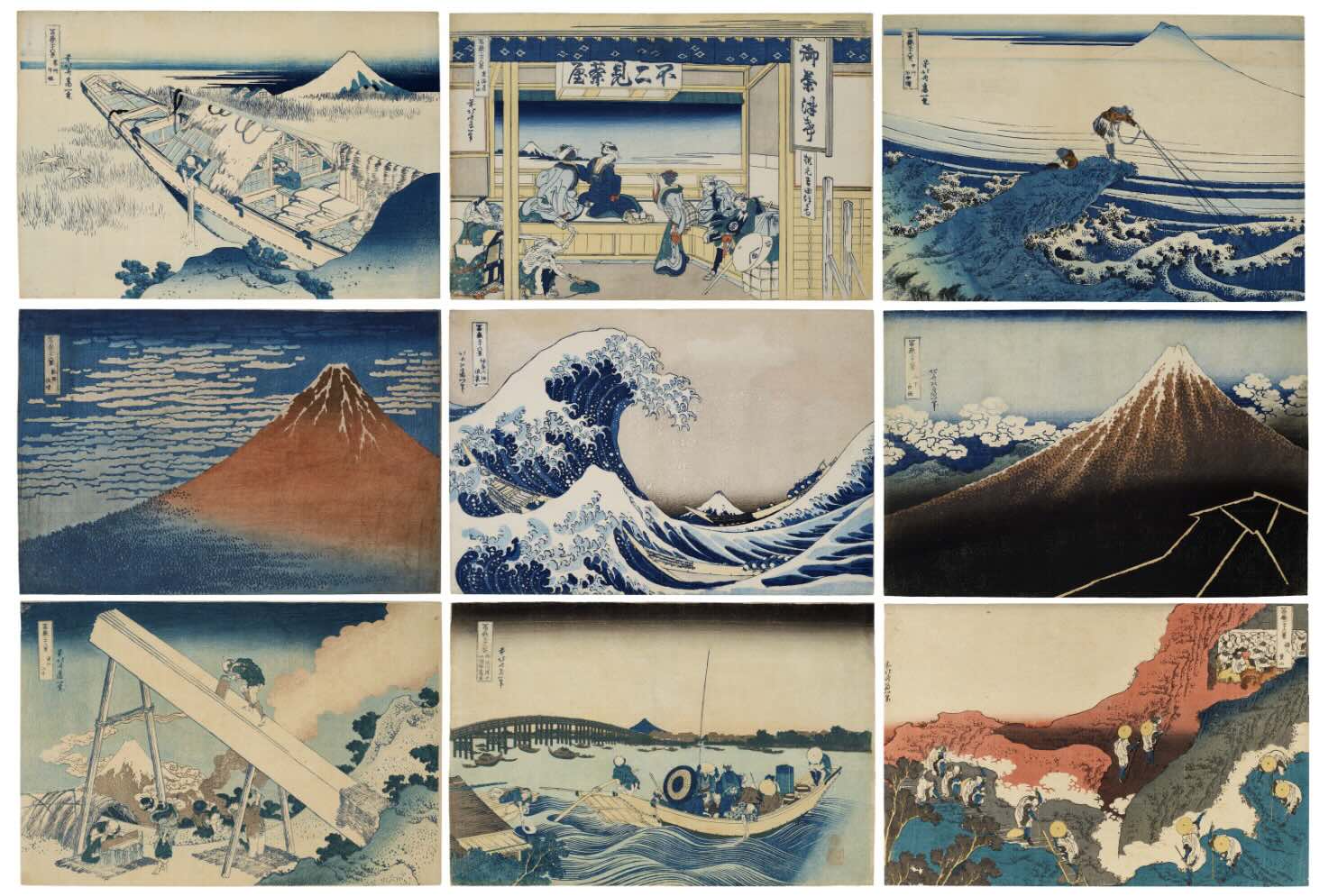
Katsushika Hokusai (1760-1849), Fugaku sanjurokkei (Thirty-six views of Mount Fuji). A set of prints
When you travel to Japan, you are walking through the landscape that Hokusai sketched 200 years ago. The cities have changed, the buildings are taller, but the spirit of the “Floating World” remains.
Hokusai teaches us that travel isn’t just about the places we go, but the curiosity we bring to them. He teaches us that it is never too late to start, and never too early to move. As the graphic novel puts it, “Maybe we don’t know many things about Hokusai… but even if they were completely invented, perhaps this is a good reason not to stop telling them.”
So, go to Kanagawa. Look at the sea. And remember the Old Man who was never satisfied, who moved 90 times, changed his name 30 times, and still believed his best work was just five years away.


