

A flight of about forty minutes on a small Air Fast plane from Semarang (Java – Indonesia) to Karimunjawa, followed by an hour of boat ride, and here we are, Kura Kura. Reaching this island is not easy at all, as the journey is quite complex. But as they say, paradise is never easy to reach.
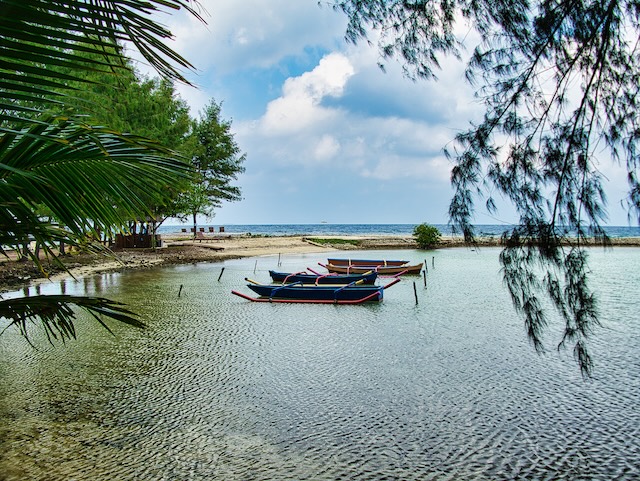
And truly, it is paradise: as soon as you disembark on the island, beyond the necessary facilities that will welcome you, an Eden unfolds before your eyes. Instinctively, you hope not to meet Eve and the snake — because, for the four days planned, there’s only one thing you want: never to lose this little corner of the world you’ve just discovered because of a forbidden apple.
Kura Kura, with its palm trees, its crystalline sea, and the calm that envelops everything, is a hidden tropical jewel in the heart of the Java Sea, located between the big islands of Java and Borneo. A refuge suspended between sky, water, and tranquility, where time still flows at a human pace — the natural rhythm that modern life’s frenzy has forced us to forget.
Here, supreme nature still reigns. You notice it in the rebellious growth of the vegetation, which, despite the efforts of gardeners, continues to spread in total chaos; in the color and transparency of the surrounding sea; and in the coral reef that envelops the island, visible in the distance, hinting at the vibrant life it hosts.
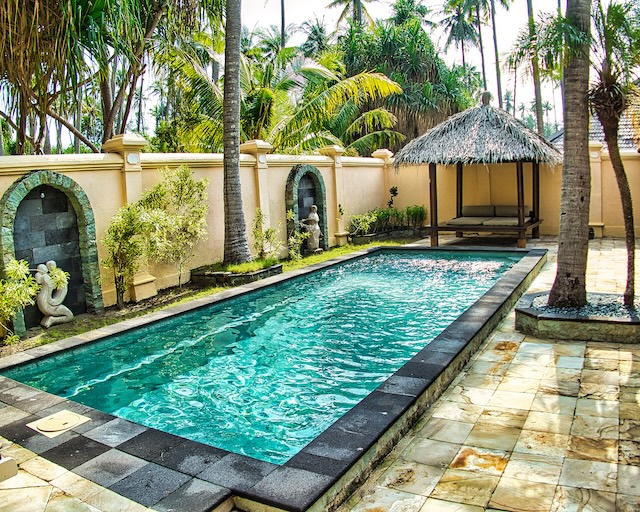
The island hosts a single, high-level resort that combines luxury and sustainability. Its buildings blend discreetly into the landscape, giving the sensation of living a rare privilege: an authentic and respectful experience where comfort merges with the untouched peace of nature.
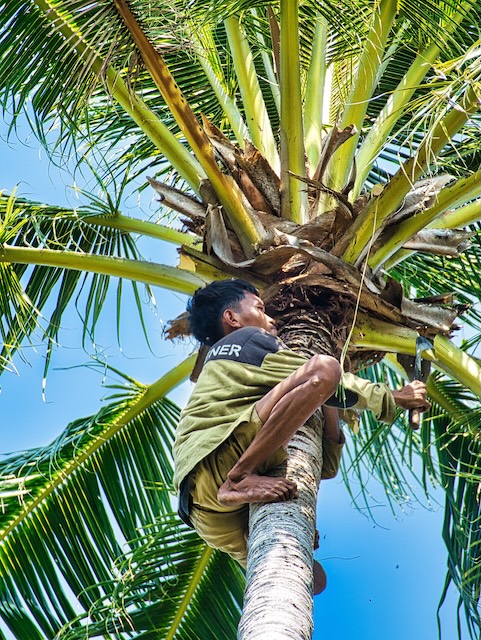
You move along shaded paths, between coconut palms silhouetted against the sky and tropical plants so imposing compared to our own that you feel small — almost transported to a primordial world where nature dominates unchallenged and you become a guest enchanted by its power.
You can stroll alongside tiny secluded beaches that give the illusion of having a private cove for each cottage or villa, and at every step, the boundary between you and the island seems to thin, until you feel like part of the scenery itself. Perhaps that’s truly how we were in a remote time: immersed in a world where the sound of the sea and the slow rhythm of the forest accompanied us without asking for anything in return — a different realm, like this, that seems to exist outside of time.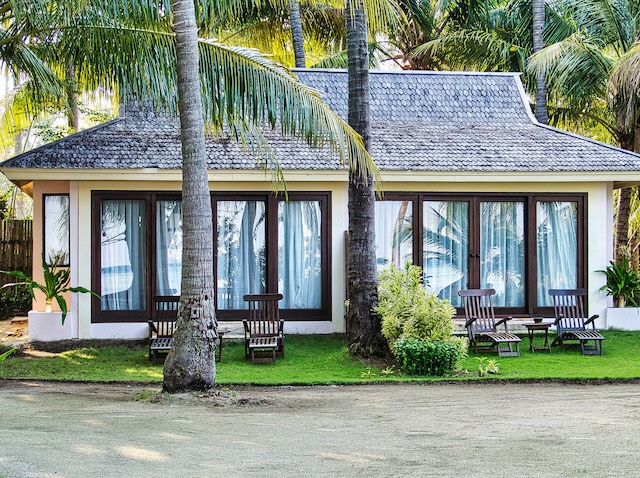
There’s no rush at Kura Kura, and honestly, what rush could there be in such a place? Here you can reclaim the spaces that society has denied you, and reconnect with the natural rhythms that belong to you but that you have forgotten.
Suddenly, you realize that the day can pass simply by listening to the wind rustling through the vegetation or watching the perpetual motion of the waves gently crashing onto the shore. It’s surprising to realize that even just walking through the greenery or jumping into the sea feels almost superfluous — an intrusion that risks disturbing the poetry of the place.
But at Kura Kura, you can go further, and this further is called Krakal: an even smaller, wilder island, about forty minutes away by speedboat, with the last stretch traveled in a rowboat due to the shallow waters.
Landing on Krakal leaves you breathless. The island reveals itself at its best: sand so white it’s almost blinding, and a sea so transparent it seems like an irresistible invitation to dive into its warm, welcoming waters.
Those heading to Krakal do so to be alone, with few possessions and without noise. Many guests of Kura Kura spend one or more days here to live a Robinson Crusoe-like experience: no electricity, days dictated by dawn and dusk, and three simple wooden huts that only accommodate already-formed groups. If the island is booked for two people, for example, they will be the only people in Krakal during those days.
Most importantly, no internet: during the time you choose to stay, there’s no room for social media or WhatsApp. The only comforts are a bed with a mosquito net, a small library, and an “antique” phone to contact Kura Kura in case of emergency.
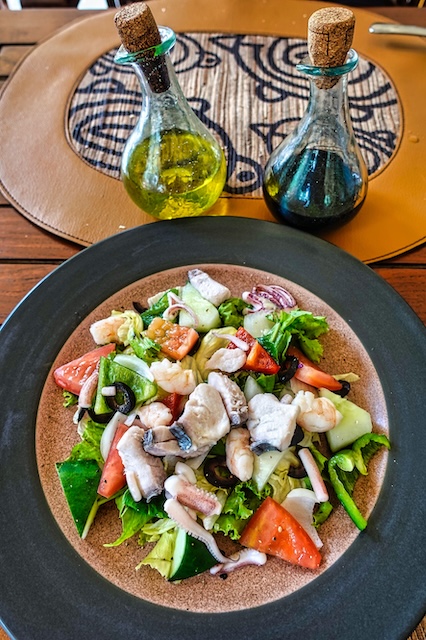
“And what about food?” you might ask. Simple: when you arrive on the island for your “luxury castaway” experience, you are provided with enough food supplies for the days you will spend there. Naturally, nothing prevents you from fishing and cooking your own fish — I saw an artisanal grill and some wood waiting to be collected, but, small detail, I didn’t notice any fishing rods around.
The rest of the time is spent walking, swimming, sunbathing, reading a few pages of a book, perhaps moments of reflection that will inevitably lead you to rediscover yourself… and then, nothing. Krakal has nothing to do. And that’s precisely why it’s worth it.
Returning to Kura Kura after a few days in Krakal feels like coming back from Lesotho to New York: the sensation of a castaway returning to “civilized” life. You see the staff, the few resort guests, you return to “normal” meals, but inside, you feel that you’ve experienced something extraordinary.
You go back to boat trips, snorkeling, and — if you’re a diver — to exploring the underwater world, hoping to spot a turtle among the colorful corals or perhaps something even more remarkable.
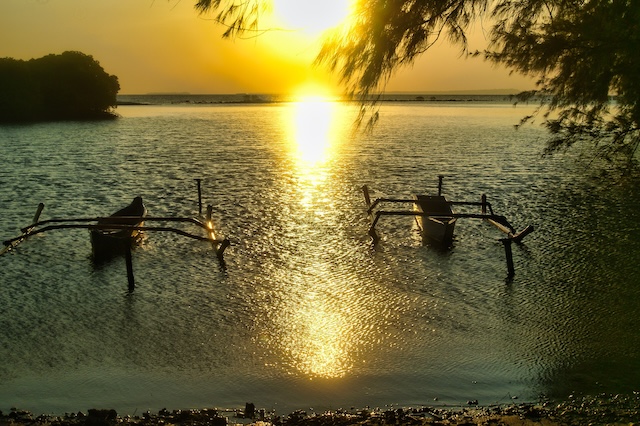
Meanwhile, the days pass, and your stay at Kura Kura comes to an end. As you sail once again across the Java Sea or float in the air on the Air Fast plane heading back, you carry with you the awareness of having lived a truly unique experience. A feeling very similar to when an intense, beautiful dream is abruptly interrupted by the morning alarm clock — the memory of it will stay with you all day, leaving a pleasant, profound sense of serenity inside.
That’s it: Kura Kura, like those dreams that fade at dawn, stays inside you and lets you feel the emotion of the journey — even after it’s over.
Photos by Guglielmo Zanchi (Pluto)
Here you can watch FantasiaAsia video:


