
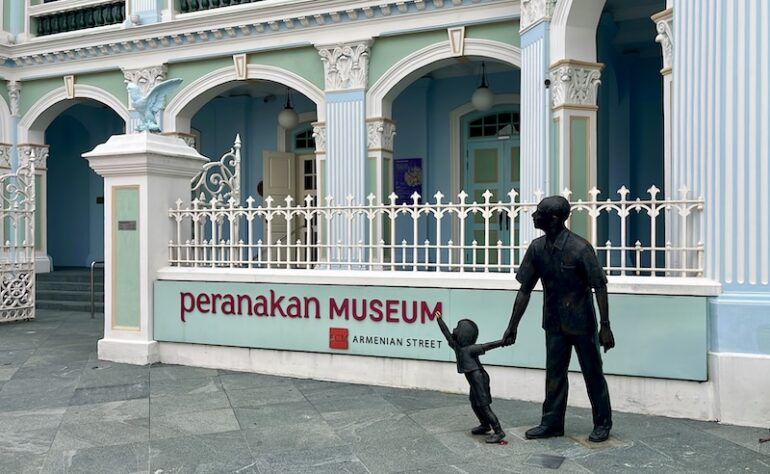
I have always been fascinated by cultures born from mixing – not the pure or the isolated, but the hybrid, the borrowed, the reinvented. That is exactly what the Peranakan Museum in Singapore celebrates: the world of communities that emerged when people from China, India, the Arab world, and Europe settled in Southeast Asia, married locally, and built something entirely new. I visited as part of my Asian Itinerary cultural media trip to Singapore, and every object seemed to tell a story spanning oceans and centuries.
What Does “Peranakan” Mean?
 The first gallery, Origins, asks a simple question: What makes someone Peranakan? The word comes from Malay – anak means “child”, and peranakan means “born of”. Originally it described someone locally born but with heritage from somewhere else, but over time it became a cultural identity in its own right, referring to mixed-heritage communities whose unifying trait is the melding of ancestral cultures – Chinese, Indian, Arab, European – with the indigenous cultures of the Malay-Indonesian archipelago. The museum is careful not to give one single definition, showing instead that there is no single Peranakan culture but many expressions, and inviting you to ask which parts can be traced to different influences and whether something is shared.
Forging Communities Across the Region
 Forging Communities explains how intermarriage alone was not enough to create a new culture – a process of acculturation and a new sense of identity had to develop. Many communities trace their genealogy to Malacca of the 14th through 16th century, a thriving port kingdom, and by the 19th century Peranakans were well established in Penang, Malacca, Singapore, and Jakarta. A significant feature of the Peranakan world is its development under European colonial powers – Portuguese, Dutch, and British – and many Peranakans depended on trading networks that facilitated the exchange of cultural forms, from dress and luxury goods to food and language. One of the most striking displays is an interactive map showing the waves of migration that formed these communities – from South Asia, Arabia, China, and Europe – all converging on the Malay-Indonesian world over many centuries.
Style: Batik, Needlework, and a Shared Aesthetic
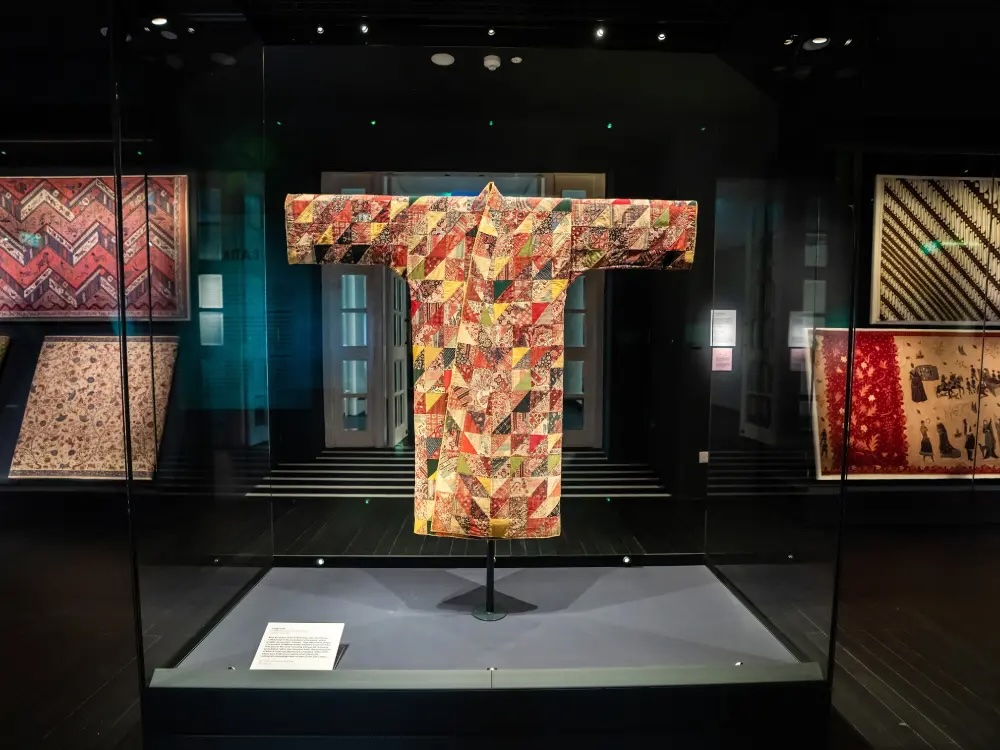 The Style galleries explore fashion, adornment, and decoration, and Batik is one of the most fascinating sections. Batik refers to both the technique and the cloth – wax is applied as a resist to prevent an area of the pattern from taking dye, using a pen-like instrument called a canting or a stamp called batik cap. The Javanese probably decorated their cotton textiles with resist-dye methods as early as the 13th century, but the fine work that made Javanese batik famous was not produced on a commercial scale until the early 19th century. Batik centres mushroomed in the north-coast towns of Java from the mid-19th century, with the Peranakan communities in Malacca, Penang, and Singapore among the keenest wearers.
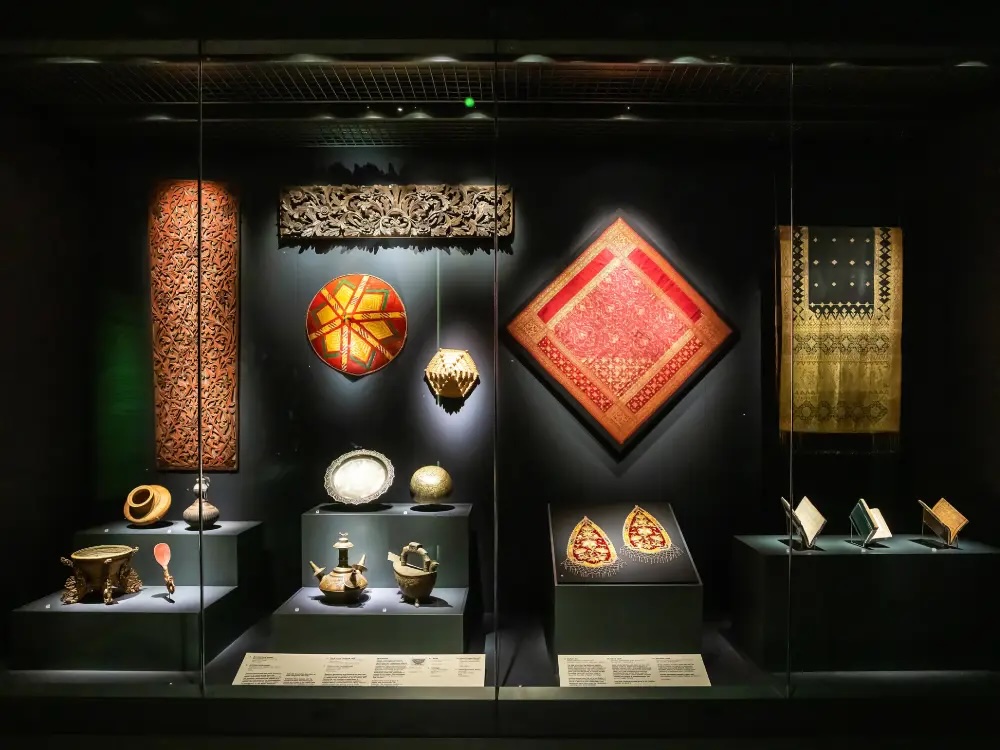 What I found most interesting was the section on Peranakan Chinese batik makers. Since at least the 17th century, they played a significant role in the production, consumption, and trade of batik, and their repertoire includes auspicious motifs adapted from Chinese symbolism. Synthetic dyes were imported into Java from the late 19th century, and Peranakan Chinese workshop owners were the first to experiment with them – giving rise to the pastel palette that characterises batiks from the north coast of Java. The museum also highlights Indo-Dutch batik makers, whose workshops were run by Indo-European women from the mid-19th century. Popularly called “Batik Belanda”, their batiks depicted motifs inspired by Dutch fashion magazines, Christian symbols, and European fairy tales, and the practice of signing batiks was pioneered by these workshop owners as a sign of quality and ownership.
Needlework and Wedding Connections
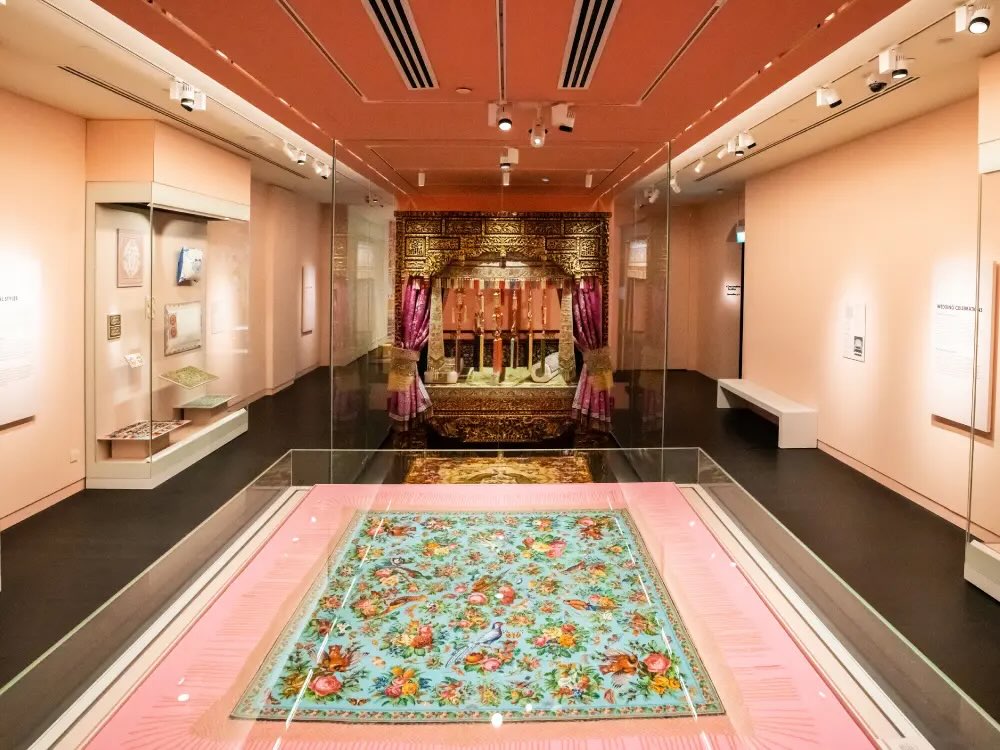
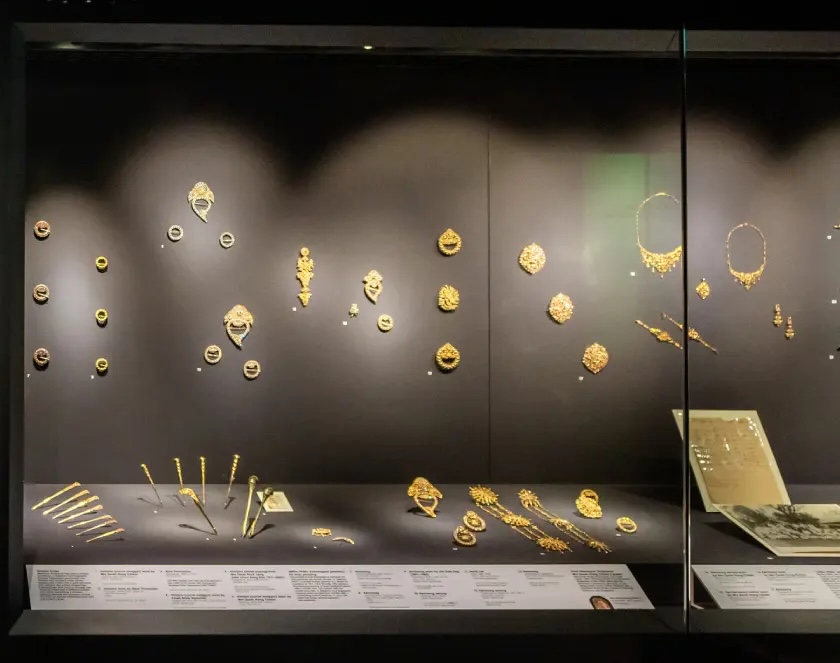
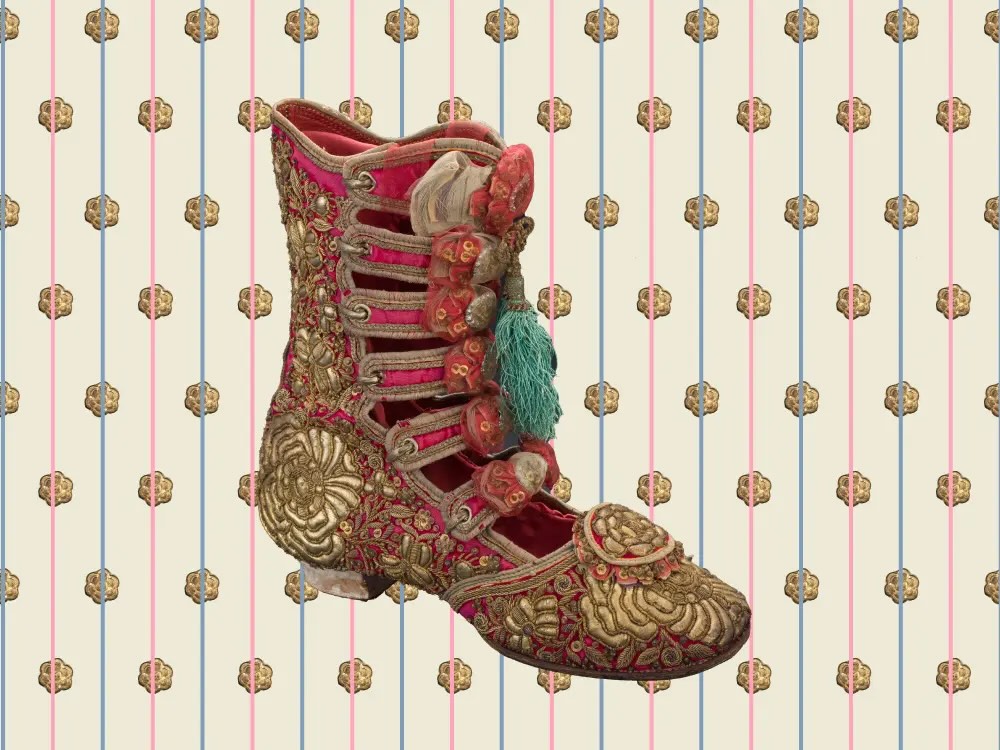 Peranakan needlework refers to beadwork and embroidery made by or to the tastes of Peranakans. Ranging from slippers to bed-curtains, it functioned as gifts, dress accessories, and most prominently, decorative textiles for major celebrations, especially weddings. Residing in port cities at the confluence of trade routes, Peranakans obtained a wide variety of materials, including Chinese silks, European glass seed beads, and Indian gold threads, and regional styles vary: Java and Sumatra were key centres for gold thread embroidery, while Malacca and Singapore share close ties reflected in similar embroidery styles, and Penang is known for jewel tones and lavish designs.
Ancestor veneration is a cornerstone of Peranakan spiritual life, rooted in Hokkien customs and Confucian values of filial piety, and the museum displays the ancestral altar of Tan Kim Seng – a silver offering service acquired by his grandson as an expression of filial devotion, which remained in the historic home for seven generations. Peranakan Chinese weddings were traditionally held over 12 days, though by the 1920s many were held over one to three days. At the heart of the bridal chamber was the wedding bed, decorated with beadwork and embroidery, and it was believed that a stylish bed promised a happy marriage. Among the rites was the An Chng ceremony: the bed was blessed by having a boy whose parents were alive roll across it three times, in the hope that the newlyweds would soon conceive a baby boy to continue the family line.
Fashion, Kebaya, and Performing Identity
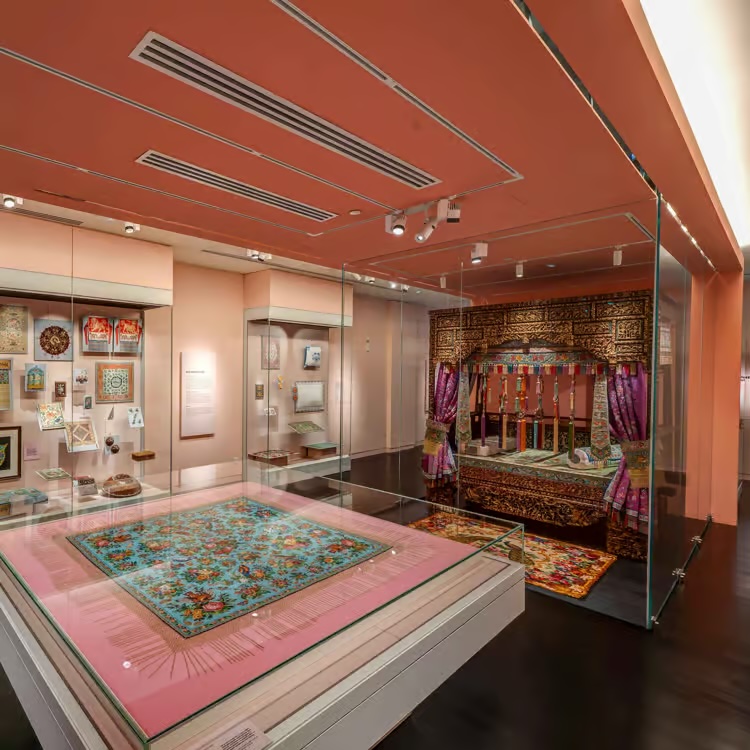 The Fashion gallery explores how Peranakan fashion responded to the cosmopolitan environment of port cities by bringing together diverse influences. The sarong kebaya consists of a kebaya (an open blouse) and a lower garment – a sarong or kain panjang – and by the 1930s the kebaya was form-fitting, with complex embroidery created using Singer sewing machines. In 2024, the kebaya was added to the UNESCO list of the Intangible Cultural Heritage of Humanity, a multinational nomination involving Brunei, Indonesia, Malaysia, Singapore, and Thailand.
The section on Performing Identity shows how the sarong kebaya takes on another dimension when worn by performers. The archetype of the Peranakan matriarch was probably forged in the landmark play Emily of Emerald Hill, written by local playwright Stella Kon, and later popularised in dramas like The Little Nyonya. The museum also highlights wayang Peranakan, where male actors historically played female roles because it was considered improper for nyonyas to be seen on-stage.
Ceramics, Food Culture, and the Home
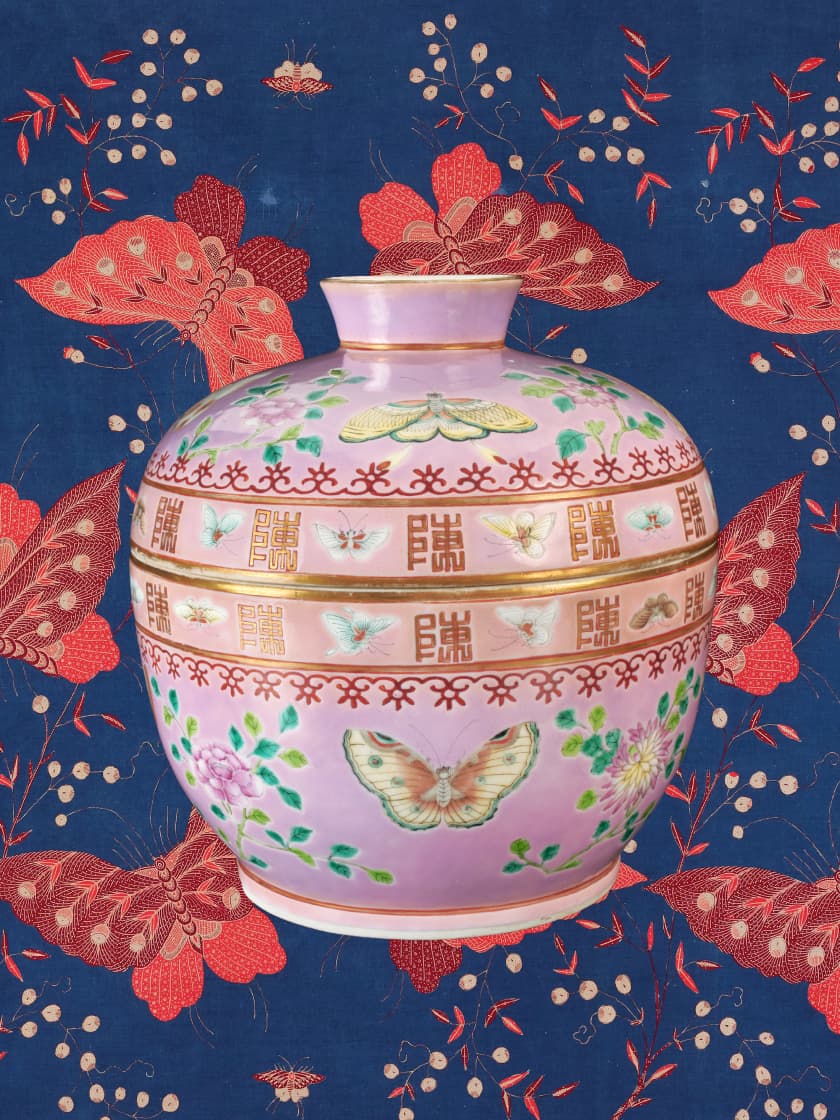 Ceramics played an integral part in Peranakan social, ritual, and culinary life. The wares most closely associated with Peranakans, called nyonyaware, are overglazed polychrome enamelled porcelains likely made in Jingdezhen, China, commonly used for festive occasions as well as for ritual purposes, with bright colours and elaborate designs featuring symbolic Chinese motifs. War and political turmoil in China, together with the declining fortunes of the Peranakan community after the Second World War, led to the end of nyonyaware production, but it remains one of the most popular elements of Peranakan material culture.
The Tok Panjang section describes a Chinese Peranakan style of dining – Baba Malay for “long table” – referring to a feast eaten at a long rectangular table on special occasions such as weddings and birthdays. The museum displays the commissioned dinner service of the family of Kapitan Cina Yap Ah Loy. Peranakan cooking fuses the cuisines of China, South Asia, and the Middle East with that of Southeast Asia, and it is one of the community’s key living traditions that continues to evolve today.
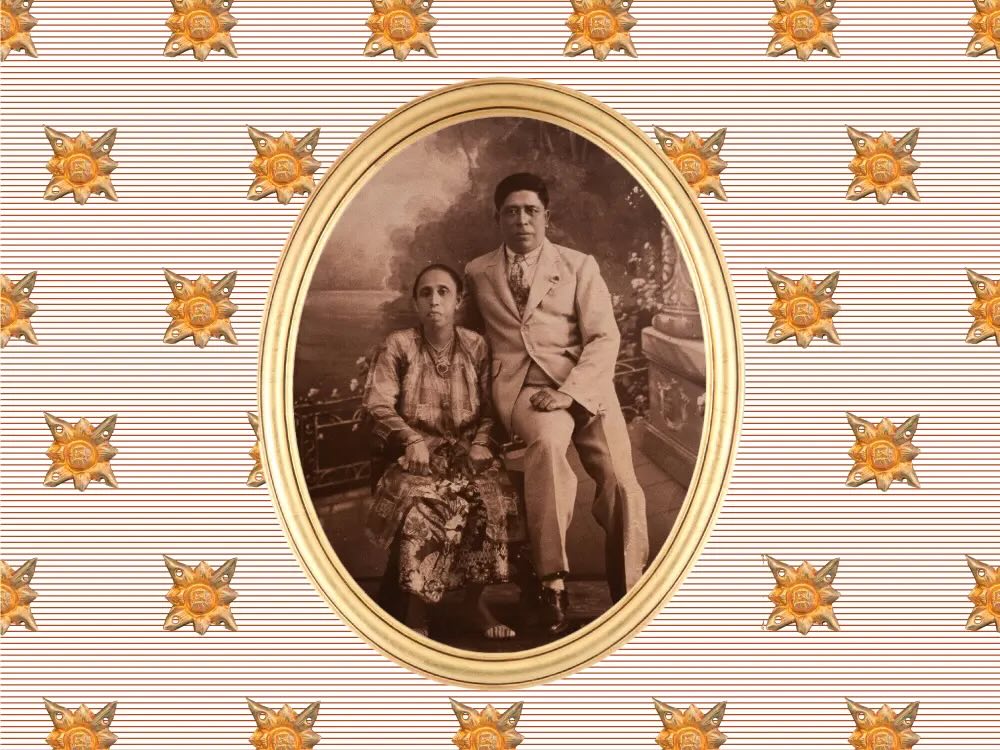
 The Home floor is the unifying theme – a living space is a home when it becomes familiar, when you recognise it as yours. The museum displays the Mandalay Villa section, featuring Mr and Mrs Lee Choon Guan. Lee Choon Guan was chairman of the Chinese Commercial Bank, and his wife, Mrs Lee (née Tan Teck Neo), was one of the founders of the Chinese Ladies’ Association and its first president. In 1918 she became the first Peranakan woman to be made a Member of the Order of the British Empire in recognition of her charitable efforts during the First World War. The section on Sireh explains the social importance of betel chewing, while the Brown and Gold Furniture section shows how locally made teakwood furniture combining European and Chinese influences was popular among Peranakans.
Final Thoughts
The Peranakan Museum is not a large museum, but it is a dense one – dense with stories, objects, and ideas. It asks you to think about identity, about hybridity, about what happens when cultures meet and create something new, and it does so with beauty and deep respect for the communities it represents. I left thinking about my own family, my own mixed heritage, my own sense of belonging. That is what the best museums do – they do not just teach you about others. They teach you about yourself.
Practical Information
|
Detail |
Information |
|
Museum |
Peranakan Museum |
|
Address |
39 Armenian Street, Singapore 179941 |
|
Nearest MRT |
City Hall or Bras Basah |
|
Opening Hours |
Daily, 10:00 AM – 7:00 PM (Last admission 6:15 PM) |
|
Website |
|
|
Recommended Time |
2–3 hours |
Disclosure & Thanks
My visit to the Peranakan Museum was hosted as part of my Asian Itinerary cultural media trip to Singapore. I would like to extend my sincere gratitude to the museum for their warm welcome.


