
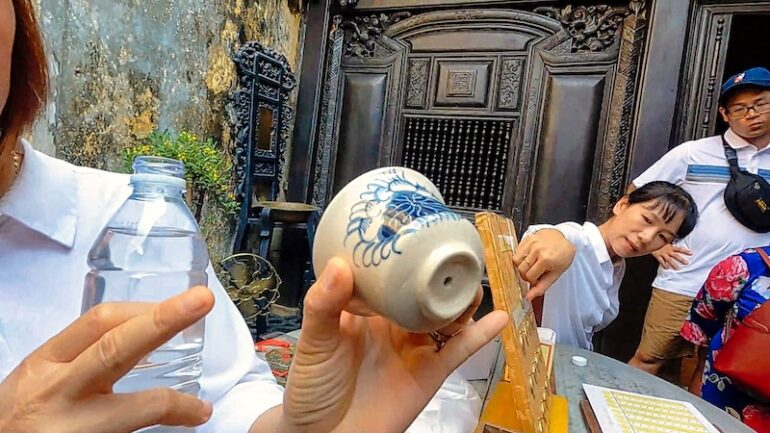
In the heart of Hoi An’s Ancient Town, a UNESCO World Heritage site, stands a centuries-old merchant house that speaks not with words, but with wisdom: Tan Ky House. Built in the 18th century and still home to the eighth generation of the same family, this living heritage site is more than a museum — it’s a quiet teacher.
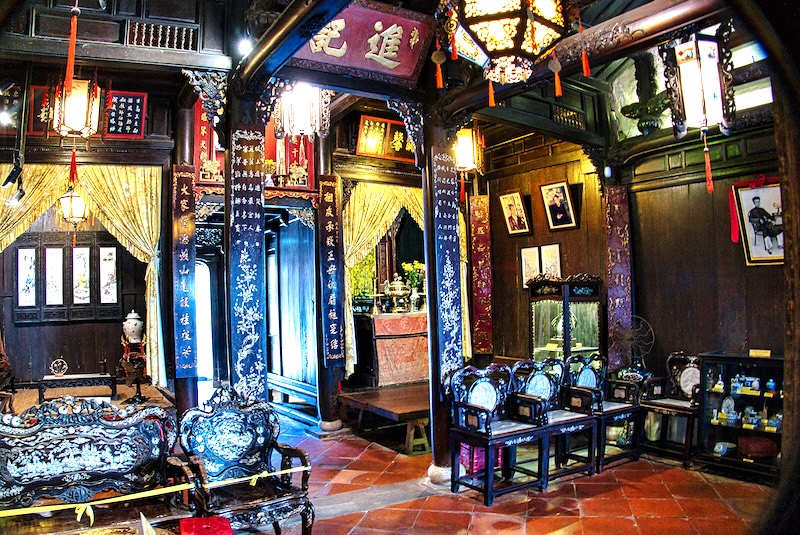
Tan Ky House in Hoi An
Among its most intriguing treasures is not gold, nor silk, but a humble clay cup — one that holds a secret older than time. Known as the Greedy Cup, it is said to carry the teachings of one of history’s greatest minds: Confucius.
How the Cup Teaches Without Speaking
The cup looks ordinary. But it has a hidden rule: it can hold liquid up to 80% of its capacity. Fill it beyond that, and the entire contents drain instantly through a hole in the bottom.
No magic. No trick. Just a clever hydraulic siphon — designed not to impress, but to instruct.
The message is clear and timeless:
“Those who take too much, end up with nothing.”
This is not just about drinking. It’s a metaphor for greed, ambition, and the human tendency to overreach — even when we already have enough.
The Legend of Confucius and the Warning Cup
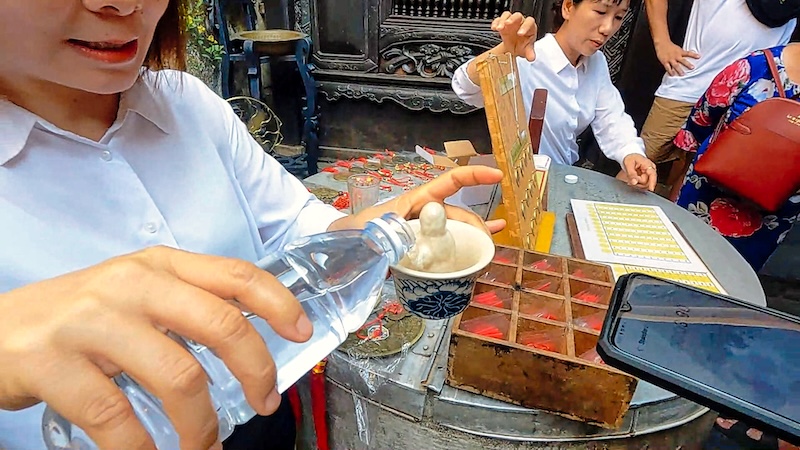
Greedy Cup Hoi An
According to tradition, Confucius once visited an ancient temple where he encountered a peculiar vessel called You Zhi — the “Warning Cup”. When empty, it tilted. When filled correctly, it stood straight. But when overfilled, it toppled over, spilling everything.
The priests explained: this cup teaches that pride leads to downfall, and excess leads to loss.
Confucius was deeply moved. He said:
“What a wise object! It shows that no man should ever fill himself beyond measure.”
In Tan Ky House, this ancient parable lives on. The Greedy Cup is not locked behind glass — it’s shown, explained, and often demonstrated to visitors. Family members invite you to pour water and witness the moment of overflow. It’s a small act, but unforgettable.
More Than a Warning Against Overdrinking
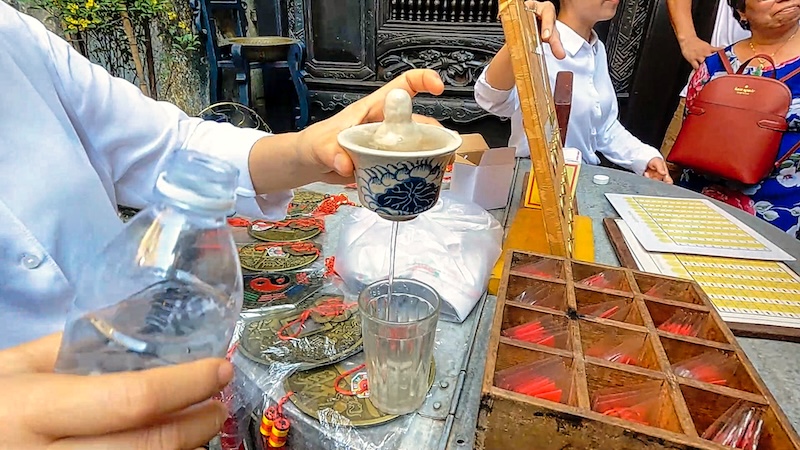 Originally, the cup was used to promote moderation in drinking, especially among scholars and merchants who gathered for wine and conversation. Pour too much? The cup empties — a gentle, non-judgmental reminder to know your limit.
But its lesson goes far beyond alcohol.
It speaks to workaholism, to consumerism, to the modern obsession with “more”: more success, more likes, more stuff.
In a world that glorifies the 100%, the cup whispers:
“80% is enough.”
And in that “enough”, there is peace.
But Here’s a Fact Few Know…
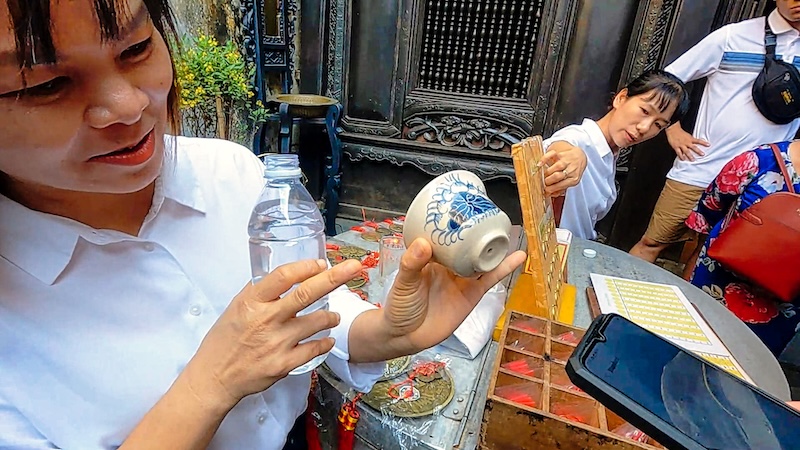 You might assume this cup is a uniquely Eastern invention. But the same device — with the same mechanism and the same moral lesson — existed in the ancient West.
In Greece, over 2,500 years ago, a nearly identical cup was attributed to the philosopher Pythagoras. Known as the Pythagorean Cup or “Cup of Justice”, it worked the same way: filled with moderation, it held wine. Filled with greed, it emptied itself completely.
Was it coincidence? Or did two great civilizations, separated by continents, arrive at the same truth?
True wisdom isn’t about taking all you can — it’s about knowing when to stop.
A Timeless Lesson Across Civilizations
Whether you call it the Cup of Confucius or the Cup of Pythagoras, it carries the same message across millennia and cultures:
Moderation is not limitation. It is freedom.
Visiting Tan Ky House is not just a cultural experience — it’s a moment of reflection. You leave not only with photos, but with a question:
“Where in my life am I overfilling the cup?”
And perhaps, just perhaps, you’ll choose to leave a little space — for peace, for gratitude, for what truly matters.
Practical Info for Visitors
📍 Where: Tan Ky House, 101 Nguyễn Thái Học, Hoi An Old Town, Vietnam
🎟️ Entry: Included in the Hoi An Ancient Town ticket (~120,000 VND / ~$5 USD), valid 4 days
🕒 Hours: 8:00 AM – 5:30 PM daily
📸 Photos: Allowed (no flash)
🗣️ Guides: Available in English, Italian, French; family members often share personal stories
🛍️ Souvenirs: Small shop with handmade crafts, including replicas of the Greedy Cup
🚌 Access: Easy to reach on foot or bicycle; central location near the Japanese Covered Bridge
Photos by Guglielmo Zanchi (Pluto)


