
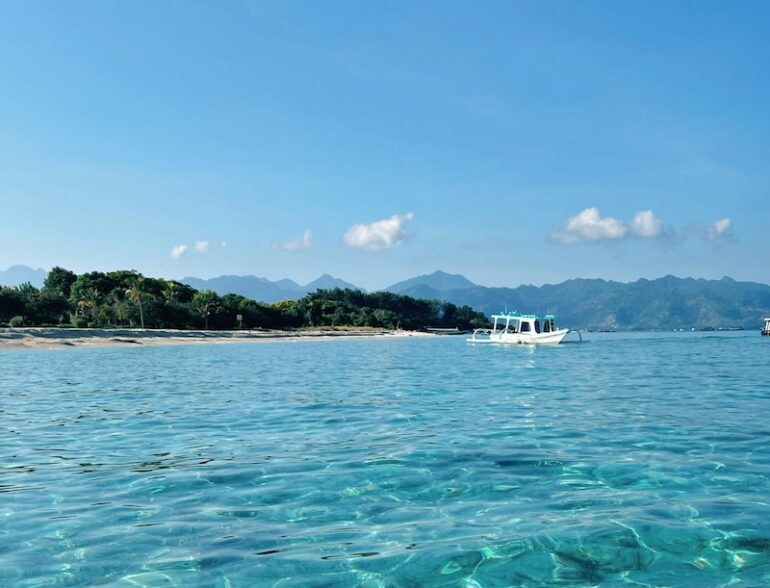
Indonesia is an archipelago of roughly 17,500 islands. Any one of them is worth visiting. Not that I have seen them all—but what I mean by “worth visiting” is quite simple: they are tropical, green, and fertile. Some are wrapped in dense jungle, others open into scrub and prairie. All of them stretch in a long, loose chain from west to east, mostly south of the equator—though islands like Kalimantan and Sulawesi reach a little north, leaning toward Vietnam and the Philippines.
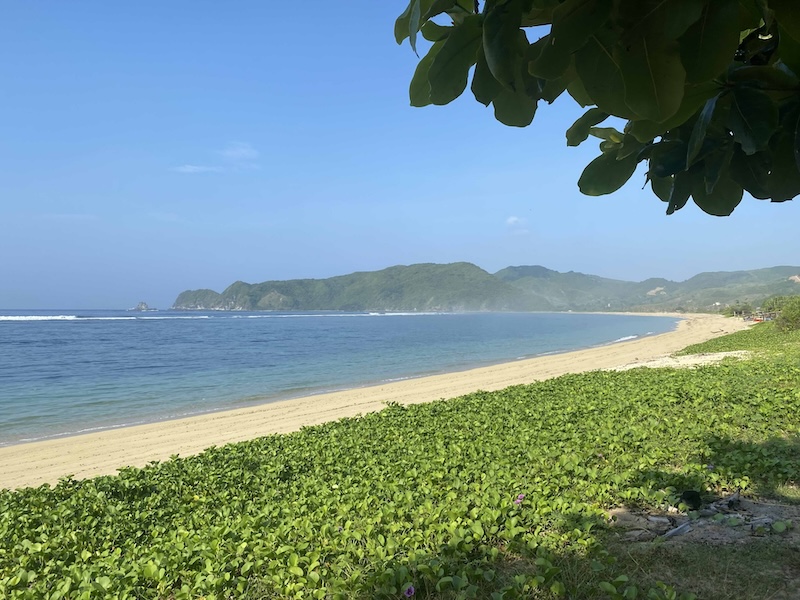
Lombok travel guide – Photo: Orion f.b.
Any of the less densely populated islands east of Java are worth the journey. Their beauty is often untouched, and their nature powerful. People come here to hike, dive, snorkel, or move their bodies—on land, water, or somewhere in between.
After the vast human landscape of Java, with its 70 million inhabitants, there’s Bali—the first island to the east—home to four or five million people, depending on the day, the season, and the presence of foreign workers or tourists.
And then, just beyond Bali, lies Lombok—the second island to the east.
Between the two sits a small chain of islands—the Gilis. Little dots in the sea that have grown into their own reputations: party nights on Gili Trawangan, quiet beach days on Gili Meno and Gili Air. “Gili,” in the local language, simply means “island”—and around Lombok, there are many more of them, each offering its own version of stillness.
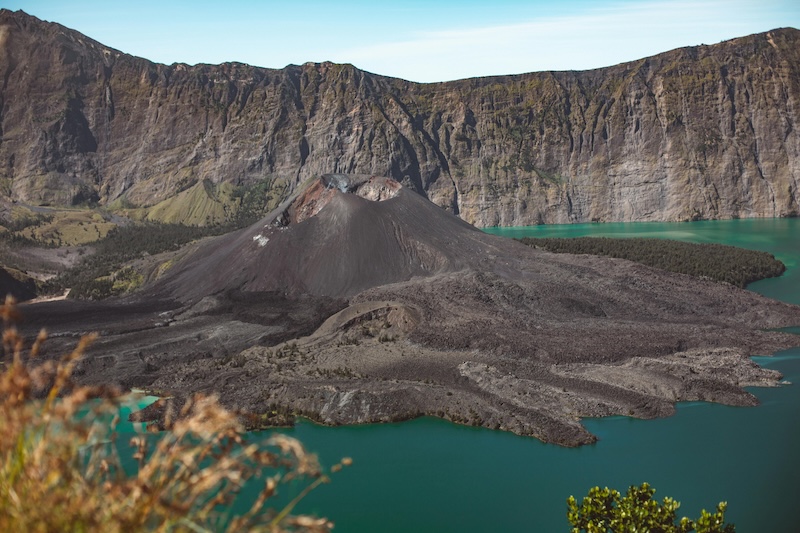
Lombok amazing nature
These are places for retreats, barefoot walks, or afternoons drifting through fields of rice, corn, or grass, where water buffalo move slowly—as if time itself is less hurried here.
Lombok, like most Indonesian islands, has its native people and its own language. With that come stories—about beginnings, about why we are here, and where we go after death. These older layers are now gently covered by a more recent one: modern, mostly moderate Islam.
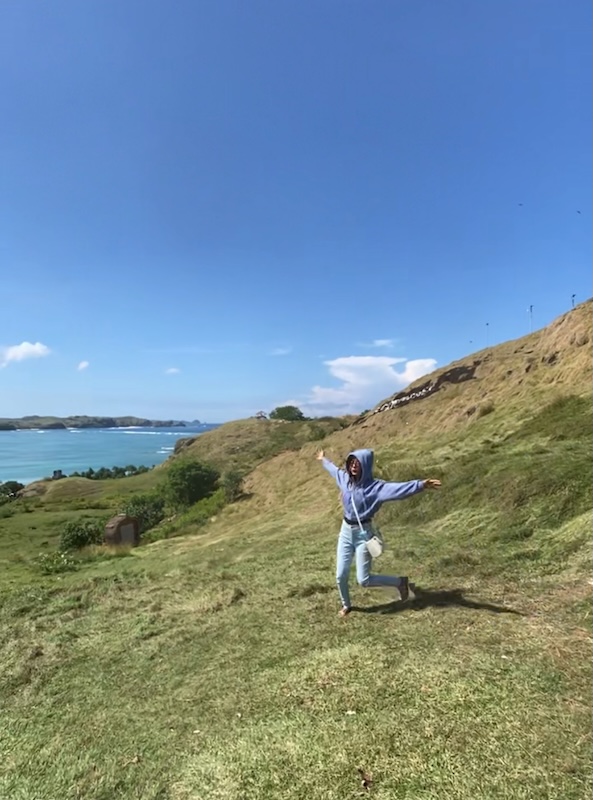
Fun in the rolling hills of Lombok – Photo: Orion f.b.
The main inhabitants are the Sasak people. On the west coast, facing Bali—clearly within sight—there are also Balinese communities, carrying their distinct Hindu culture across the water.
Arriving in Lombok—whether by ferry or plane—you first land on what seems like an endless flat plain. Fertile land stretches toward the horizon: rice paddies, vegetables, watermelons, cornfields—all nourished by irrigation from the mountains.
But don’t be fooled.
The island is, in essence, one massive mountain.At its heart rises Mount Rinjani, reaching 3,726 meters into the sky. From there, everything slopes downward—toward the sea, every beach, bay, and cliff, and every perfect surfer’s wave.
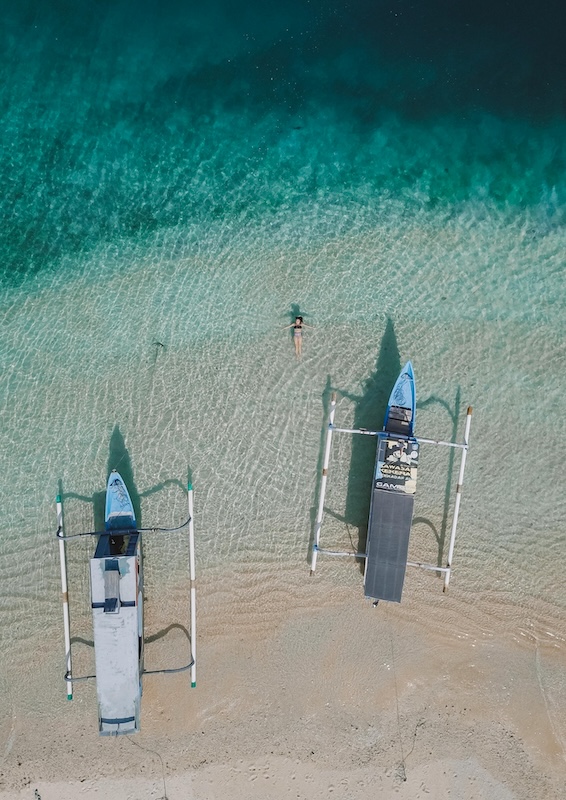
Fishing boats on a Lombok beach
Imagine seeing Lombok from above—either from a bird’s eye view or an ultralight aircraft—circling outward from Rinjani’s crater lakes, waterfalls, and dense jungle slopes. The island would appear as a single, enormous mountain, continuing deep beneath the surface of the ocean.
That perspective offers a certain clarity. You are walking on a volcano—a pearl in a long volcanic necklace known as the Ring of Fire.
Development began on the west coast. Here, you find harbors connecting Lombok to Java, Sumatra, and beyond; the capital, Mataram, with its universities and agricultural trade; and Senggigi, the island’s first modest step into tourism. There was also the original domestic airport, now replaced by a modern international airport.
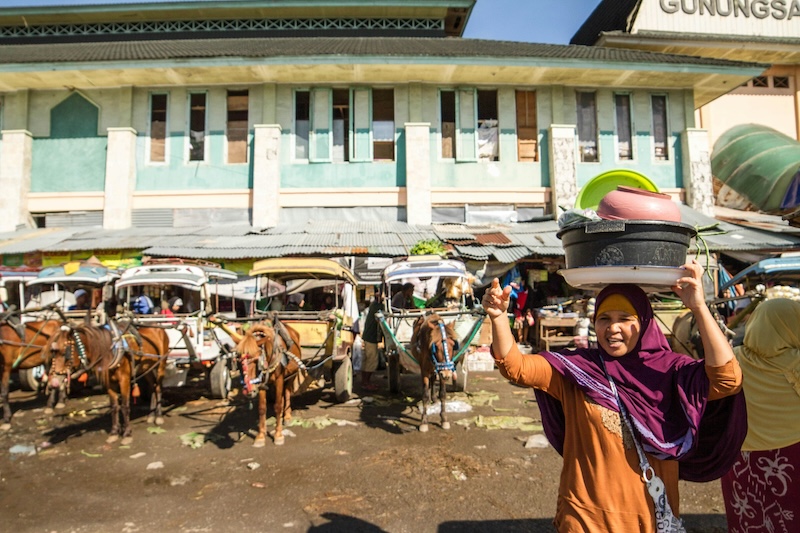
a scene on a Lombok street
In the early 2000s, travelers—followed, inevitably, by tourists—discovered the south. The fishing village of Kuta slowly transformed into a destination, while nearby Praya became home to an international airport. A two-lane highway now leads straight to the beaches of Central Lombok.
And yes—the roads. I take quiet pleasure in mentioning Lombok’s roads: wide, well-maintained, often straight, and lined with tall trees offering shade, as if by design. Roads you rarely find on Bali. And, perhaps even more remarkably, roads with traffic that actually flows—no long frustrating pauses behind a line of motorbikes unless you wait until late at night in Bali to “get somewhere.”
When I want to drive—really drive—I take my car or motorbike on the ferry to Lombok. Windows open, wind moving through the cabin, or helmet on, leaning into the curves. A biker’s adventure or a car driver’s luxury.
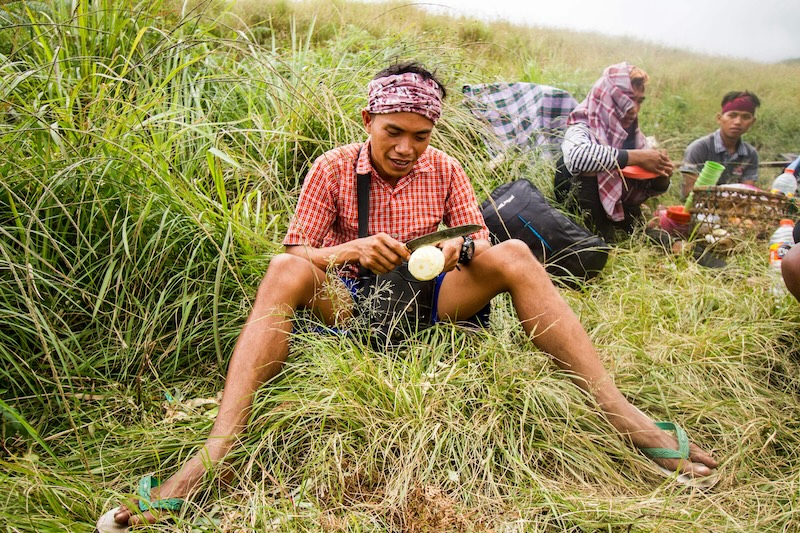
Lombok villagers
The people—farmers, traders, fishermen—are friendly, grounded, and quietly hospitable. They don’t ask too many questions. They let travelers be travelers—whether in search of adventure or simply a place to rest.
I greet them with a warm Assalamualaikum. I sit for tea with families. I eat freshly grilled fish on the beach, cooked over wood fires with fishermen. Over the years, friendships have grown.
And there is a certain freedom here: a freedom to take off my clothes and swim at a remote beach or waterfall without raised eyebrows. A freedom to sit in a beach bar at night, listening to live music, drinking a beer. A freedom to talk—laugh, even flirt—with women in shops or on the roadside in front of their family homes, without tension or disapproval.
Sometimes I hear travelers praise Lombok’s beauty, only to follow it with a slight tightening of the lips: “Yes, but it’s Muslim.”
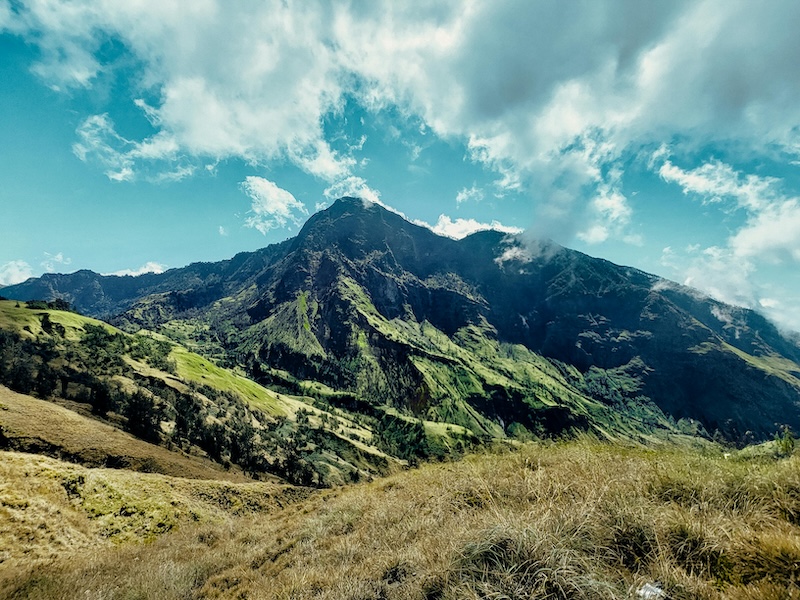
Stunning Landscape of Mount Rinjani, Indonesia
It is true—there are mosques, Ramadan, and the rhythm of daily prayer. But never have I, or anyone I know, been pressured into participation or judged for living differently.
Living in Bali for so long, I have often heard a different phrase: “You don’t do that here.”Instructions, corrections, well-meaning reminders about what is appropriate, what is not, what should be said, and what should be left unsaid.
The climate differs too. It is a little drier than Bali, with some Australian flora and fauna. There are open plains, dense jungles, and a beautiful chain of mountains running parallel to the southern coast—shaping its dramatic bays and beaches, adding beauty to the turquoise blue waters.
Lombok is gentle where it is cultivated, especially in the central south. It turns wilder along the coastal mountains and toward the east.And around Mount Rinjani, it becomes something else entirely—raw, unpredictable, and challenging for the adventurous.


