
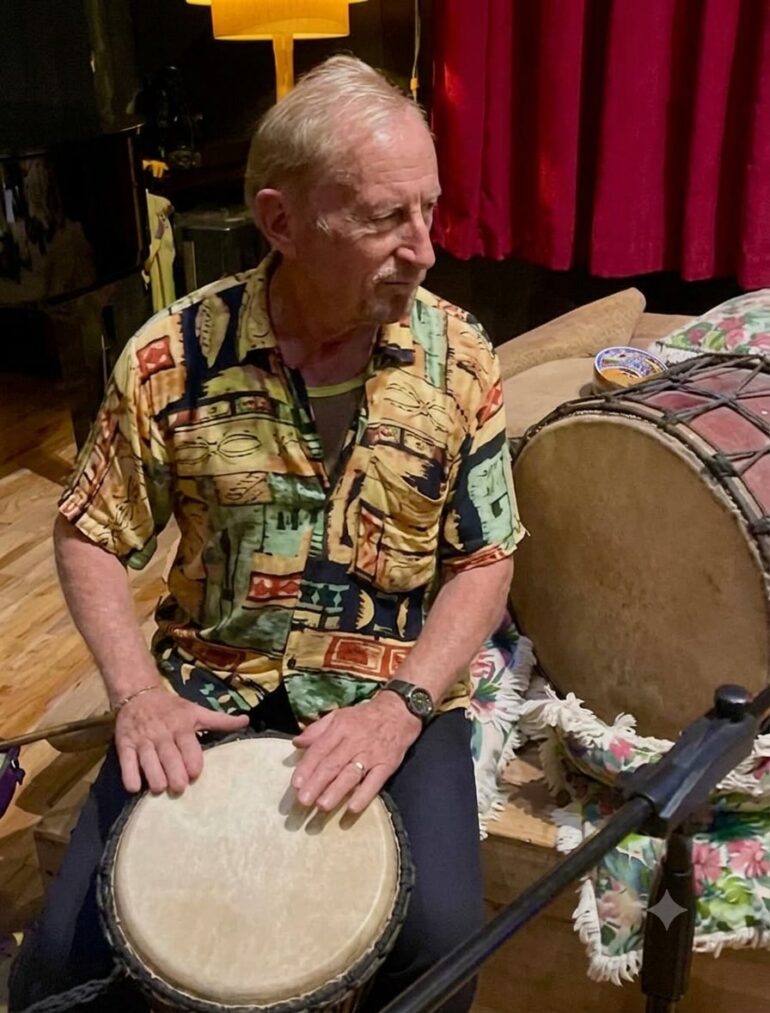
When I visit my usual hangouts in Bali, I feel out of place. The faces and the ethnic makeup have changed drastically. Around the turn of the millennium, I went to an event in Ubud and saw exactly the kind of guys and girls I’d gone to school with. Not literally, but their faces always reminded me of someone I knew from back then. Sometimes I could even picture myself sitting there: long blonde hair, blue eyes, dressed in flared pants—tight on the legs but wide and flowing at the bottom—paired with long-sleeved, colorful linen shirts or hand-painted T-shirts.
The guys with full beards, brown or blond, like Vikings; the girls in “Christian Community”- style blouses, oversized linen shirts, and long skirts, like flamenco dancers. They chatted about trivial things, told jokes, debated, and talked about relationship problems while eating nasi goreng and a salad and drinking a glass of fruit juice. Some smoked “kretek” cigarettes—the Indonesian specialty with clove powder mixed into the tobacco.
Not that I miss that lifestyle—but: When I go to an event or a gathering today—people don’t talk much anymore; instead, they stare at their screens. The beards are jet-black, as are the eyebrows and the hair, most of which is “gone”—shaved upward on all sides, leaving a “crown” on top. Noses have become “Middle Eastern”—long and curved—and Indian or Mongolian facial features predominate.

The girls wear yoga bras and tight, stretchy pants that reveal every indentation and crease on the skin beneath the tight, stretchy yoga pants. Skin tones range from ethnic brown to sun-kissed brown. The predominant accents that come through the “Traveler English” are: Eastern European, Slavic/Russian, and ASEAN countries.
Suddenly, the “Aussies”—who at the time were so FAR removed from my cultural background (after all, they’re “Down Under”)—offer a sense of relief when, amid the crowd of “multicultural” people, you spot a Caucasian, blond person of Irish or German descent. But that’s becoming increasingly rare. Australia, too, is being flooded by waves of Asian and Russian immigrants.
Last night, a man who looked as if he’d come straight from Ali Baba’s Baghdad approached me to thank me for playing Sufi music. I wondered which tribe in which desert he’d come from to Bali. His answer was: “Lebnen.” Well, I’m not particularly skilled at understanding Arabic accents, so I asked back: “Which country?” He repeated it, visibly annoyed that I didn’t know his culture—the cradle of humanity, that beautiful, vast land everyone is talking about these days—until it dawned on me that he had omitted the vowel “A”—so important to me—and turned the “O” into an “e.” Then, of course, I would have understood that he was saying “LebAnon.”
The two men spoke an interesting kind of bazaar English, somewhere between Istanbul and Kandahar. At first I enjoyed listening to them, but it also wore me out trying to understand their abbreviations, because their vocabulary focuses on verbs and who they’re talking about—that is, names and activities. Adjectives and grammar are missing and are simply left out.
We’re familiar with this in German: “Then Sergei comes—I say ‘shit’—too late. He comes around the corner, new car, no chance, but try tomorrow with Mahmat…”
I feel out of place among this mix of people, like a relic from another time. It seems as though fewer fair-skinned, blond people are being born every year—people who look like my contemporaries from my youth—and fewer and fewer of them are coming to Bali. I belong, so to speak, to a dying breed.
Musicians these days are either Black—and by that I mean African Black—or they’re South American mixed-race people like:
Lebanese + Colombian DNA (Shakira),
Nigerian + English: Sade.
Jhene Aiko—Japanese + African American + German + Indian.
Bruno Mars: Puerto Rican + Filipino + Spanish + Ashkenazi.
Alicia Keys—African American + Irish, Scottish, and Italian
Freddie Mercury—born in Zanzibar to Indian-Parsi parents….
I sip my caffé latte, look back at the past, and try to guess the future…
I don’t feel old myself—neither when it comes to music, nor art, nor interesting conversations, nor physically—but when I look around (in Bali), I feel like a dinosaur that has made it into the next millennium. The locals are in a class of their own. Fairly dark skin, full lips, aesthetically pleasing features, healthy, thick blue-black hair, and a smile on their lips and in their eyes. Of course, I’m painfully aware that I’m not “one of them,” but interestingly, I feel as if I am.
I feel closer to the Balinese than to many of the ethnic groups that show up in Bali these days. Starting from my self-perception as a “foreigner”—when I first arrived in Bali—I now feel closer to the waiters, cooks, shop owners, and taxi drivers than to the “tourists.” To maintain this feeling, I speak to them in their language in restaurants or shops whenever I feel like a dying breed.
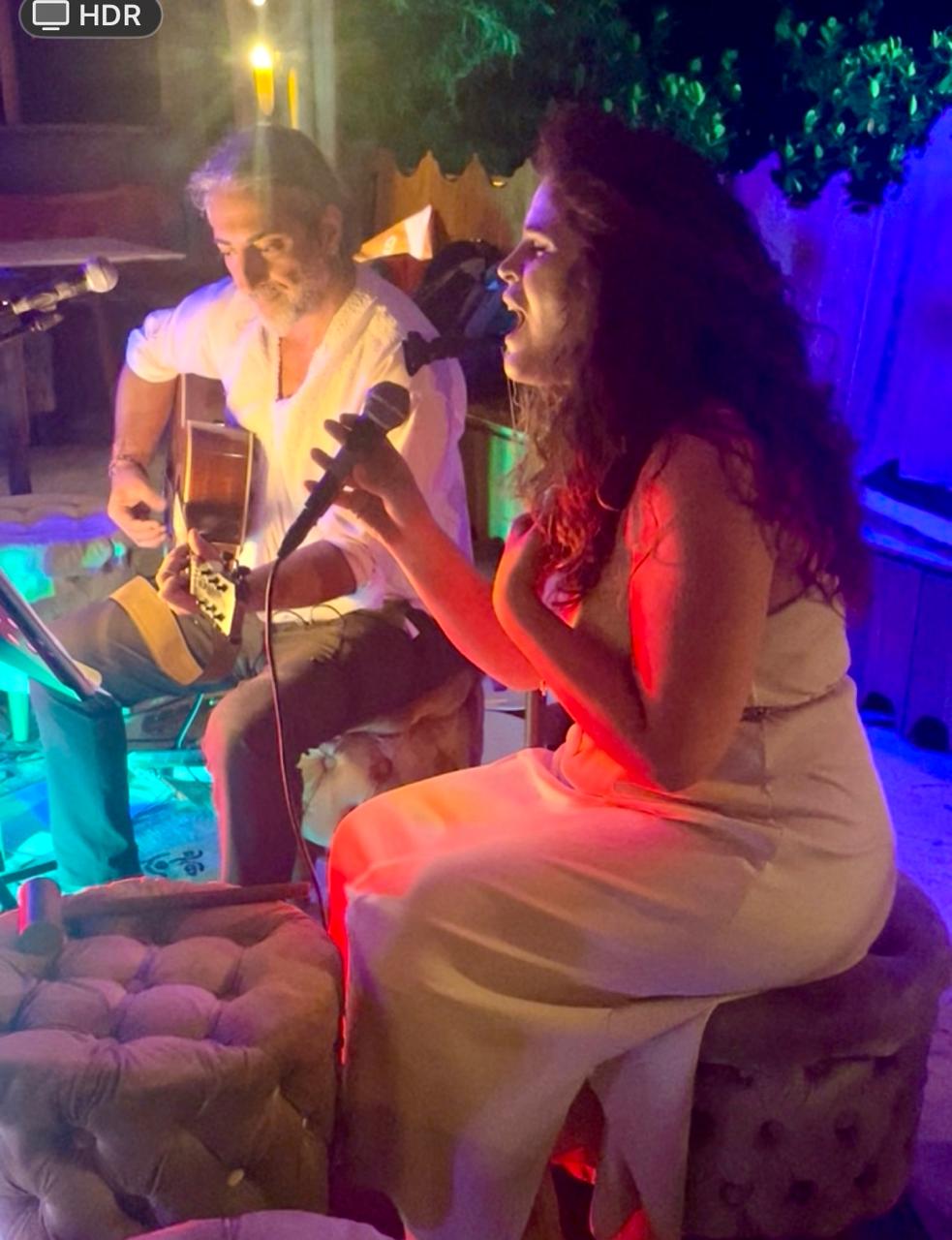 My buddy in Bali was born in Iran but is a U.S. citizen from the East Coast. With him, I get both worlds in one package. We joke and laugh and imitate accents when we’re together. I’m sure he doesn’t just see me as a Caucasian white man on a dying branch, but recognizes the diversity within me—the cultures I’ve lived in and from which I’ve adopted traits and words. He doesn’t stop at reading my appearance like a swatch book and reducing me to (or projecting onto me) a rare species; with him, I can be Turkish, sing Sufi songs with him, and be a Native American—with all my heart.
I just feel lonely sometimes when I’m sitting in a packed vegan wellness and event venue, teeming with Gen Z vegans and yoga instructors (who’ve never seen a Himalayan yogi in their lives) who project their own ideas onto me… I don’t know what. Maybe a Swiss farmer on vacation, craving a piece of beef. And yes, sometimes I actually have a craving for a piece of organic Swiss beef, freshly marinated, with a sip of Italian red wine, just like a Swiss farmer would 🙂
But what isn’t evident from my clothes or my lack of tattoos—that I practice yoga and qigong, do breathing exercises, take ice baths, and go jogging… every day, and play music from fifty different cultures and understand a hundred dialects (if I listen closely). That I’ve recited more Hindu mantras and Native American songs in my life than many of the people in yoga clothes with sun wheel tattoos and eagles on their biceps.
But then again—I don’t need to be recognized “at first glance.” I don’t have to sell myself or promote myself; I don’t crave followers; I don’t “influence” others; I rarely post on Instagram. It’s enough if a few people can see beyond the Alpine hiker, the Caucasian retiree, the “tourist”—on an island where they’re the tourists and I’m the local. Funny.
Satya’s book on his journey through Time and Space, discovering South East Asia in the 1980s and settling in Bali in 1990 through a roller coaster of events, tides of bliss and remorse and deeply experiencing Indonesian cultures from within. The book leads through thirty five years of life on the island – up to 2025.


