

Among the pearls of the Andaman, roses of the north, diamonds here, sapphires there, and while we’re at it, let’s also add a few Purple Roses of Cairo—these are all titles that have been attributed, perhaps rightly so, to the main tourist destinations around the world. Yet, there is one that lacks any redundant nickname but perhaps deserves it more than many others. Yes, because in the end, Laos appears as a hidden gem whose sparkle, seemingly not very vivid, cannot help but enchant all those travelers who, with an innate instinct for thievery, manage to catch its glimmer and seize the many moments of beauty that the country has to offer. A reflection that seems to ignite thanks to its enchanting nature, which frames its cultural richness, at the heart of which lie ethnic roots that have permeated its society, giving rise to a woven tapestry of customs and traditions.
It is like a crown whose main jewel is represented by the Lao people, surrounded by many small equally precious gems that are nothing more than the numerous ethnicities that make up the population.
 Behind the scenes, almost dispersed, in rural villages and remote communities—whether they are nestled along more or less rugged mountain roads, leaving little room for a normal life, or whether they are villages that develop along waterways, first and foremost the Mekong, where access to transportation and other “amenities” is far greater—behind the scenes of the majestic hills covered in dense vegetation and the banks of rivers from every region, communities grow, mostly agrarian, whose roots run deep into the culture of the land, hiding unique stories that are just waiting to be whispered into the ears of those who wish to listen.
These are the stories of diverse ethnicities, which, when read together, contribute to weaving that intricate and vibrant fabric that is Laos.
Laos is home to over 80 ethnic groups, each with its own history, language, and beliefs. Ethnic roots that, when combined, offer a testament to the history of this country, made up of migrations mostly influenced by historical, political, and economic factors, as well as cultural exchanges and external influences that have in some way shaped its history. Cultural intertwining can be seen in almost every aspect of daily life, which does not remain isolated but mixes together, creating a vibrant and multifaceted cultural and human landscape where traditions, practices, and customs blend and influence each other.
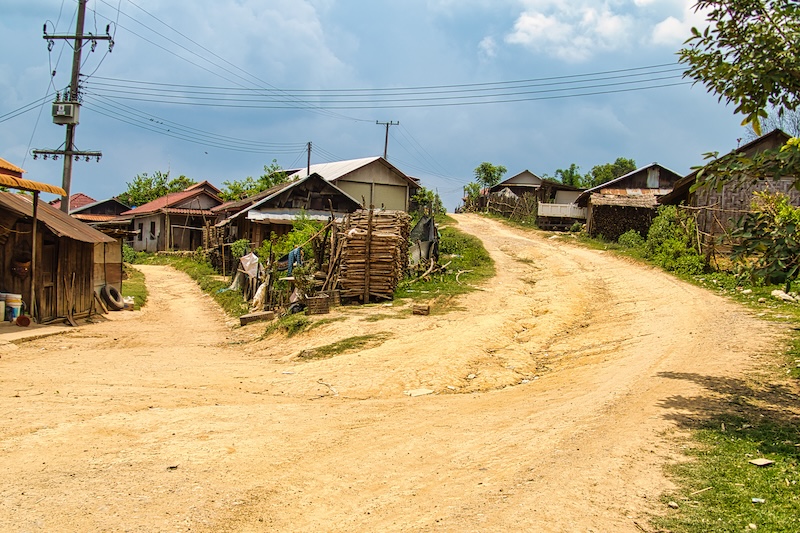 In the remote mountainous regions and river valleys, communities continue to preserve their millennia-old traditions and live in harmony with the surrounding nature. The stories of the different communities transport us back in time, revealing the importance of ties to the land, respect for ancestors, and love for simple living.
The ethnic groups of Laos, such as the Hmong, Khamu, Tai, and many others, have traversed centuries of history and maintained their unique identities despite social changes and external influences. They are vibrant communities with traditions passed down orally. Each community has its own voices, manifested through songs, dances, ceremonies, and stories handed down from generation to generation. Voices of diversity that resonate in the rhythms of drums, the melodies of flutes, and the harmonious intertwining of incomprehensible languages and dialects, sometimes even for the Lao themselves. It is through these voices that we can understand the depth of wisdom and experience that the different communities have to offer, and it is in this ethnic mosaic that the Hmong population stands out, having a long history that has been discussed in more recent times, but also possessing a culture, distinctive customs, and traditional practices that continue to fascinate and attract the attention of those who immerse themselves in their reality.
The Hmong are an ethnic group originating from the mountainous regions of southern China, particularly the provinces of Guizhou, Yunnan, and Sichuan. Over the centuries, the Hmong have migrated towards Vietnam, Thailand, and, of course, Laos, where they represent one of the largest ethnic minorities in the country, with an estimated population of over 450,000 people.
Their migration to Laos dates back to around the 19th century, when the Qing dynasty ruled China and was reportedly responsible for persecutions against the Hmong, causing the political tensions that led to their movement towards the mountainous regions of northern and central Laos.
Traditionally, the Hmong people are farmers dedicated to cultivating crops such as rice, corn, and vegetables, which they grow, not without effort, in the mountainous regions of Southeast Asia where they live.

An elderly Hmong woman
They also have a history of cultivating opium poppies, used to produce heroin and other illegal drugs, which was encouraged by the CIA during the so-called “dirty war,” when the American agency unsuccessfully exploited the Hmong people to fight against the communist forces of the Pathet Lao. The Hmong were trained and equipped by the United States and provided with air support to carry out their operations against the forces opposing the government in power, supported by the Americans, becoming involved in intelligence gathering, counter-insurgency operations, and rescue missions for downed American pilots, in addition to actions aimed at limiting the use of the Ho Chi Minh trail by Vietnamese forces. A role fraught with danger and significant consequences for the Hmong minority, which, in addition to suffering heavy losses, is estimated to have seen up to 30,000 Hmong fighters and civilians lose their lives during the conflict, not to mention the wounded or displaced, who faced harsh persecution and repression from the Laotian government after the war.
New political tensions in their land, therefore, and a new diaspora that scattered them among refugee camps in neighboring Thailand and asylum in France and the United States of America, which, at least this time, did not forget those who had helped them at such a high price.
In the years immediately following the war, the Hmong who remained in Laos faced significant discrimination, including limited access to education and healthcare, a kind of retribution for their position taken during the war, to which they responded with new episodes of violence and terrorist attacks.
 Such as in 2007, a few months before my first visit to Laos, when rebel groups based in the jungles of northern Laos carried out several attacks against government targets, including military outposts and police stations, but also targeted tourists visiting that region. One particular incident was recounted to me during the bus ride from Vientiane to Luang Prabang, when a young Lao, sitting not far from me, attempted to awkwardly hide an AK-47 beneath a worn jacket, awakening, needless to say, my curiosity. When I asked, I was told it was a form of protection for travelers after a group of Hmong rebels had attacked a tourist bus, killing a Chinese citizen and injuring several others.
The Laotian government responded to the rebels’ hostilities with a crackdown that lasted several years, causing loss of life and further suffering to the population until it sought to establish lasting peace with the Hmong people by beginning to address some of the causes that fueled the rebellion.
One of the fundamental steps taken by the Laotian government was the establishment of a program to resettle and integrate Hmong refugees who had fled to Thailand during the conflict. Thanks to this program, tens of thousands of refugees were resettled in Laos and provided with housing, education, and other forms of assistance.
Additionally, the Laotian government has undertaken actions to improve the economic and social conditions of the Hmong people, seeking to promote their identity and protect their cultural heritage. For example, the government has supported the development of Hmong language and culture programs, provided funding for infrastructure projects in villages, and promoted the participation of members of that ethnicity in local government decisions.
Significant efforts have also been made to encourage the Hmong to abandon opium production in the region by providing alternative livelihoods for farmers.
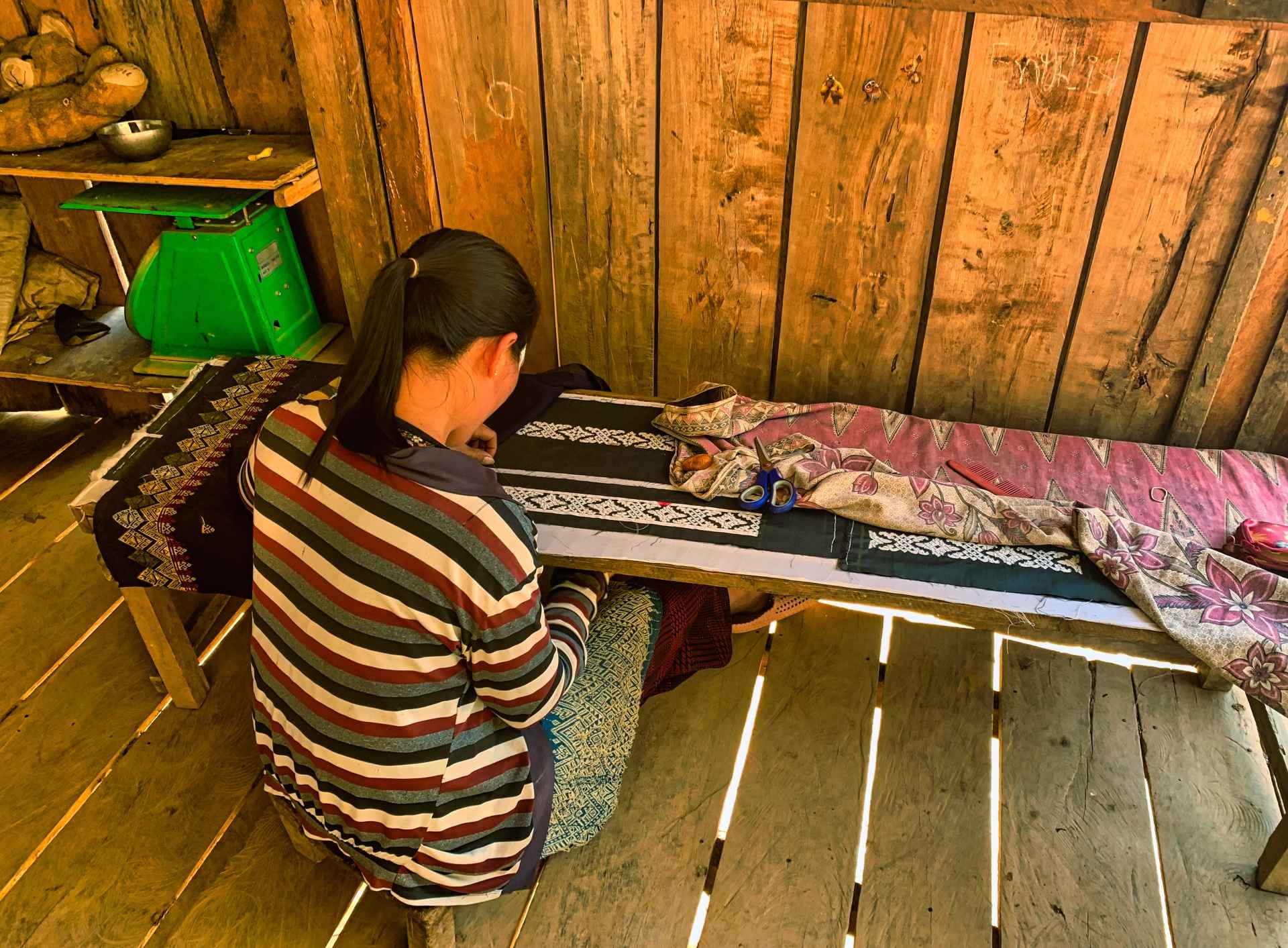
 In addition to agriculture, the Hmong are also traditionally known for their skills in weaving and embroidery. Hmong women have a long tradition of producing intricate textiles and embroideries using techniques passed down from generation to generation, and there has been no Hmong village we visited where we did not find women bent over looms or engaged in embroidery, surrounded by more or less primitive tools and threads or “beads” of all colors.
Yes, the Hmong women… we met some who appeared disheveled, in tattered clothes, but who behind a neglect born from a life of hard work and pregnancies hide a beauty that is unexpected. A simple, almost natural beauty, and then they have that smile that seems to be half of Asia’s secret weapon.
Not all have been able to choose their husbands, nor have all been chosen by their families, because among the Hmong there is also a practice that we could define as “bride kidnapping.”
I had already heard about it in the mountainous tribal regions of Vietnam in the far north, where it was common to abduct a woman solely for the purpose of marrying her.
In her home, in a village we visited, a 23-year-old girl, currently engaged in weaving with a newborn sleeping on a hammock shielded from the world’s eyes by the dim light, calmly told us how, following her “kidnapping” by the man who would become her husband, she had been living this new life for about a year, in a village unknown to her and among equally unknown people, and to a specific question, she replied that she was happy with her new situation.
I certainly did not expect that she would confess the opposite to strangers.
Regardless of the positive or negative effects on women, it’s important to note that this practice is illegal and that the Laotian government has recently made efforts to educate young Hmong about the negative consequences of this practice and promote safer and consensual ways to find a partner.
 We focused only on the Hmong because they provided us with some insights and curiosities, but every ethnic group has stories to tell, interwoven with moments of joy, pain, and resilience. Every story that emerges from the ethnic communities of Laos is a precious piece in the cultural mosaic of the country. Stories that offer a window into both material poverty and the cultural richness and diversity of Laos, allowing us to immerse ourselves in the social and human context of different communities. And during this journey we undertook, we had the opportunity to meet these simple people, we sensed the smell of dignified poverty and the warmth of smiles, the weight of daily struggles, and the sense of belonging; we listened attentively to the stories, tales, and superstitions of a country with a thousand faces that tries to move toward its future, difficult to reach but inevitable to pursue.
The Laotian government has adopted policies to protect and promote the cultural diversity of the country by recognizing citizenship to minority groups and guaranteeing them, as citizens, the same rights and protections provided by law. However, there are still signs of discrimination, especially in access to economic opportunities, but above all, there are still challenges and difficulties that ethnic minorities must face. For example, many ethnic groups have been forced to leave their ancestral lands to make way for large development projects, such as the construction of hydroelectric dams.
Cultural intertwining, contradictions, and the poverty that seems to resist acceptance make Laos, through encounters with the various ethnic groups that comprise it, a fascinating place to explore and understand, teaching us the importance of preserving and valuing cultural diversity here as well as everywhere else in the world.
Photos by Guglielmo Zanchi (Pluto)


