
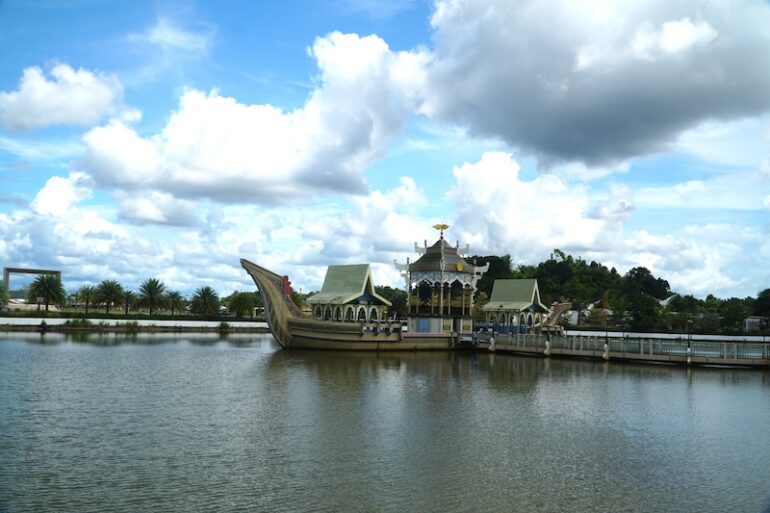
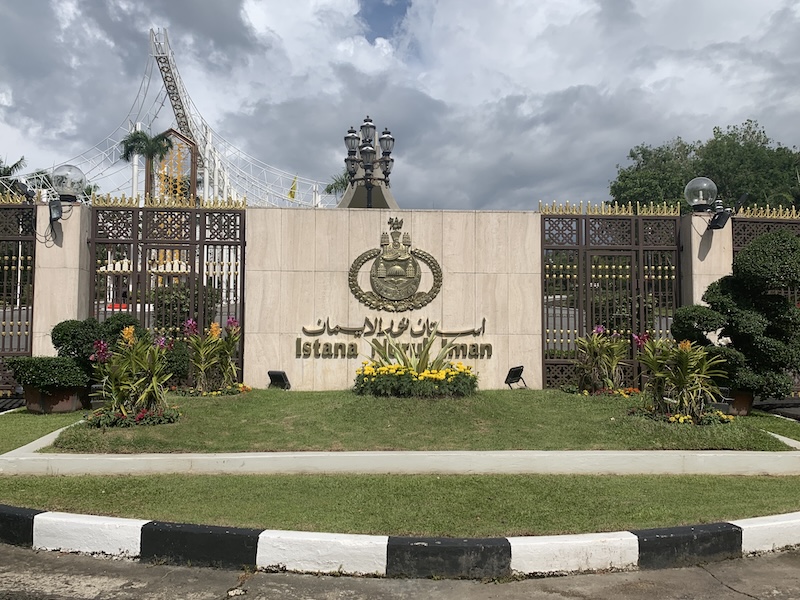
Istana Nurul Iman, the official residence of the Sultan of Brunei, located in the capital city of Bandar Seri Begawan
“Brunei makes me think of Cinderella,” I said out of the blue to the driver as he steered the car across a bridge whose name — Sultan Haji Omar Ali Saifuddien — seemed almost as long as its 30-kilometer span. He glanced at me through the rearview mirror, puzzled, waiting for an explanation. And so I did explain myself — not only to satisfy his curiosity but also to assure him I wasn’t entirely mad.
Yes, Negara Brunei Darussalam, or “the State of Brunei, Abode of Peace,” truly reminds me of the fairy-tale heroine from the Brothers Grimm. A humble figure, suddenly transformed by fortune into royalty, yet somehow retaining a quiet grace, a certain gentleness beneath gold and silk.
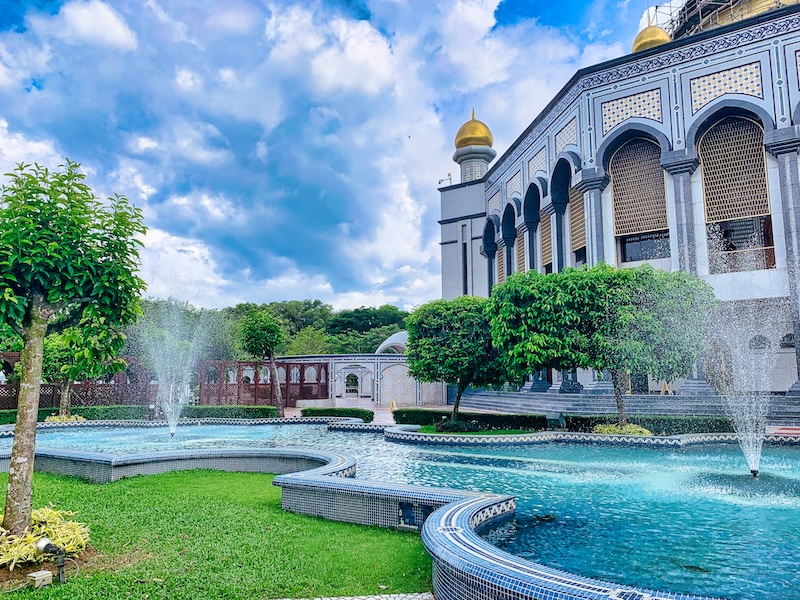
Travel Brunei Asia
Brunei is like Cinderella after the ball. It has everything: immense wealth drawn from oil and gas, pristine roads, palaces that shimmer over the water, and a capital city — Bandar Seri Begawan — that feels more like a well-kept secret than a display of power. And yet, despite its sudden rise, it doesn’t boast. There’s no clamor, no flashy excess. Skyscrapers are rare, shopping malls modest, luxury cars parked neatly, as if no one wants to disturb its peace.
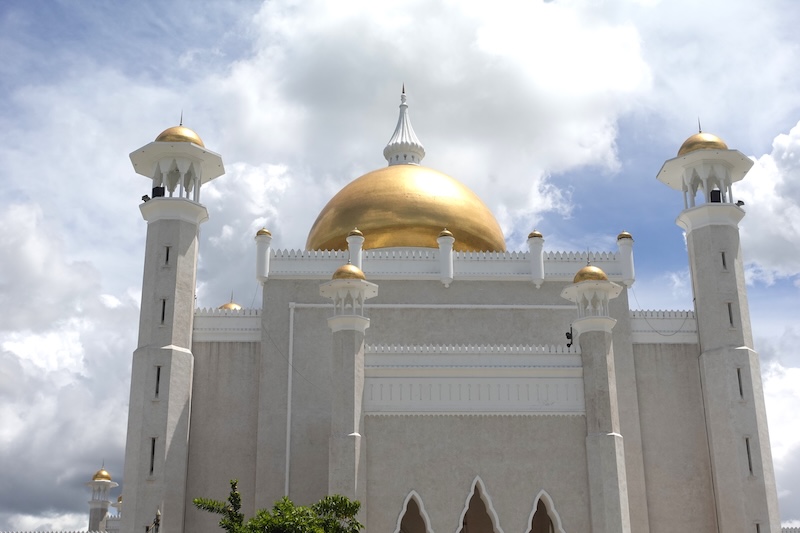
The Omar Ali Saifuddien Mosque
Walking through the city, you feel you’ve stepped into a place that moves quietly. The Omar Ali Saifuddien Mosque, with its golden domes and lit minarets, rises majestically beside the river, yet it doesn’t dominate — it belongs. The Brunei River flows slowly, lined with stilt houses where life is lived much as it did decades ago. In Kampong Ayer, the “Water Village,” thousands live on wooden homes connected by walkways, with schools, mosques, and even floating police stations. It’s a world apart, yet central to Brunei’s identity.
Then there’s the monarchy. This isn’t a constitutional figurehead; here, Sultan Haji Hassanal Bolkiah has ruled since 1967, one of the longest-reigning monarchs in the world. Once listed among the richest men on Earth, his presence is everywhere — on currency, in schools, in official portraits — but never in a way that feels oppressive.
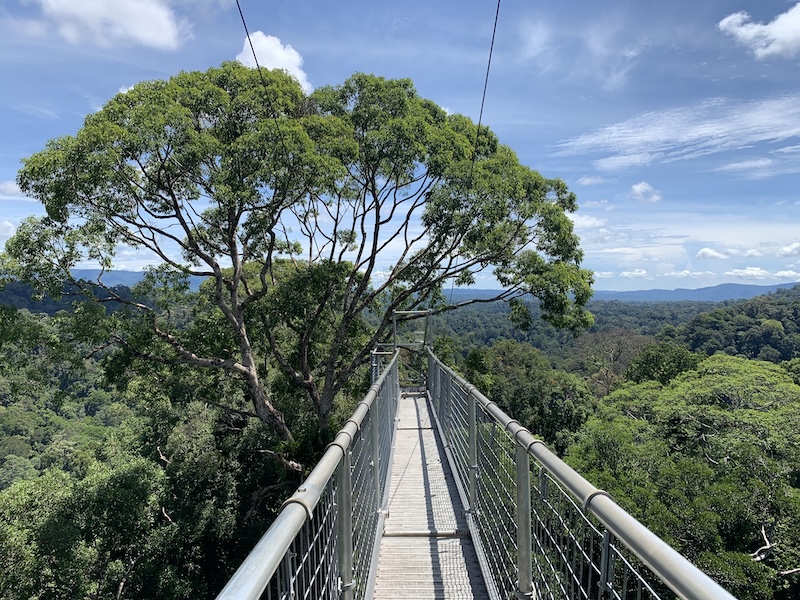
a walkway high in the canopy of the rainforest in Ulu Temburong National Park, Brunei’s first national park.
It’s more like the calm gaze of a father watching over a family shielded from the noise of the outside world.
In 2014, Brunei introduced Sharia law as part of its legal system, drawing international criticism. Yet, walking its streets, you don’t feel repression. You feel instead a deliberate balance — between modernity and tradition, between global openness and cultural preservation. Women wear headscarves, alcohol is banned, nightlife is nearly absent. But there’s no sense of sadness. Instead, there’s tranquility — a feeling that time here isn’t dictated by consumption, but by prayer, family, and community rhythms.

Kampong Ayer
The driver remains silent as we cross the final stretch of the bridge. We are now approaching the district of Temburong, an exclave of the sultanate enclosed within Malaysia’s borders and today connected to the rest of Brunei by the Temburong Bridge. After a long pause, he said, “I had never thought of it that way… I like it.”
“That’s the beauty of Brunei,” I reply. “It is as wealthy as a prince, yet it continues to live in simplicity. It’s like Cinderella who, after the ball, returned to her humble home; and when the prince found her again and made her a queen, I like to think she never wanted to forget who she once was.”
As the sun began to set, gilding the surface of the strait, the bridge stretched ahead like a thread between two worlds: abundance and restraint. And Brunei, balanced upon it, walks gently forward — as if knowing that true elegance isn’t in having everything, but in carrying it with grace.


