
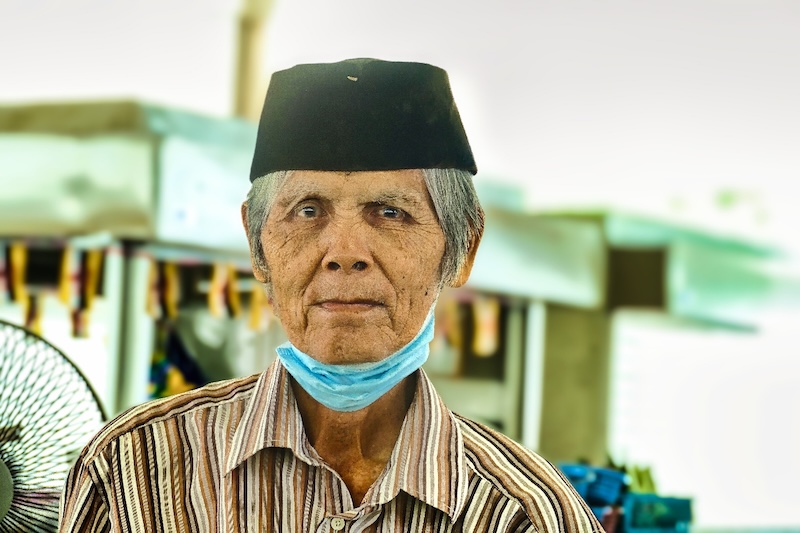
Chinese guy a the market
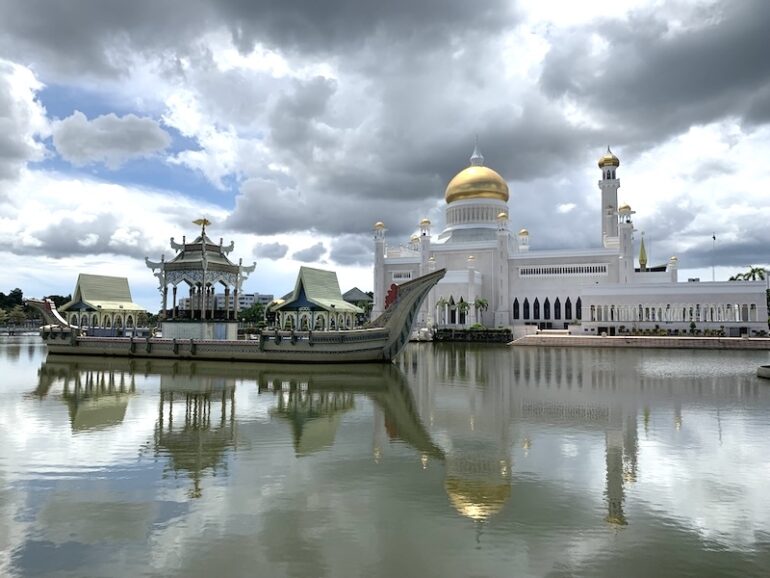
When you think of Brunei, what usually comes to mind are images of grandeur: golden palaces, glittering mosques, one of the richest sultans in the world. Yet what I couldn’t imagine, what no travel guide ever tells you, is that the real surprise of Brunei is not in its architecture but in the simplicity of its people.
It may sound cliché, I know. After every trip, people say: “We met wonderful people!” But after years of traveling, rarely have I felt so moved. Here, there is no forced smile, no politeness worn like a duty, as you sometimes find in places overwhelmed by mass tourism.
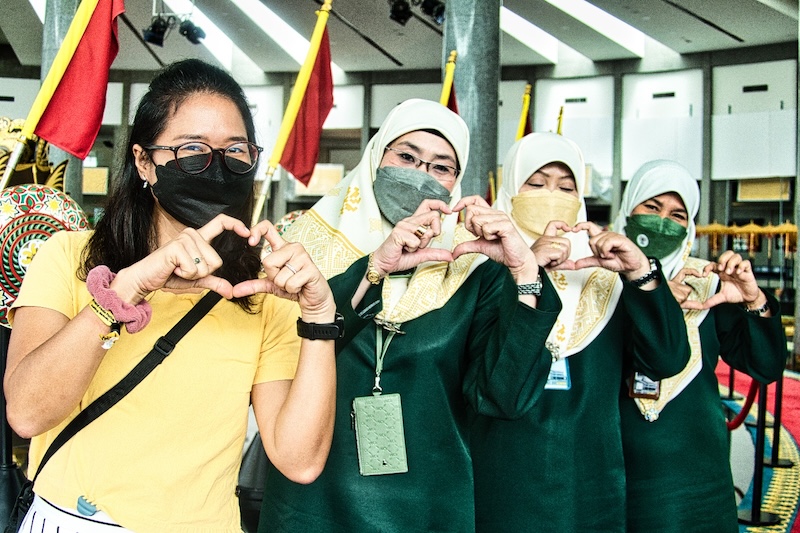
Three ladies at the Royal Regalia Museum
No. Here, the smile is genuine. Kindness is spontaneous. Perhaps it is precisely because mass tourism hasn’t arrived yet, because Brunei hasn’t “sold itself” to the world, that such authenticity survives.
The first person I want to remember is Darren, the manager of the Badi’ah Hotel. Of Chinese origins but deeply rooted in Brunei, he hosted us for four nights, offering us a more than generous price. But it wasn’t just a business exchange. He went beyond that.
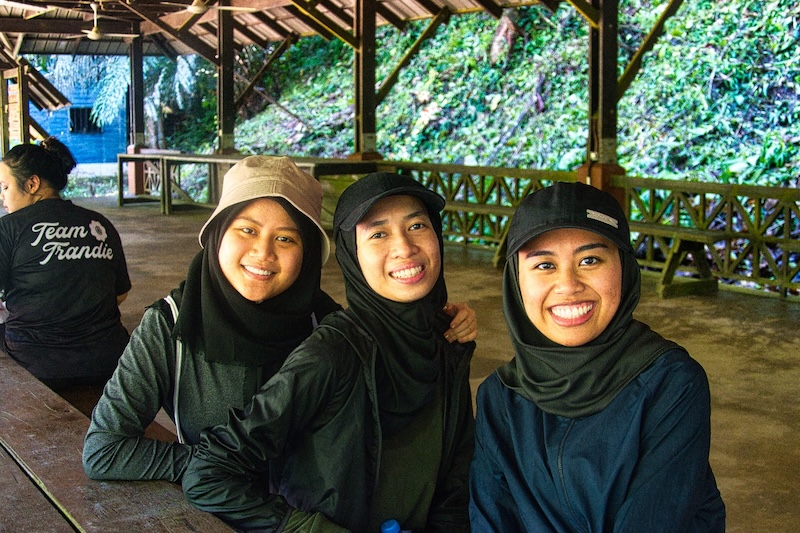
3 girls we met prior to our jungle tour
He arranged our tours, personally drove us to the starting point of an excursion difficult to find, and made sure every detail was perfect. Not like a professional on duty, but like a friend. And when I say friend, I don’t exaggerate: there was genuine care, almost affection, in his attitude.
Then there was Mohammed, our city tour driver. He speaks little, smiles even less, but his kindness shows in his gestures: patient, precise, respectful. He drives calmly, obeys the rules, and never rushes. And in a world where hurry is the norm, such slowness feels like respect. Even his English, though simple, was clear and helpful. Not a talker, but a man who knows what he’s doing.
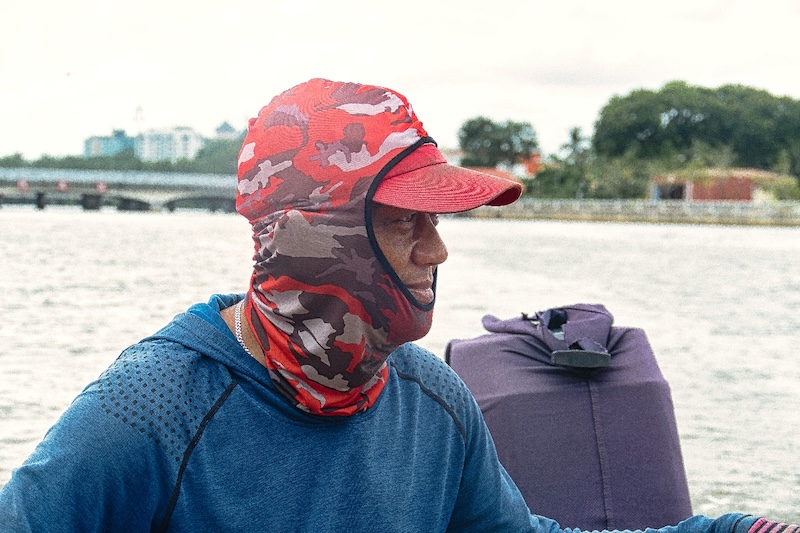
Kampong Ayer boatman
And what about the boatman who took us through Kampong Ayer, the village on stilts, in search of proboscis monkeys? I don’t remember his name, but I will never forget him. With his modest boat, he guided us through canals, shallow waters, and tiny rapids. He spoke enthusiastically about his country, wanted to know who we were, what we did. And when we finally saw the monkeys — yes, we saw and photographed them — his pride was genuine. A rare person: polite, curious, sincere. The kind you wish to meet again on your next trip.
Then came another unexpected pair: the driver and guide who took us into the jungle. He, far more talkative than the guide, spoke non-stop for an hour and a half, explaining every detail of the journey.
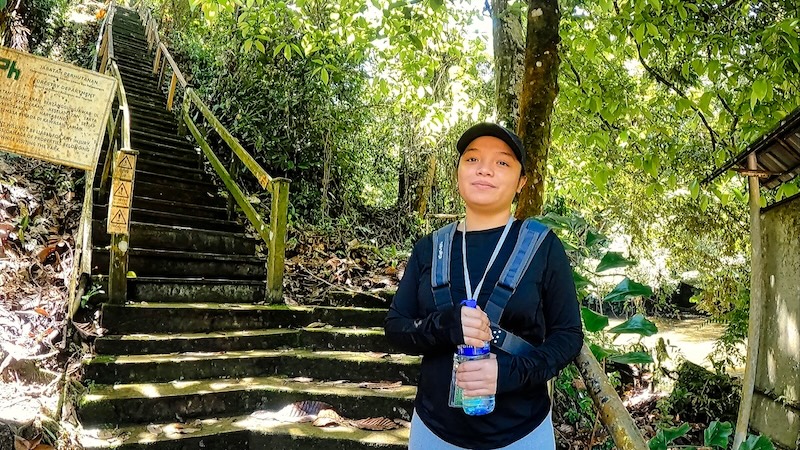
Mira, our jungle guide in Brunei
She, Margy — or rather Margelyn, a Filipina, administrative director of the tour operator, not just a guide — was young, professional, impeccable. And him? Perhaps the owner of the company himself, stepping in because, in a country where tourism is still slow, there simply isn’t enough staff. Two managers working as driver and guide, smiling and flawless in their knowledge. And yes, when you joke with them, they laugh because they understand, not because they must.
But if I must choose the person who struck me the most, it would be Mira. Nineteen years old, from the Iban people — the ancient Dayak — freshly graduated as a guide. Confident, intelligent, with impeccable English. She led us into the jungle on a “long boat” as narrow as a nutshell, steered with skill by Jimmy, another local, who navigated the shallow rocky riverbed with the mastery of someone who does it daily.
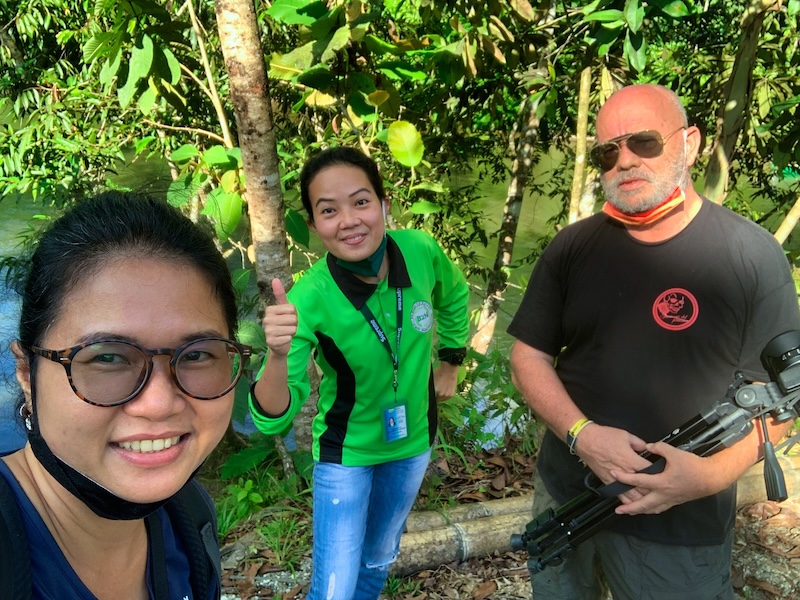
Alis, Pluto and the Iban guide Margy
Then came the trek, the suspension bridge… I, with my fear of heights, trembled, making the rope bridge tremble too. But Mira accompanied me calmly, without rush, with a reassuring tone. And I made it. Perhaps not a great triumph, but at 62 years old, it felt like a small victory. While she and Alice continued to the canopy walk, I stayed behind to rest. And above all, to reflect.
And then there were others: Somboon, the Thai cook from Korat working here, who after a week without pasta promised me spaghetti al dente “just the way you like them.” A simple gesture, but full of humanity, for someone like me who is so sensitive to the pleasures of the table. Or the three ladies at the Royal Regalia Museum, who stood up for a photo so as not to look like they were on break. Or the Chinese man at the market, proud of living in a country where, as he said, “the government helps the people.” Or the three smiling girls who greeted me with a heartfelt “Welcome to Brunei,” without pretense.
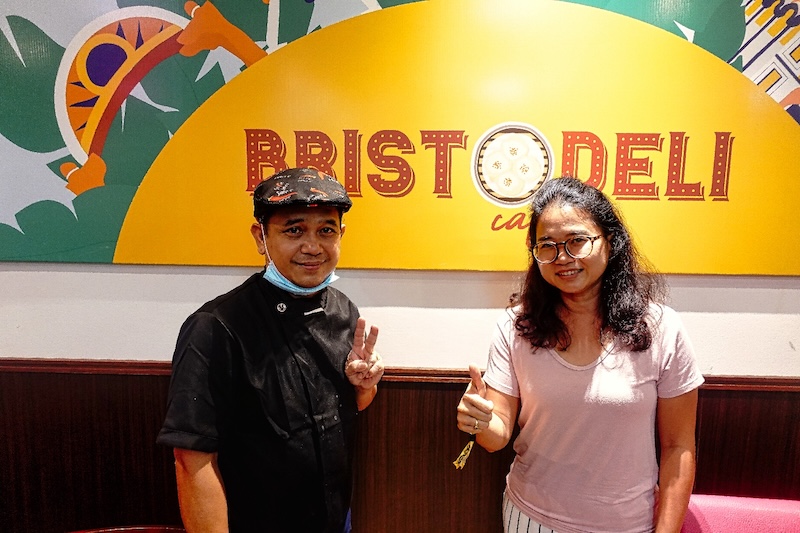
Sonboon the Thai chef
These people, even those with whom you exchange only a few words, tell you more about a country than a thousand speeches. They show you a Brunei that is not only sharia, monarchy, and oil. It’s a place where kindness is not an exception but the norm. Where hospitality is not a service, but a way of being.
And maybe, in the end, this is the Brunei worth knowing: not the one of golden palaces, but the one of sincere eyes, genuine smiles, and open hands. A country that, despite everything, leaves you with a lighter heart.
To learn more about planning your trip and experiencing authentic Brunei hospitality, visit the official Brunei Tourism website.
Photos by Guglielmo Zanchi (Pluto)
Watch Fantasia Asia video on Brunei HERE:


