

Teahouse trekking is a unique style of hiking that spans multiple days, especially in the Himalayas of Nepal. Travelers stay in established lodges run by families, instead of camping. As such, this system provides trekkers with basic accommodation along with meals and cultural immersion. Trekkers traversing high-altitude landscapes prefer this model of logistics, as they can enjoy the fun of trekking without the burden of carrying heavy camping gear, food supplies, or cooking equipment.
What’s a Teahouse?
Imagine a rustic but functional shelter located along the trekking trails in Nepal. A teahouse is designed to sustain life in the harsh mountain environments of Nepal. Usually made of stone or concrete, these houses typically have tin roofing. In a typical teahouse, you can expect to find the dining hall on the ground floor and the bedrooms on the first floor. The bedrooms usually have twin beds, each one with a thin mattress and a blanket.
Inside a teahouse, look forward to smelling the scent of wood smoke or dried yak dung used as fuel. You can hear the sound of pressure cookers whistling in the kitchen. Add to that the mountain chill that settles in once the sun drops behind the ridges. Overall, teahouses offer a raw and communal existence, which is a direct window into the lives of the mountain inhabitants. Moreover, you do not stay away from the community, as you would do if staying in a tent. Instead, a teahouse forces interaction — with the hosts, with porters, and with fellow travelers from around the globe.
The Daily Rhythm

Teahouses in mountainous Nepal
During the trek on the trails of Nepal — be it the popular Everest Base Camp Trek or the remote Manaslu Circuit Trek — trekkers must follow a strict schedule. And the daylight and temperature dictate this. The day usually begins early, around 6:00 am, in the teahouse, where you have your breakfast. It is a caloric necessity rather than a leisure activity, and most trekkers depart the teahouse between 7:00 am and 8:00 am.
After walking for about 4-5 hours, you reach the next stop for the day — another teahouse along the trail — for lunch. This usually involves a one-hour stop at a lodge. They serve freshly cooked meals, usually rice or noodles, that provide essential rest and fuel for acclimatization. On average, trekkers typically reach their destination — yet another teahouse — by around 4:00 pm during the trek. It is where they spend the overnight, evenings in the dining hall while waiting for dinner, before going to bed between 8:00 pm and 9:00 pm.
Dining Hall Dynamics
The dining hall is the highlight of any teahouse, primarily because it is the only warm room in the building. A central stove keeps the space warm while guests wait for dinner. The teahouse menus often list Western options like pizza or pasta as available items. But experienced trekkers understand the limitations of cooking at high altitude. That means the lower boiling point of water here often results in inconsistent textures for dishes that are based on dough.
Therefore, the most practical choice in such teahouses is dal bhat (steamed rice, lentil soup, and vegetable curry). It is fresh, locally sourced, and traditionally served with refills. This elaborate set of dishes is important for trekkers to maintain the energy levels required during the trek. Meanwhile, many teahouse kitchens also serve garlic soup. It is a traditional remedy that the locals believe aids in altitude acclimatization.
The Economics of Altitude
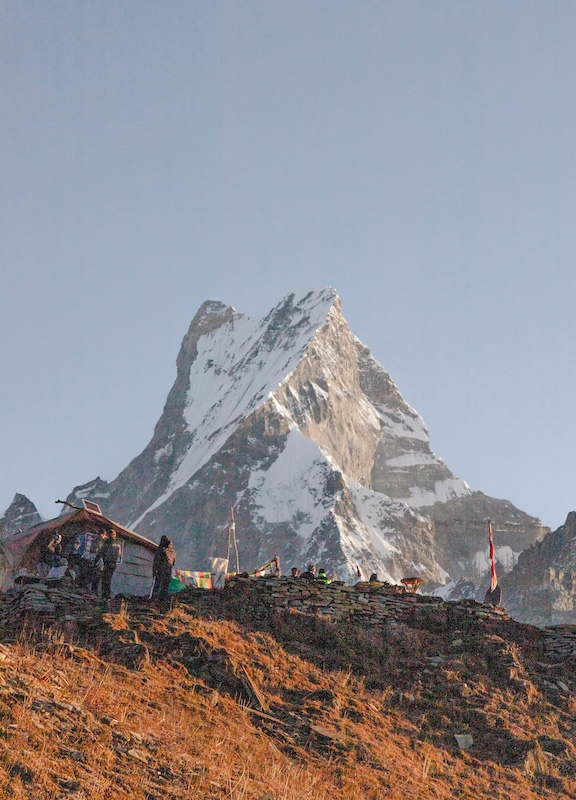
Nepal teahouse trekking
Travelers often misunderstand the pricing structure of teahouses located in the high mountains. Costs of food and accommodation rise with elevation: a bottle of water that costs Rs 25 in Kathmandu may cost Rs 400 at 4,000 meters. This is due to the difficult roads and the cost of transport. It is important to remember that this is not price gouging. You should know that either animals like mules and yaks, or porters, transport every consumable item in higher altitudes along the trekking trails of Nepal. This can be anything from rice to gas cylinders. Therefore, the higher the lodge, the higher the transportation cost.
This economic reality applies to electricity as well. You often need to pay an extra fee for charging devices at teahouses in higher elevations. It may even incur an hourly fee because power is generated solely by local solar infrastructure in this part of the world.
Accommodation Standards
Do not expect luxury during the teahouse trekking in Nepal, as lodging here prioritizes utility. Rooms are usually small and unheated. They are constructed with thin plywood walls and give an impression of cubicles. Therefore, do not expect soundproof rooms in the teahouses as the insulation is minimal here.
Unlike the communal dining halls, the bedrooms of these teahouses are unheated. As a result, indoor temperatures can frequently drop below freezing at night. A sleeping bag rated for -10°C is standard gear that every trekker must carry when on a high-altitude teahouse trek in Nepal. This is essential to stay warm and prevent altitude sickness, as it is common to wake up to condensation frozen on the interior of the windows.
Operational Etiquette
The culture of Nepal’s teahouses relies on a specific set of unwritten rules to function smoothly. One of them is ordering dinner on time. Dinner orders should be placed immediately upon arrival. That is because the kitchens operate with limited burners, and batch cooking is essential for efficiency. Meanwhile, it is not wise to consume outside food in the dining hall. Lodge owners operate on slim margins for room rates, and they rely on food sales for their primary income.
Authentic Experience
The definition of teahouse trekking has been evolving over the years. For instance, the Everest Base Camp (EBC) trek route has seen rapid commercialization. Therefore, you can expect the teahouses there to be comfortable here. Nonetheless, the presence of attached bathrooms, bakeries, and luxury amenities can create a buffer between the trekker and the local culture. But the case is different for remote journeys, like the 12 Days Manaslu Circuit Trek. Currently, Manaslu represents the gold standard for those seeking authenticity. It retains the traditional family-run atmosphere where owners are directly involved in hospitality. Most importantly, it offers a balance of essential infrastructure (WiFi, varied menus) without the overcrowding and over-commercialization found elsewhere.
Infrastructure and Hygiene
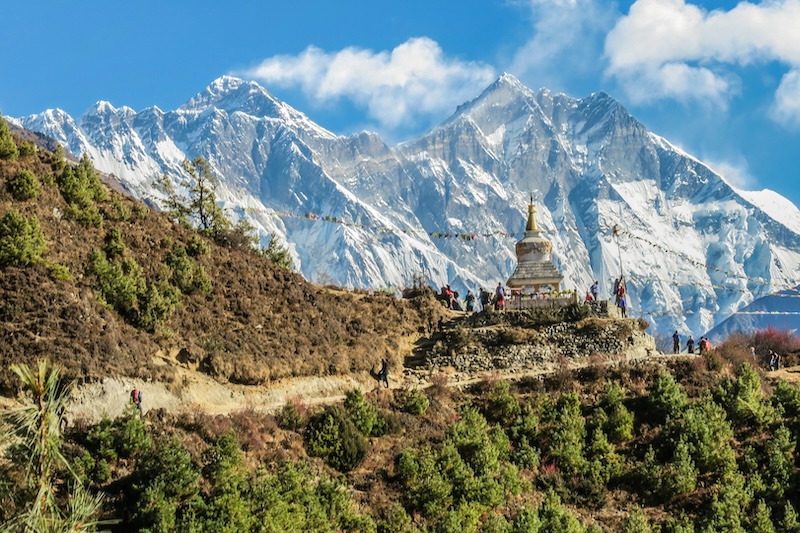
Stupa, namche Bazaar, Nepal
Facilities available in the teahouses vary by altitude. You can expect Western-style toilets at lower elevations. The squat toilet becomes standard higher up. Though physically demanding for some, they are often more sanitary in freezing conditions. Likewise, hot water is a luxury in these teahouses. The water is heated using either gas geysers or solar power. But it is not always readily available. As such, the bucket shower remains the most reliable method at high altitude. You get a bucket of heated water, and you need to shower by mixing it with cold water.
Final Words
Teahouse trekking is not merely a method of travel. It is an immersive engagement with the environment and the people found along the trekking trails of Nepal. But being part of it means you need to learn adaptability. Internet connections may fail, and comforts are limited. However, the reward is the opportunity to experience the Himalayas from the inside, centered around a warm stove in a remote valley. It remains the most authentic way to experience the high mountains.
If teahouse trekking is not your thing, yet you wish to witness the Himalayas of Nepal, then opt for the Everest Base Camp Helicopter Tour. This is also an authentic experience, without the need to trek. All you need to do is fly in a chopper, and you can see the Himalayan giants in a couple of hours.


