
A Lesser-Known Market
If this isn’t your first time in Bangkok, you’ve probably already visited the city’s most famous landmarks, such as the Royal Palace, Lumphini Park, and Jim Thompson‘s House; you’ve also likely taken the Chao Phraya River ferry and shopped at the modern malls downtown. You may have visited Chatuchak Market, the biggest in town, and enjoyed a drink at one of the premium rooftop bars such as Vertigo, Lebua, or Marriott The Surawongse, while admiring stunning views of the city at night.
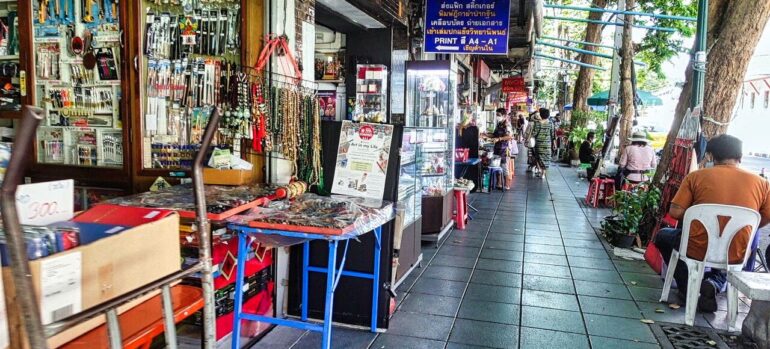
However, if you still have some time to spend in the city and want to see something more unusual that mostly draws locals, it’s worth learning about one of Bangkok’s lesser-known markets. I doubt you’ve ever heard of it, despite its location in a popular tourist zone, close to the Royal Palace and Wat Pho. It’s called The Amulet Market.
Thailand is (primarily) a Buddhist country, and amulets play an important role in its culture and religion. The Amulet Market is a haven for Buddhists, monks, and collectors alike, gathering in this open bazaar in search of everything from pricey antiques to everyday talismans that can be worn around the neck for good luck.
Directions
 The Amulet Market is located on Maharaj Road, behind Wat Mahathat Temple, not far from the Grand Palace and the Chao Phraya riverbanks. Ferries, such as the Chao Phraya Express, stop at Chang Pier, Maharaj Pier, and Phra Chan Tai Pier, from where it’s only a short walk to reach the bustling market.
Some stalls are along the main road (Maharaj Road), but the most interesting part of the market is down an alley labeled “Trok Maha That,” so keep your eyes peeled for the sign and turn down the alley.
The Amulet Market is also marked on Google Maps, so once you’ve arrived in the area, you can easily ask your phone for directions.
If you’re traveling around Bangkok by BTS, get off at BTS National Stadium, take Exit 2, then walk to the bus stop for bus 47. The Royal Palace is about a 30-minute drive away.
Amulets and Buddha Sculptures
 As I mentioned earlier, the Amulet Market is near the Royal Palace, in one of Bangkok’s most visited areas. However, it took me several trips and years before I finally made it there—previously, I always lacked the time or couldn’t locate it.
I’m certain I passed down that particular soi (narrow lane) at least once before, but the market must have been closed that day.
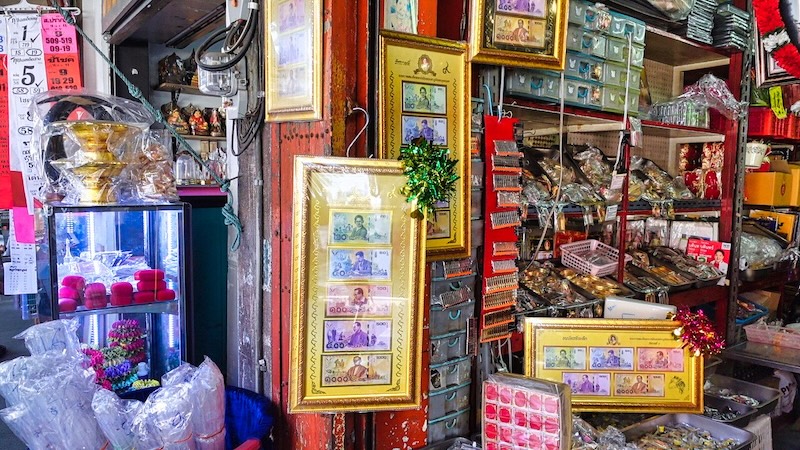
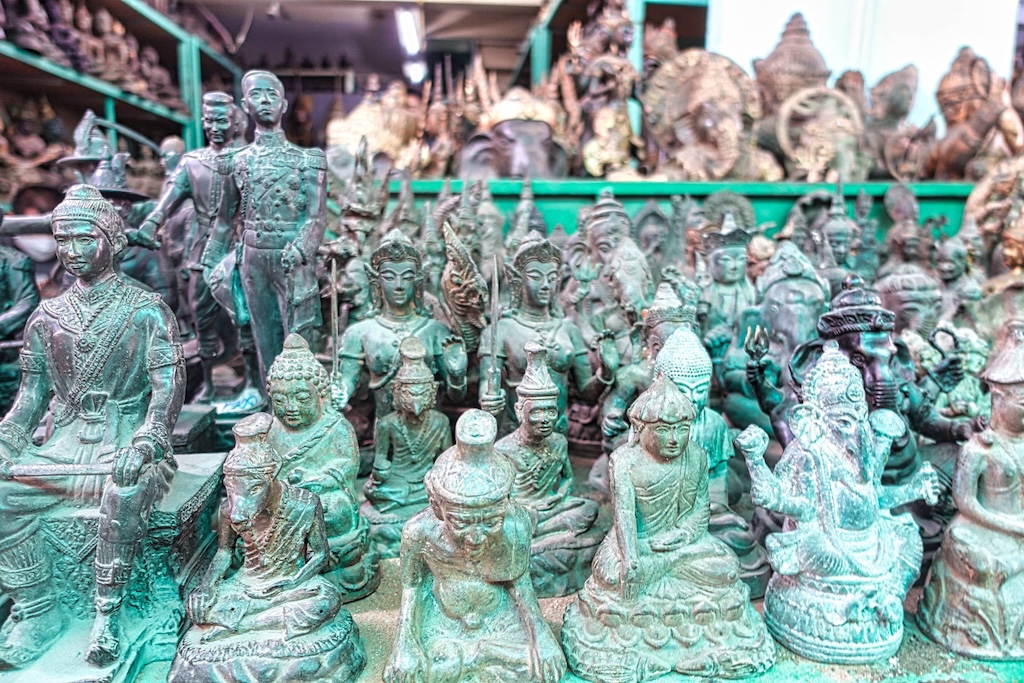
Once you find the right alley, however, it’s hard to miss: numerous kiosks sell thousands of precious amulets, “charged” with enchantments and prayers for protection, as well as hundreds of Buddhist and Hindu figurines, sculptures, and other religious artifacts.
It’s a neighborhood market that draws local citizens shopping for their collections and daily rituals, as well as monks buying for their temples. It has all the charm and enchantment you could wish for in a foreign market. However, not all vendors are pleased with tourists taking photos and videos, so you’ll see many “No Photography” signs and some unfriendly shopkeepers.
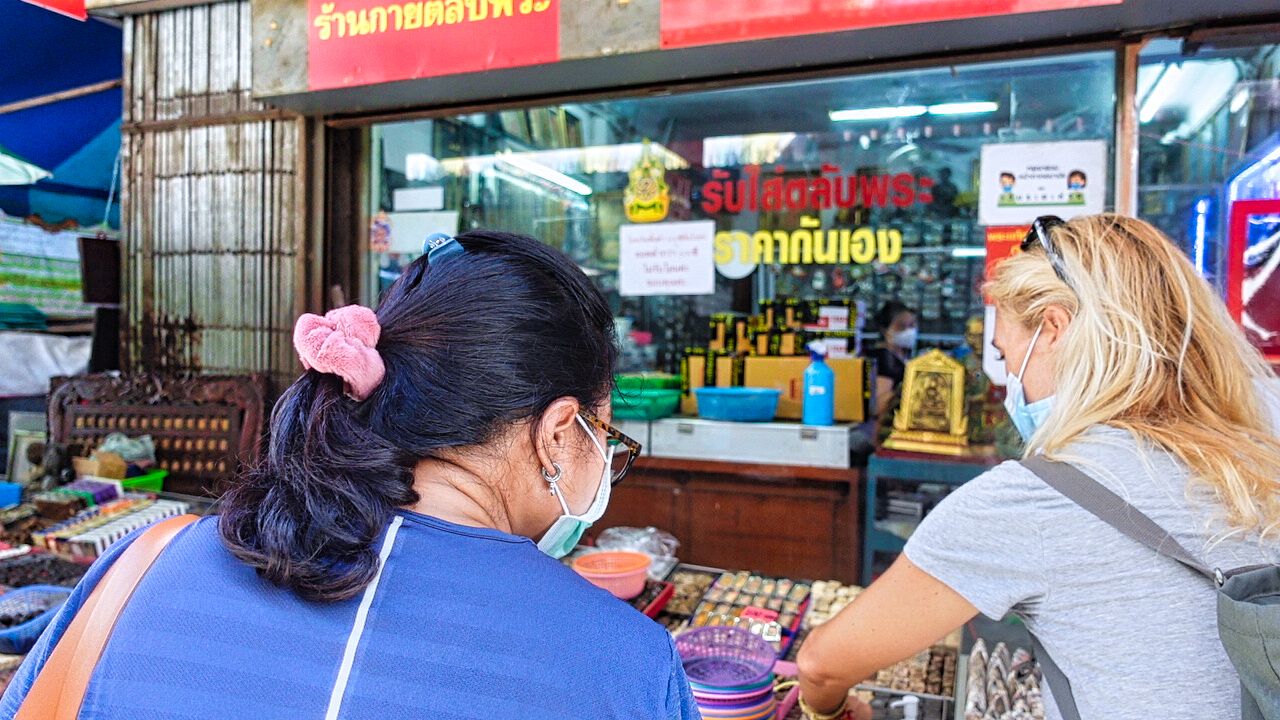
Fortunately, most salespeople are patient and polite; a few can even provide information about their amulets in English. The merchant I approached first was delighted by my interest and questions, and we ended up talking for a while. I purchased a couple of small amulets for Buddhist friends and family.
Different Degrees of Protection
From that friendly vendor, I learned that the power of each amulet varies: some are believed to ward off spiritual demons, ghosts, and imbalance; others are supposed to protect owners from physical threats such as road accidents, gunfire, and more. That’s why every visitor to the Amulet Market has a specific goal in mind—they’re hoping to find a talisman that will bring them exactly what they seek, whether it’s a blessing for their business or new home, a long-desired child, or the winning lottery ticket.
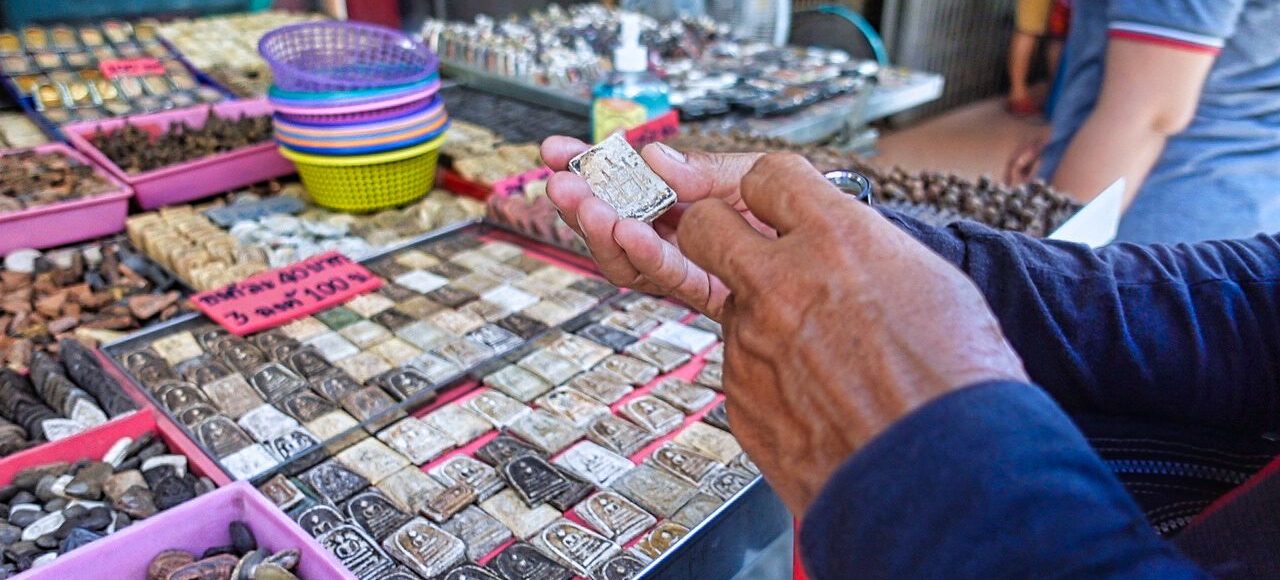
Bangkok Amulet Market
Amulets can be in the shape of medallions, Buddha statuettes, or other Hindu or Buddhist deities. They can be made of various materials, including wood, clay, stone, brass, or even human body parts (such as hair or bones of a deceased monk). It’s best not to haggle too much on the price unless you’re quite certain of what you’re buying. Some amulets date back centuries and are extremely valuable; most, however, are mass-produced, and distinguishing the authentic from the fake requires a trained eye.
My suggestion is to pay the price you’re willing to pay for a souvenir: it can range from as little as 10 Thai baht to several thousand, depending on how much faith or money you have! Just observing customers consulting merchants to identify the talisman that will work its magic and grant their wishes makes the Amulet Market a fascinating place to visit—even if you’re not planning to buy any talismans to bring home.
Photos by Guglielmo Zanchi (Pluto)


