
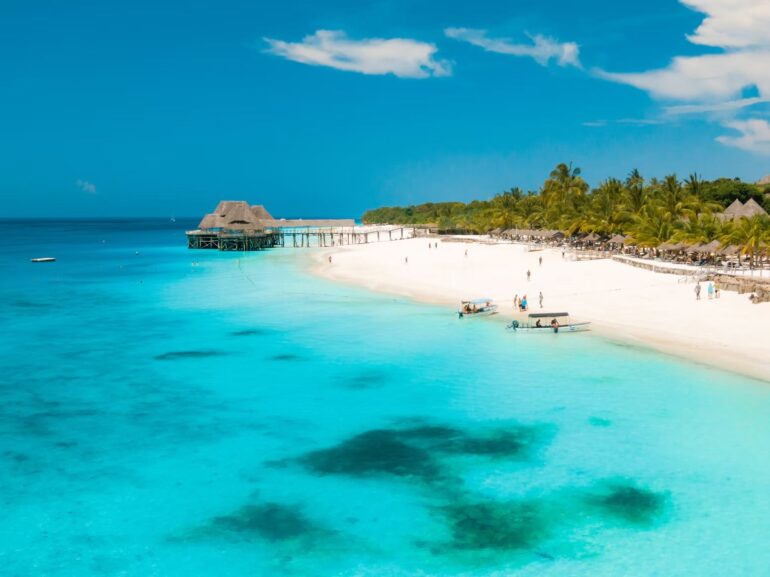
For travellers based in Asia, the Indian Ocean often means the Maldives, Sri Lanka, or the Andaman coast of Thailand. These are excellent destinations, but they share a certain predictability—the flight routes, the resort formats, the crowds. Zanzibar offers something different. The archipelago sits off the coast of Tanzania, blending Swahili, Arab, Indian, and European influences into a culture that feels distinct from anything in Southeast Asia. The beaches are wide and tidal, the water warm, and the pace of life on the northeast coast is genuinely unhurried. It is not the easiest place to reach from Asia, but that is part of its appeal.
Getting There: Routes and Realities

Snorkeling in Zanzibar
There are no direct flights from major Asian hubs to Zanzibar. Travellers from Singapore, Hong Kong, or India will connect through a Gulf or African hub. From Singapore, Qatar Airways offers a one-stop routing via Doha with a total journey of around eighteen hours, while Ethiopian Airlines connects through Addis Ababa in a similar timeframe. Emirates flies from Singapore via Dubai, and Kenya Airways offers connections through Nairobi, which can be useful if you are combining Zanzibar with a safari on the mainland.
For Indian travellers, the routing options are comparable. Mumbai and Delhi have connections through Dubai, Doha, or Addis Ababa, with no nonstop service currently published. Flight times from India are shorter than from East Asia, typically around eight to ten hours including the layover.
Visa formalities are straightforward for most Asian passport holders. Tanzania operates an e-visa system, and the Ordinary Tourist Visa costs USD 50 with a validity of up to 90 days. Applications are submitted through the official immigration portal, and approval typically takes a few working days. One practical detail that catches some travellers: yellow fever vaccination certificates are required for entry if you are arriving from or transiting through a country with risk of transmission, and this is checked at the port of entry. Carry a printed copy of your e-visa alongside your passport.
When to Go: Seasons and Tides
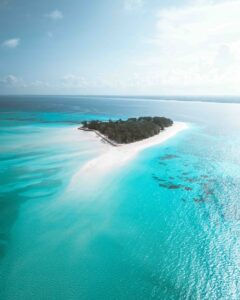
Mnemba Atoll
Zanzibar has two main dry seasons. The long dry period runs from June to October, when humidity is lower and the southeast trade winds (known locally as kusi) bring a steady breeze. The short dry season falls between December and February, hotter and more humid but still largely rain-free. The long rains arrive in March and last through May, which is best avoided unless you are seeking low prices and do not mind daily downpours.
The more important consideration for the east coast is the tide. Zanzibar’s eastern shoreline has a significant tidal range, and at low tide the sea retreats hundreds of metres, exposing sand flats and making swimming impractical for several hours each day. This is not a flaw—it is a rhythm you learn to work with. Plan your swims around the tide table, and use the low-tide hours for walks along the exposed reef or for excursions inland. The northeast coast around Matemwe and Muyuni faces the Mnemba Atoll, and the water here is generally clearer than further south, though the tidal pattern remains the same.
What to Do: Beyond the Beach
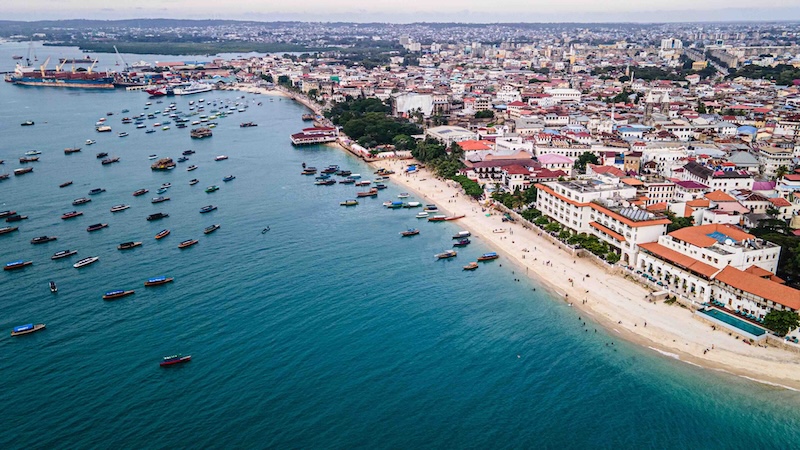
Stunning aerial view of Zanzibar Stone Town’s coastline
The Mnemba Atoll is the primary draw for anyone interested in marine life. Snorkelling and diving trips depart from Matemwe and Muyuni, taking visitors to protected reefs with healthy coral gardens and a reasonable chance of encountering dolphins, sea turtles, and reef fish. It is worth noting that the atoll itself is a private conservancy, and landing on the island is not permitted. The experience is entirely in the water. Boat operators vary in quality, and the dolphin-watching component can feel crowded when multiple boats converge on the same pod; choosing a smaller, locally operated boat is a practical way to reduce your impact.

Vibrant peppers drying on cloth
Stone Town, the historic core of Zanzibar City and a UNESCO World Heritage Site, deserves at least half a day. The narrow alleys, carved wooden doors, and the old fort offer a counterpoint to the beach experience. Spice farm tours in the island’s interior are another staple, and while they can feel touristy, the guides are often knowledgeable and the sensory experience of tasting fresh vanilla, cinnamon, and cloves straight from the plant is genuinely memorable.
One detail that guidebooks rarely mention: the northeast coast faces east, which means sunrise over the Indian Ocean is the daily spectacle, not sunset. Set an alarm at least once. The light at dawn, with Mnemba Island silhouetted on the horizon, is the kind of thing that stays with you longer than any resort amenity.
Where to Stay: The Mora Zanzibar
On the quiet stretch of Muyuni Beach in Matemwe, The Mora Zanzibar offers a relaxed luxury base that suits the rhythm of the northeast coast. This luxury beach hotel in Zanzibar is low-key rather than flashy, with sandy pathways, a spacious pool area facing Mnemba, and rooms that are comfortable without being overwrought.
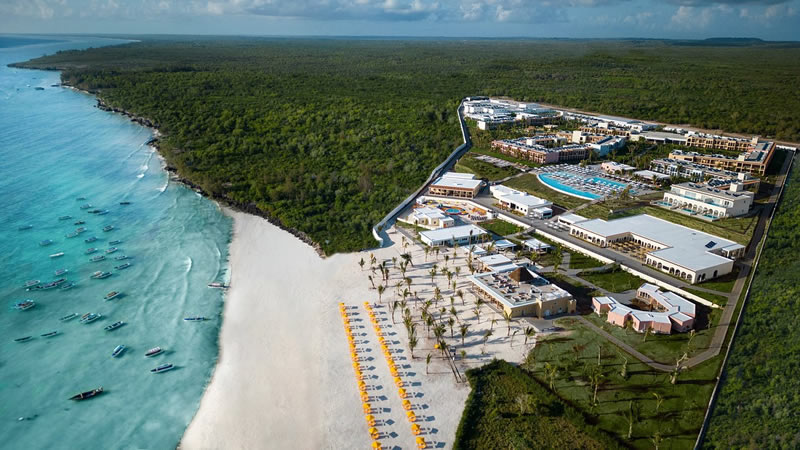
The Mora Zanzibar
What distinguishes it is the service: guests consistently mention the staff by name in reviews, and the atmosphere is one of genuine warmth rather than trained politeness. Meals are available at any time, which matters more than it sounds when you are adjusting to a new time zone or returning from a morning snorkelling trip. The beach is wide and clean, and the resort’s location puts you within easy reach of the atoll departure points.
A Note on Expectations
Zanzibar is not the Maldives. The beaches are tidal, the infrastructure outside the main resort areas is variable, and the island’s history—including its role in the slave trade—is present in Stone Town in ways that demand acknowledgment rather than avoidance. But for travellers from Asia seeking a beach destination that feels genuinely unfamiliar, where the food, language, and rhythm of life require a small adjustment, it is worth the journey. The northeast coast, in particular, rewards those who slow down and let the tides set the schedule.

