

As I wandered through the early morning streets of Kandy, Sri Lanka, I felt a profound sense of calm and anticipation. I had left my hotel well before dawn, crossing the peaceful Kandy Lake and the quaint bridge that leads to the heart of the city. My destination was the world-famous Temple of the Tooth, a site that’s not only a spiritual sanctuary but also a symbol of Sri Lanka’s rich history and cultural identity.
A Personal Journey into a Sacred Landmark
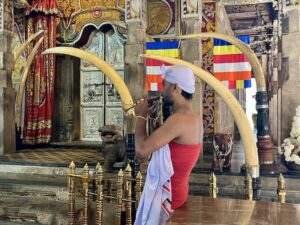
 Arriving at the temple around 9 am, I was greeted by a quiet serenity that sharply contrasted with the bustling city outside. The temple complex was still awakening, with only a few early risers and local worshippers beginning their daily rituals. As I entered, I was immediately immersed in an aura of reverence — fragrant flowers, incense smoke, and the soft chanting of monks.
Within moments, the space filled with hundreds of devotees queuing patiently to make flower offerings to the sacred relic. It was a humbling experience, witnessing the deep devotion of Sri Lankans who come here from all walks of life to pay homage to the Tooth of the Buddha, believed to be enshrined inside the temple.
The Rich History of the Temple of the Tooth

Temple of the Tooth Kandy
The Temple of the Tooth, known locally as Sri Dalada Maligawa, is one of Sri Lanka’s most venerated sites. Its history dates back over 400 years, but its origins are rooted in ancient legends. The sacred relic itself — a tooth of Lord Buddha — was believed to have been brought to Sri Lanka in the 4th century CE.
The relic’s journey to Sri Lanka is filled with fascinating stories. According to legend, the Buddha’s tooth was originally kept in India, but after a series of political upheavals and wars, it was smuggled out of India to Sri Lanka for safekeeping. It was first enshrined in the ancient city of Anuradhapura, before eventually being transferred to Kandy in the 16th century, when the island’s rulers sought to protect it from invading forces.
The temple complex was built in the 18th century during the Kingdom of Kandy’s reign, and it steadily developed into a symbol of sovereignty and religious devotion. Today, it’s a UNESCO World Heritage Site, drawing pilgrims and tourists alike who come to witness its spiritual significance and stunning architecture.
The Architecture and Rituals
 The temple itself is a marvel of traditional Sri Lankan architecture, featuring intricate wood carvings, golden accents, and a majestic stupa that houses the sacred relic. Inside, the main shrine chamber is an atmospheric space, filled with flickering oil lamps and the scent of jasmine and sandalwood.
One of the most captivating moments is witnessing the Perahera, a grand procession held annually, where the relic is paraded through the streets of Kandy on a beautifully decorated elephant. During this festival, the temple transforms into a riot of color, music, and devotion, attracting thousands of visitors from around the world.
Daily rituals are equally mesmerizing. Devotees offer flowers, light lamps, and chant prayers, creating a vibrant tapestry of faith. The temple’s custodians take meticulous care of the relic, ensuring its sanctity and security.
 Tips for Visiting the Temple of the Tooth

- Arrive early: As I experienced, the temple is peaceful in the mornings before it gets crowded. It’s the perfect time for reflection and photography.
- Dress modestly: Cover your shoulders and knees out of respect for the sacred site.
- Participate respectfully: Whether you’re making an offering or simply observing, show reverence for the worshippers and rituals.
- Visit during festivals: If your schedule allows, plan your visit around the Esala Perahera festival in July or August — an unforgettable experience.
- Combine with nearby attractions: Explore Kandy Lake, the Royal Botanical Gardens, or take a scenic train ride through the hill country for a complete experience.
Why the Temple of the Tooth Should Be on Your Travel List
 For anyone seeking a meaningful cultural experience, the Temple of the Tooth in Kandy is more than just a tourist attraction — it’s a living testament to Sri Lanka’s spiritual traditions, history, and resilience. The sense of community, devotion, and history that permeates this sacred site makes it a highlight for any traveler exploring Sri Lanka’s cultural heart.
If you want to learn more about Sri Lanka’s incredible heritage sites, visit Sri Lanka Tourism Official.
In Conclusion:
Visiting the Temple of the Tooth was one of the most memorable moments of my trip to Sri Lanka. Watching the early morning rituals and witnessing the devotion of local worshippers left a lasting impression. Whether you’re a spiritual seeker or a history enthusiast, this sacred site offers a unique glimpse into the island’s soul.
CHECK UP OUR PHOTO-GALLERY HERE
View 360 Hotel by Queens Mount
 The Asian Itinerary team was kindly hosted by View 360 Hotel by Queens Mount, which offers family rooms with air-conditioning, private bathrooms, and modern amenities. Each room includes a work desk, TV, and free WiFi, ensuring a pleasant stay.
Visit their FACEBOOK page HERE.
Metro Tours & Rent A Car

Asian Itinerary explored Sri Lanka by car, courtesy of Metro Tours & Rent A Car, proudly serving travelers across the island since 2005. With over 20 years of experience and a 4.9-star rating from 220+ Google reviews, they are a trusted name in car rentals, known for quality service and customer satisfaction.
WEBSITE: https://metrotours.lk/
EMAIL: metrotoursrentacar@gmail.com
WHATSAPP: +94 777327285


