
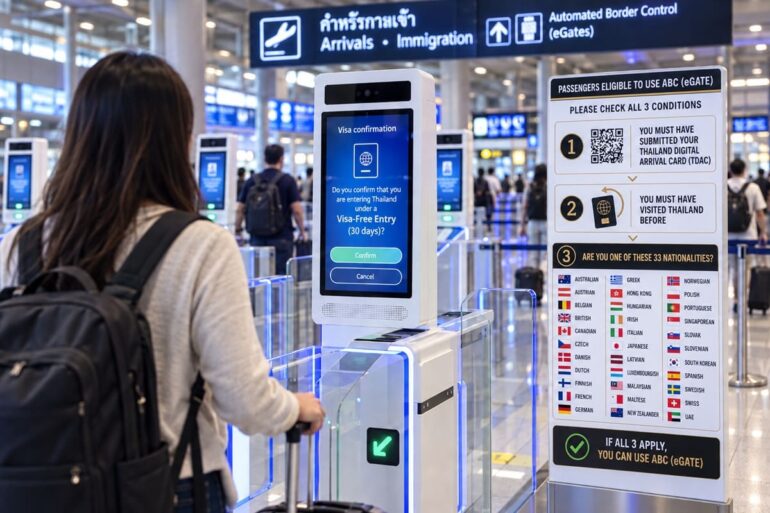
Travellers from 33 nationalities can now use automated border-control e-gates on arrival at Bangkok‘s Suvarnabhumi Airport, provided they meet three conditions shown on new airport signage.
The gates are available only to eligible visitors entering Thailand under the visa-exemption scheme who have previously visited the country and are entering on the same passport. They must also have completed the Thailand Digital Arrival Card (TDAC) before arriving.
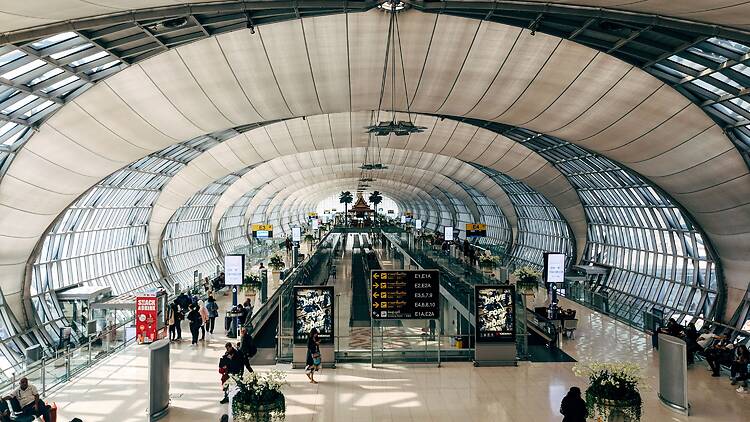 The details were displayed on signage at the airport’s automated border control, or ABC, e-gates.
Who can use the arrival e-gates
The 33 eligible nationalities listed on the sign are: Australian, Austrian, Belgian, British, Canadian, Czech, Danish, Dutch, Finnish, French, German, Greek, Hong Kong, Hungarian, Irish, Italian, Japanese, Latvian, Luxembourg, Malaysian, Maltese, New Zealander, Norwegian, Polish, Portuguese, Singaporean, Slovak, Slovenian, South Korean, Spanish, Swedish, Swiss and UAE.
For foreigners arriving on a Destination Thailand Visa (DTV), education visa, non-immigrant B work visa, or another Thai visa, Khaosod reported that immigration stated that currently, the new system does not yet apply. They must continue to use the staffed immigration counters.
Th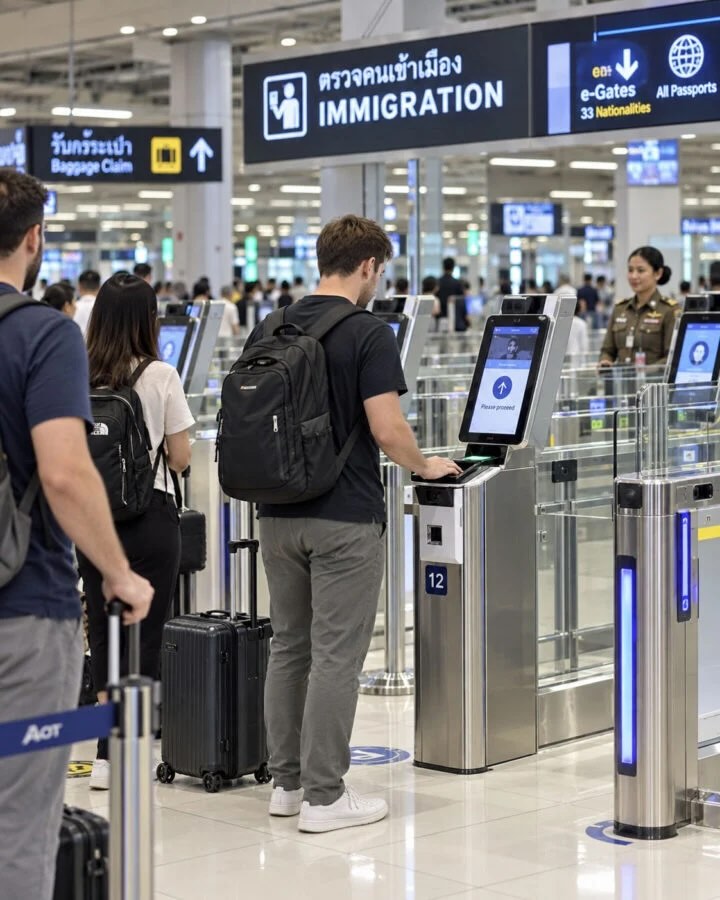 e same applies to first-time visitors to Thailand, even if they hold a passport from one of the 33 listed nationalities. The sign makes clear that a previous visit to Thailand is required before an eligible traveller can use an e-gate.
USA citizens still need staffed counters
US passport holders are not among the 33 nationalities currently listed as eligible for the automated lanes. Americans arriving at Suvarnabhumi must therefore continue to join the regular immigration queue, including those entering under visa exemption.
For eligible repeat visitors, the e-gates could mean a faster route through arrival formalities, particularly at busy times. But completing the TDAC remains compulsory before travel, and the electronic arrival form does not itself make a traveller eligible to use the gates.
The signage also drew attention for an apparent spelling errors: Dutch travellers were described as “DUTIЄCH” rather than Dutch and quoting the language Luxembourgish.


