
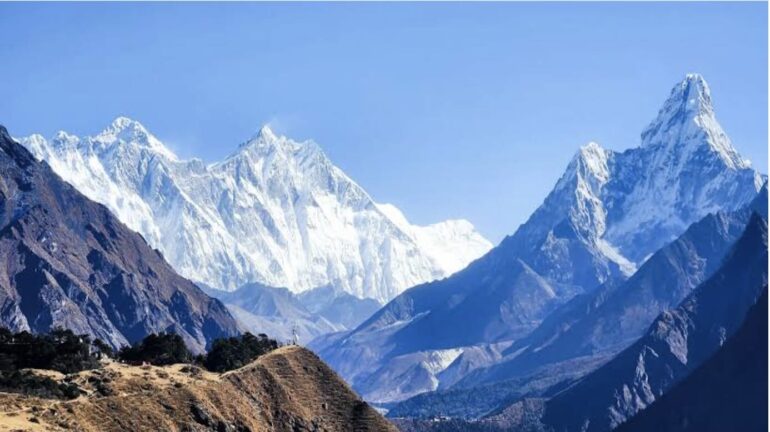
Nepal is a small country, but inside this land there are the biggest dreams of mountains. When people talk about real adventure, they always remember the shadow of Mount Everest. The air is thin, the sky is very near, and my heart is beating a little fast but feeling very alive. This journey is not only walking; it is fighting with cold wind, high altitude, and your own fear. Inside the region of Sagarmatha National Park, trails go up and down like a life story. Prayer flags flying, yaks walking slowly, and snow peaks watching you silently. In this article we talk about three big journeys of the Everest region—the Everest Base Camp Trek, the Everest Three High Pass Trek, and the Gokyo Lake Trek. All are different styles, but all give the same powerful feeling.
Everest Base Camp Trek
The Everest Base Camp Trek is the most famous trek in the world. Many people from America, Europe, and Asia come here for one dream: to stand near the base of Mount Everest. The trail starts from Lukla Airport, with a small runway and big excitement. When the plane lands there, my heart already starts to adventure. From Lukla, the trail goes to Phakding, then to Namche Bazaar. Namche is like the capital of Khumbu. Small shops, a bakery, a coffee place, and big mountain views. Here trekkers rest for acclimatization. Because altitude goes higher, the body must adjust slowly; otherwise, sickness can come. Walking to Tengboche, you see a monastery on a hill and Ama Dablam shining behind. The prayer sound in cold air makes the soul calm. After Dingboche and Lobuche, the landscape became drier and rockier. Trees disappear, with only stone and ice around.
Finally, you reach Everest Base Camp. It is not a luxury place; there is no big building, only glaciers and colorful tents in the climbing season. But when you stand there, you feel strong inside. You see the Khumbu Icefall and think about how climbers go up from here. Tears sometimes come, not from sadness, but from achievement. The Kala Patthar viewpoint is also highlighted. Early morning climb, very cold wind, but sunrise on Everest is golden magic. This trek usually takes 12 to 14 days. It is moderate to difficult. Good fitness is needed, but a normal healthy person can do it with preparation. The accommodation is a tea house, simple yet comfortable. Dal bhat is energy food. Sherpa people are kind and helpful. They always smile, even in hard weather. The Everest Base Camp trek is not only a destination; it is an emotional story written step by step.
Everest Three High Passes Trek

Everest Three High Passes Trek
The 3 pass Trek Nepal is a full epic novel. This trek is longer, harder, and more wild. It crosses three big mountain passes—Kongma La, Cho La, and Renjo La. Each pass is above 5,000 meters, and each one tests your courage. The trail follows the same route till Namche, but later it splits into a high valley. Kongma La is my first challenge. The climb is steep and rocky. Sometimes snow covers the path. But from the top, the view is very wide. You see many peaks around and feel like standing on the roof of the world. Then the trail connects to the Everest Base Camp area. So in this trek, you also visit base camp and Kala Patthar. But the journey is not finished here. The next big challenge is Cho La Pass. This pass has a glacier crossing. Early morning starts are important because snow becomes soft later. Walking on ice with crampons is sometimes needed. When you reach the top, you feel a warrior spirit. After Cho La, the trail goes to the Gokyo Valley side. But before that, my body is already tired. Many days walking, high altitude, and cold nights. Mental strength becomes very important. Some trekkers quit in the middle because it is not an easy journey.
The last pass is Renjo La. Many trekkers say this pass gives the best view of the Everest region. From the top you see Everest, Lhotse, Makalu, and the turquoise lakes of Gokyo below. That view stays in my memory forever. This trek takes around 18 to 21 days. It requires strong fitness and previous trekking experience. The weather must be clear, because heavy snow can block passes. The best seasons are spring and autumn. A guide is highly recommended because trails are sometimes confusing and risky. But the reward of this trek is very big. You see hidden valleys, less crowded trails, and a full circle of the Everest region. It is a real adventure for those who want more than normal trekking.
Gokyo Lake Trekking
On the quiet side of Everest, there is a paradise of blue water called Gokyo Lakes. Gokyo Lake trekking is a peaceful and beautiful journey. Instead of going directly to base camp, this trail follows the Dudh Koshi River and then turns toward Gokyo Valley. After Namche, trails go to Dole and Machhermo. These villages are small and less crowded. The landscape is open and wide. You walk with a mountain view all the time. When the first Gokyo Lake appeared, the color was unbelievable. It is turquoise like a dream. Around the lakes there are several small glacial lakes, shining under the sun. Gokyo Village is near the third lake. From here you climb the Gokyo Ri peak. The early morning climb is hard but short. The panorama is amazing. You see Everest, Cho Oyu, and many other snow giants. The view from Gokyo Ri, many people say, is even better than Kala Patthar. One special experience in Gokyo trekking is crossing Ngozumpa Glacier, the longest glacier in Nepal. Walking on glacier moraines feels like moon land. Silence and wind are the only sounds.
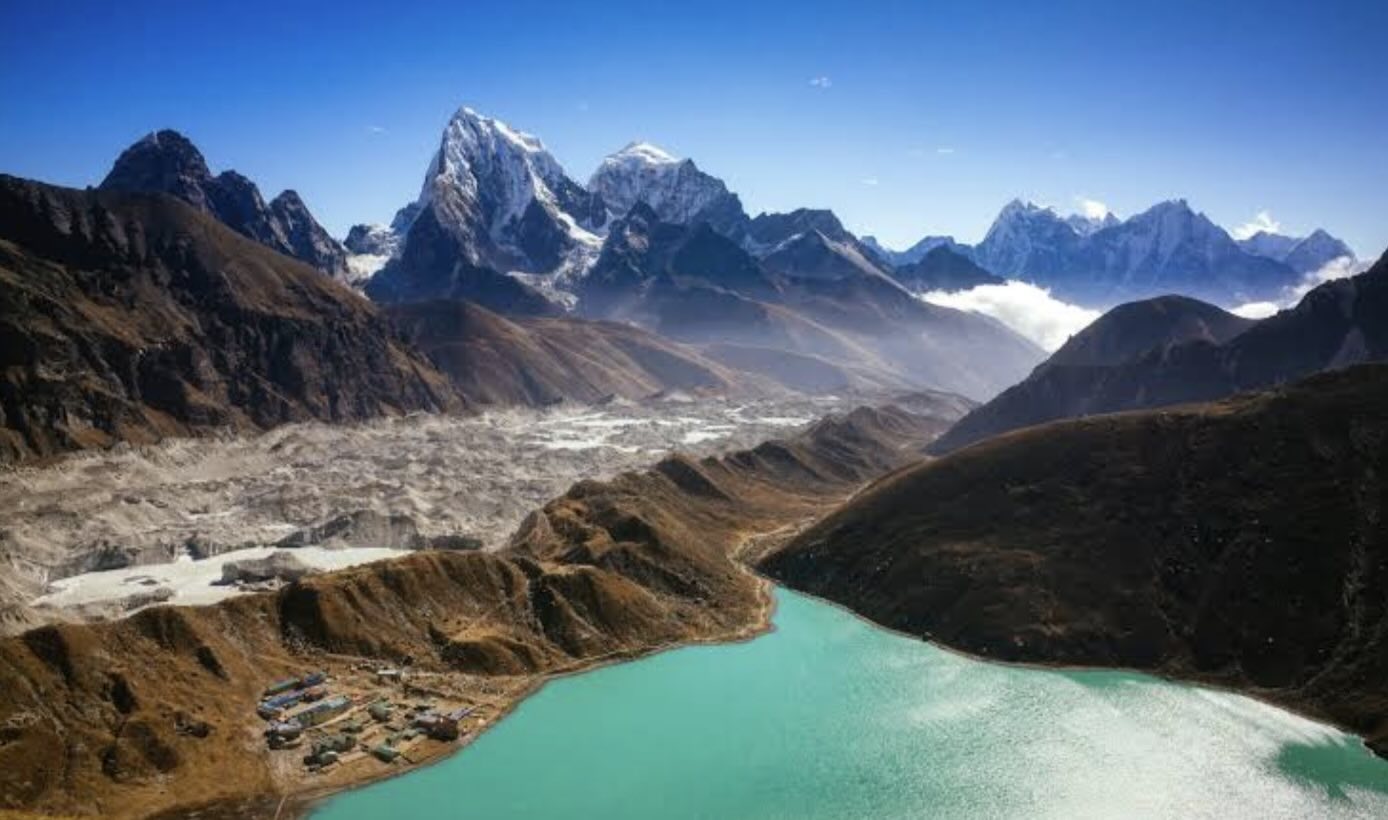
Ultimate Everest Trekking Adventures – Gokyo Lake Trekking
This trek normally takes 14 to 16 days. Difficulty moderate to challenging. It’s less crowded than the base camp route, so it’s more peaceful. Tea houses are available but a little simpler than the main trail. Food is similar: dal bhat, noodles, soup, and tea. Gokyo trekking can also combine with Cho La Pass and base camp, making a full three-pass journey. So it is a flexible option for trekkers.
Culture and Life in the Everest Region
The Khumbu region is the home of the Sherpa people. Their culture is very connected with mountains and Buddhism. Monasteries like Tengboche have a spiritual heart. Prayer wheels, mani stones, and chortens on the trail show religious devotion. Trekkers must walk on the left side of mani walls; it is a rule of respect. Sherpa people are strong and humble. They carry heavy loads but are still smiling. Many are expert climbers and guides. Without them, the Everest adventure is impossible. Their hospitality in tea houses makes the journey comfortable.
Best Time for Trek
Spring (March to May) and autumn (September to November) are the best seasons. In spring, rhododendrons bloom in lower regions, and the weather is stable. In autumn, the sky is very clear and the mountain view is sharp. Winter is very cold and snow-heavy in high passes. Monsoon season has rain and clouds; flight delays are possible in Lukla.
Difficulty and Preparation
All these treks are high-altitude journeys. Altitude sickness is a serious risk. Slow walking, proper acclimatization, and drinking water are important. Physical training before trekking is necessary. Cardio exercise, hiking practice, and mental preparation help a lot. Good trekking boots, warm clothes, sleeping bags, and basic medicines must be carried. Travel insurance covering helicopter rescue is recommended.
Why This Adventure Changed Life
The Everest adventure is not only about reaching a place. It is about pushing limits. When oxygen is low and legs are in pain, you learn patience. When the sun rises over Everest, you learn gratitude. When strangers help you on a trail, you learn humanity. The Everest Base Camp trek gives a classic achievement feeling. The Three High Passes trek gives extreme adventure and pride. Gokyo Lake trekking gives peace and beauty. All three together make a complete story of mountain life. Many trekkers say after coming back from the Everest region, their thinking changes. Small problems in city life look very small. Because when you walk under the highest mountains, you understand how small a human is but also how strong a human can be.
Conclusion
It must be like the Everest adventure, which means not only visiting famous places but also feeling a mountain inside your heart. The Everest Base Camp trek brings a dream close. The Three High Passes trek tests your power and bravery. Gokyo Lake trekking shows you the silent beauty of nature. In the land of Mount Everest, every step is a memory. Cold wind, rocky path, smiling Sherpa, and fluttering prayer flags all mix together like powerful music. This journey is not a luxury holiday; it is a raw experience. You go there as a normal person and come back as a stronger soul.
If someone asks what real adventure is, the answer is simple. Go to the Everest region. Walk slowly, breathe deeply, and let mountains teach you.


