
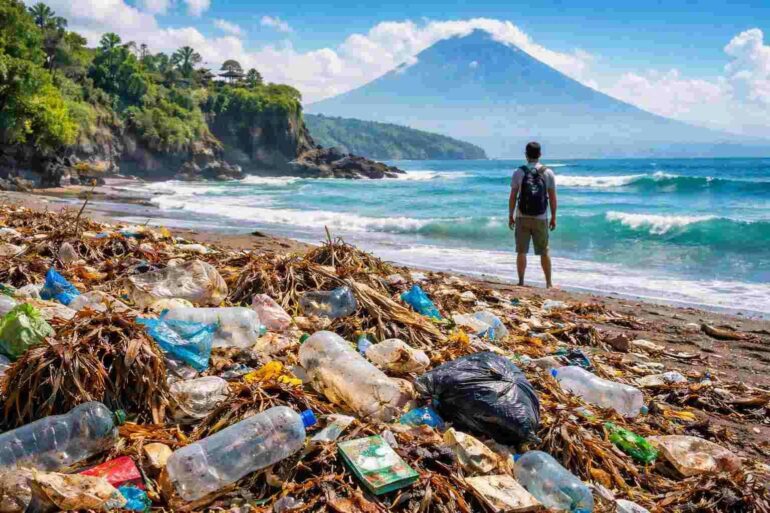
How paradise is suffocating under traffic, waste, and its own global success
Bali — from a small, archaic island on the Ring of Fire, to the “Island of the Gods” discovered by tourism, to an island drifting into post-capitalist consumer chaos.
Did I make a mistake back then?
When I traveled through Southeast Asia, captivated by the beauty of its countless islands, I chose Bali as my place to live. It could just as easily have been Lombok, Flores, or an island in Thailand—but Bali scored highest on my personal scale. There was culture, a distinct spirituality, and a vibrant alternative scene in Ubud.
 At the time, there was still abundant nature, little traffic, and no visible waste problem.
I lacked foresight. I made no projections about what the growing streams of tourists would eventually bring. It wasn’t only the travelers and Indonesians from other islands coming to Bali for work who turned it into one of the most densely populated places on earth. There were also people like me—foreigners who didn’t just come for a holiday, but chose to stay.
People from all over the world who saw Bali as the most attractive place to live in Asia: entrepreneurs, retirees, digital nomads, artists, healers, DJs, developers, restaurant owners. They all came seeking something—opportunity, freedom, meaning. Most stayed. And every year, more arrive.

People from all over the world saw Bali as the most attractive place to live in Asia
With this additional influx of non-Balinese residents, the island soon became overwhelmed.
The government failed to keep pace with this development. No effective systems were created to manage waste or traffic. The narrow roads are hopelessly congested. Garbage is not systematically handled—it accumulates, spilling into daily life.
So where does this lead?
Can Bali still regain control? Or is this already a lost battle—an island slowly collapsing under the weight of its own success?
And what about me? Do I have to admit that I failed to see far enough ahead? Will I one day have to leave in order to stay healthy?
I began to wonder how other expats living in Bali deal with these issues, and how deeply they are affected by traffic, waste management, and the sheer density of the population. So I asked friends who have lived here long-term how these developments are shaping their perspective on staying—or leaving.
One informant who has lived in Bali for 25 years, and has seen stories like the following, shared her experience:
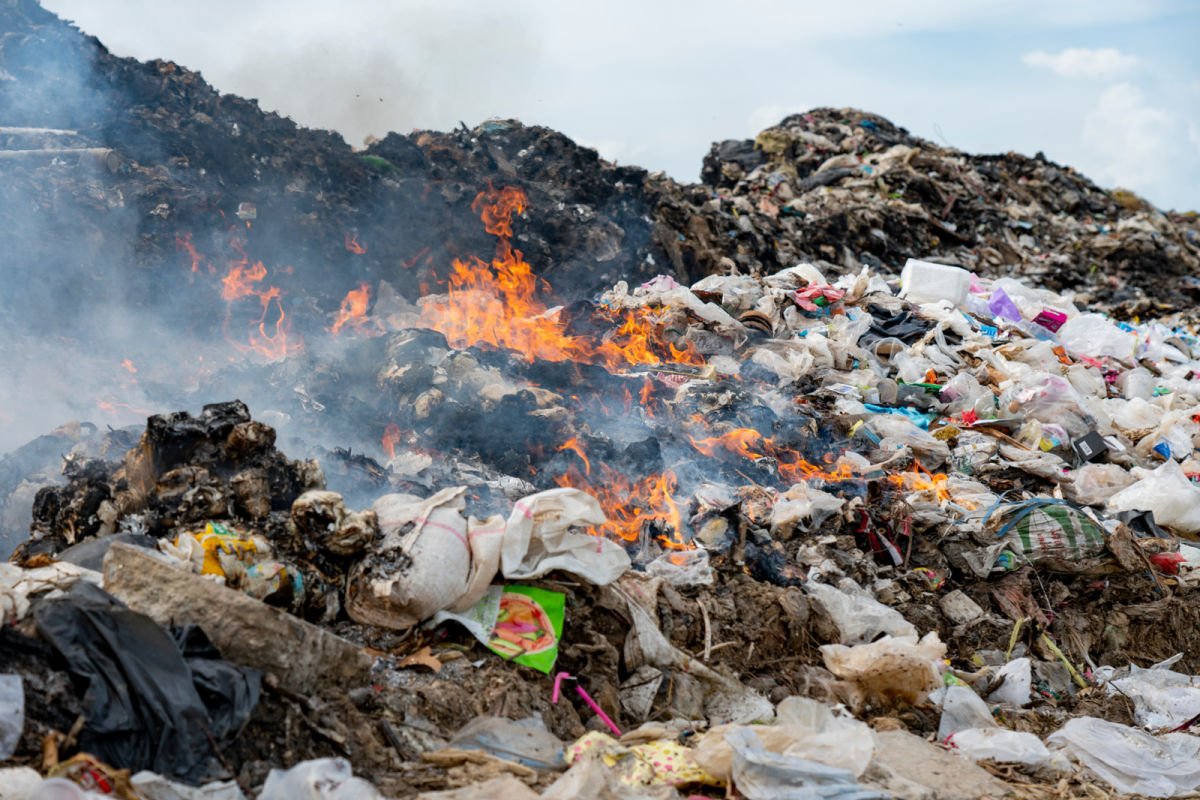
Bali’s trash burning problem has just reached new toxic heights
“After years of suffering from locals burning plastic, rubber, and construction debris in small fires next to their homes, I was relieved when a regulation was introduced prohibiting the burning of household waste, with a fine of 50,000 rupiah. From then on, garbage collection became regular—twice a week, costing around 100,000 rupiah per month.
Only occasionally would someone refuse to pay even a small amount—around €2.50—for weekly collection and continue burning their waste. But at least there was now a system in place, and complaints could be made.
Eventually, waste collection became properly established.
But now, it has begun again.
In 2026, neighbors started burning their trash once more after the island’s main landfill was abruptly closed by government decree. The idea was that residents should separate plastic, paper, and glass for collection, while burying organic waste themselves.
A short-sighted solution.
Who, with only 100 square meters of land, has space to create a functioning compost system? And what about construction waste or materials that cannot be recycled or buried?
Bali waste problem
Rumor has it that a new shopping mall is planned next to the landfill site, and the investor did not want unpleasant odors nearby—so pressure was applied to shut it down.
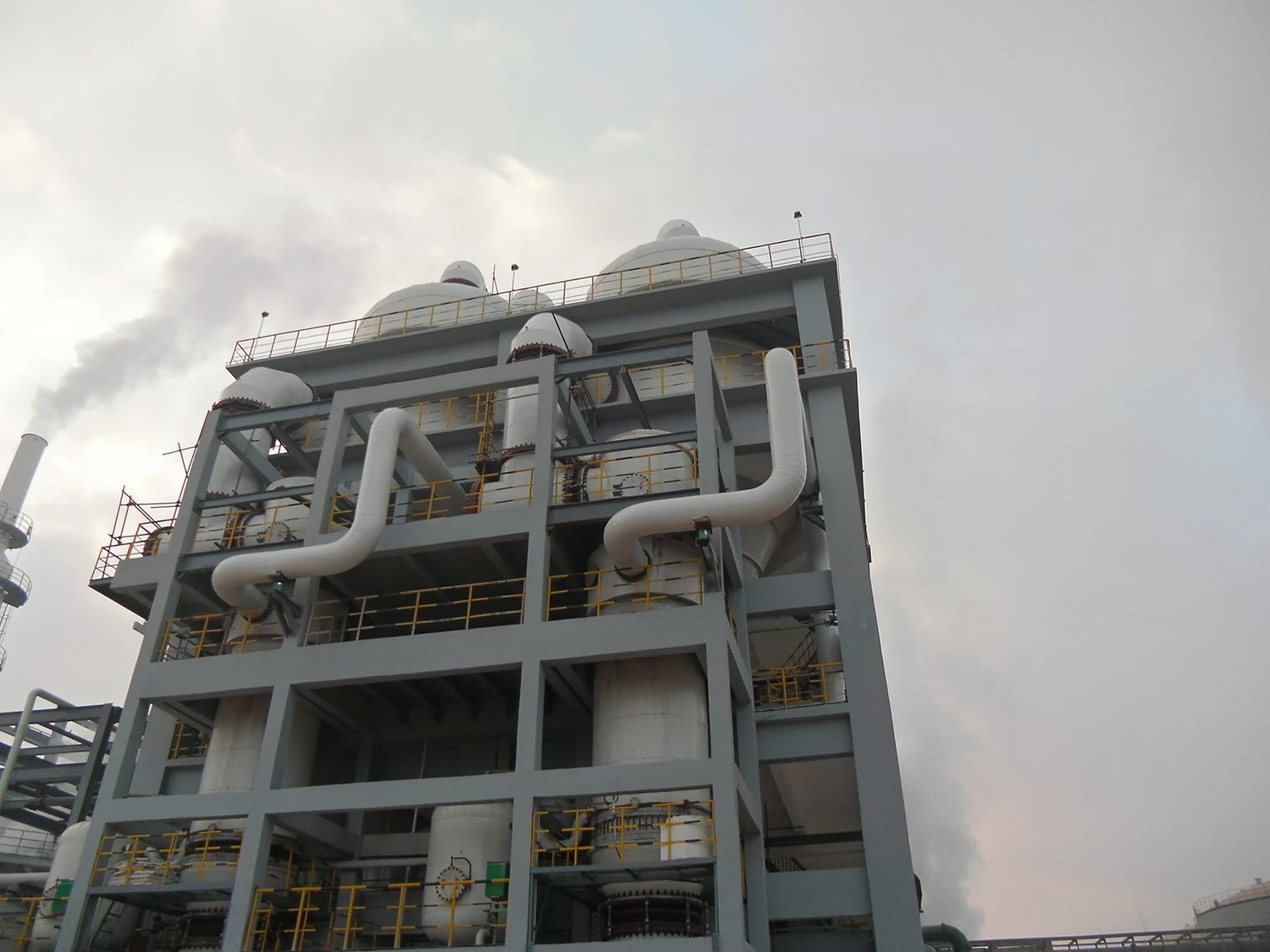
There has been international effort to tackle Bali’s waste problem:, years earlier, a French company had proposed building a waste-to-energy incineration plant near Gianyar. But excessive permit fees—from both government authorities and, as is common in Bali, the local adat structures—made the project economically unviable. It would have taken over 15 years to turn a profit. The investor withdrew. The project collapsed.
And now, the situation has reached a critical point.
Hotel underground parking areas are filling up with garbage bags that are no longer being collected. Without a functioning system, the only alternatives seem to be uncontrolled burning. Only recently has the government begun to react. The landfill has been temporarily reopened for two months to deal with the accumulated waste.
But temporary measures are not enough.
Something fundamental has to change. After all, six million tourists per year now pay a €9 tourism levy—a kind of visitor tax—intended to support waste management. Surely, that should be sufficient to finally build proper infrastructure, perhaps even a modern incineration facility.”
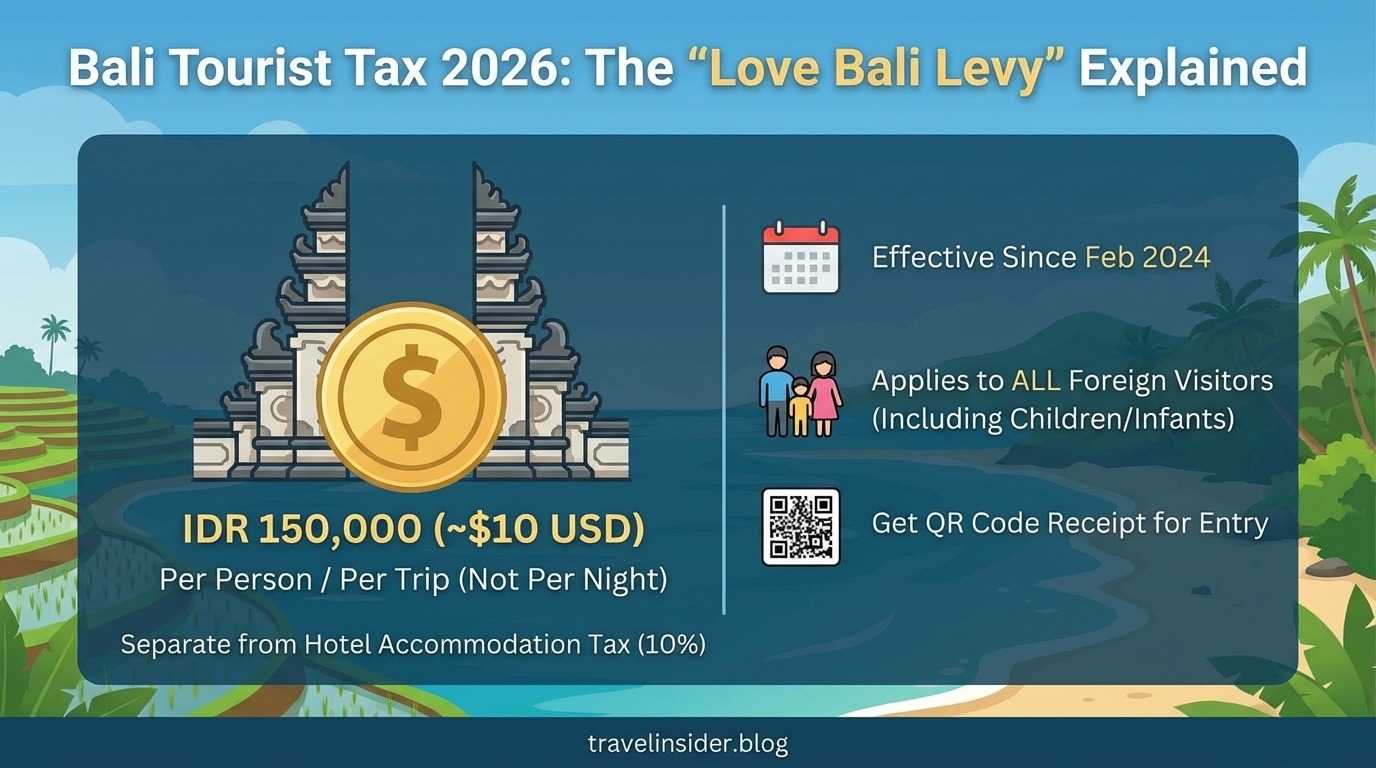
Bali Tourist Tax 2026
I went on to speak with another expat, a friend from Switzerland, Tom, who chose Bali as his home after many years in Malaysia and Thailand, and who is deeply familiar with life in Southeast Asia.
He offered a different perspective:
“There have always been critical voices on these issues. Even back in 2000, when I was living on Koh Samui, traffic, waste, and development were exactly the same concerns. In that sense, it’s nothing entirely new.
What often changes is ourselves.
The longer you stay in one place, the more you begin to notice its downsides. And sometimes the grass on the other side suddenly looks greener. Ultimately, much in life is a compromise—and living in one place is no different. You decide what you can live with and what you cannot.
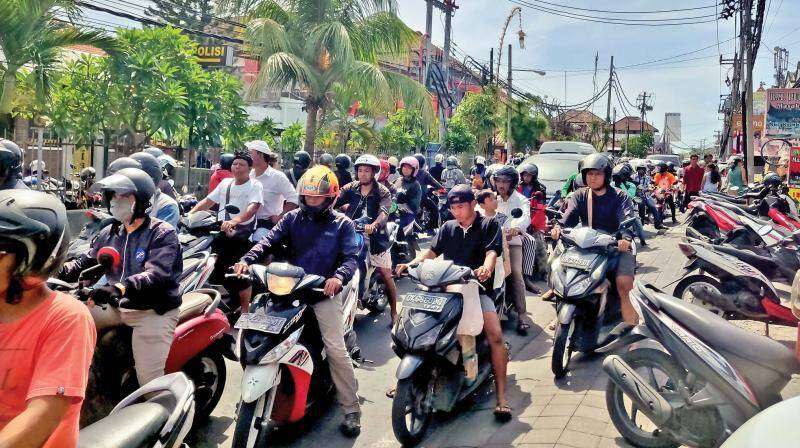
scooter traffic problem in Bali
For me, the scooter traffic here even has a certain charm—if you are willing to engage with it. These small ‘freedom rides’ give you a different connection to a place. You notice things that remain hidden when you sit in a car: smells, light, people, little scenes by the roadside.
Personally, I even appreciate a certain degree of this chaos.
Of course, waste management could be better organized—that’s obvious. But where I live, it functions reasonably well. And when I recently spent two weeks in Phuket, (Thailand), I realised it’s not that different there. In Patong, we were just as stuck in traffic as we are here in Bali.
In the end, you have a choice. You can let it frustrate you every day, or you can consciously adapt.
That doesn’t mean ignoring the problems. But for me, Bali is still a place where I feel enough freedom, movement, and inspiration to accept the compromises.
Perhaps the real question is not only how Bali is changing—but how we deal with change when a place we once idealised no longer lives up to its image.”
And yet, while these reflections weigh on me—casting grey shadows across my once bright Bali daydreams—something else happens.
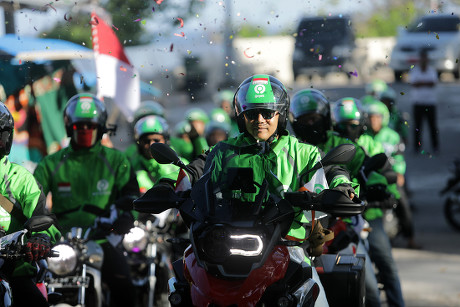
Indonesian Motorbike Taxi Riders Gojek
I call a Gojek (motorbike taxi) to take me home. As if on cue, the sky opens and heavy rain begins to fall. Perfect timing. Barely have I settled onto the back of the motorbike when the driver, despite the downpour, begins to sing cheerful Indonesian songs.
And just like that, the feeling returns—that I don’t want to leave. That this is exactly where I belong. Because Bali is more than a waste problem, more than traffic, more than the visible symptoms of imbalance. These things may, somehow, be resolved.
But above all, Bali is its people—who, day after day, remind you with their warmth, humor, and spirit why you came here in the first place.


