
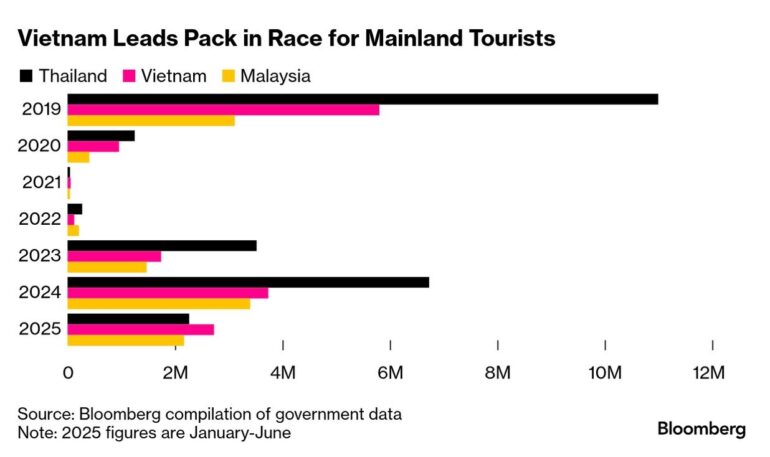
The Southeast Asian travel map is shifting. For years, Thailand was the undisputed favorite of Chinese travelers, but Vietnam has now taken the crown. Recent figures show that more than 3.5 million Chinese tourists visited Vietnam this year, a surge that has reshaped regional tourism dynamics.
This change is not accidental. While Vietnam promotes itself as a fresh, authentic destination, Thailand is struggling with safety concerns, rising costs, and recent negative headlines that have impacted its image.
Why Chinese Travelers Are Choosing Vietnam

Vietnam overtakes Thailand Chinese tourists
Vietnam’s appeal lies in its blend of authenticity, affordability, and diversity. Nearly 14 million international visitors arrived this year, with Chinese arrivals jumping 44% by August. Unlike in the past, when package tours dominated, more Chinese travelers are now exploring Vietnam independently.
Destinations such as Hanoi, Halong Bay, and Danang are popular, but many are also venturing off the beaten path, discovering rural provinces and lesser-known coastal towns. The sense of discovery is a strong draw compared to Thailand, which some travelers now see as “too familiar.”
Local authorities are also stepping up. The province of Quang Ninh recently launched paragliding and hot-air balloon festivals to encourage longer stays. Hotels in Danang and Ho Chi Minh City are hiring Mandarin-speaking staff and adopting tech solutions tailored to Chinese guests.
For more insight on Vietnam’s tourism growth, see the Vietnam National Administration of Tourism.
Thailand’s Struggles: Safety and Costs
Thailand, long seen as a safe and affordable destination, is facing new challenges. A 35% drop in Chinese arrivals has been linked to several factors:
-
Rising travel costs in popular destinations like Bangkok and Phuket.
-
Reports of scams and petty crime targeting visitors.
-
A high-profile kidnapping case involving Chinese actor Wang Xing, which made global headlines and fueled concerns about organized crime.
While Thailand continues to attract tourists from Europe and the U.S., the decline in Chinese visitors — historically its largest market — is a significant setback.
Economic Impact Across Southeast Asia

Vietnam overtakes Thailand Chinese tourists
This tourism shift could translate into a $3.5 billion revenue swing in Southeast Asia. Chinese tourists are among the highest spenders, and Vietnam is benefiting from their growing preference for new destinations.
Thailand, on the other hand, may see some recovery during its peak season, but regaining the trust of Chinese travelers will take time. Safety improvements, better regulation of scams, and refreshed marketing campaigns will be crucial.
Key Takeaways for Travelers and the Industry
-
Vietnam is booming: Fresh attractions, festivals, and local hospitality are attracting independent Chinese travelers.
-
Thailand faces challenges: Safety issues and rising costs have tarnished its appeal.
-
Chinese travelers are reshaping tourism: Their shift in preferences is influencing investment and development in the region.
For travelers, this means Vietnam is an increasingly exciting choice, while Thailand remains a strong option once it addresses its current hurdles.


