
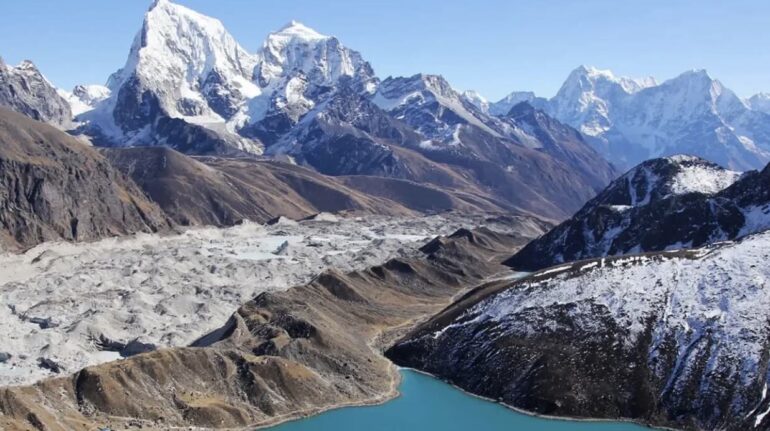
Nepal is a popular destination for trekkers and climbers. They revere the high-altitude land. But for a photographer, the country is an archetype of scale, dramatic light, and profound narrative depth. The Himalayas here are not merely geological giants. They are technical subjects that demand an understanding of atmospheric perspective and emotional storytelling.
The allure of the tall peaks is undeniable. However, the real power of the region lies in the valleys and passes to beautify these giants. Many of Nepal’s strongest images come not from the most famous trails, but from quieter routes and high passes that reveal the mountains in unexpected ways.
To shoot here is to document a vertical world where the landscape dictates the lifestyle. It offers a promise of an access-based perspective that goes far beyond the standard postcard shot.
Understanding the Mountain Geography of Nepal
For a photographer, understanding the spatial layout of Nepal is as crucial as knowing your camera settings. The country is characterized by a series of deep river corridors that separate massive, distinct ranges. For instance, the high-altitude arid landscapes and sharp, ice-armored peaks determine the Everest region. And to the west, the Annapurna Massif offers a different visual palette. The landscape here is wetter and greener, with the mountains that form wall-like barriers rather than isolated spires. The Langtang Region, further, has a more intimate valley experience.
A photographer must understand the trekking corridors rather than just walking around them. This dictates your vital angles. It is not ideal for you to walk around with a camera and take shots arbitrarily. Learn about them, learn them, and strategise your next move.
Mount Everest
There is a special contradiction to photographing Mount Everest. The closer you go, the more difficult it is to convey its size. The huge shoulders of Nuptse frequently block off the summit from the traditional Everest Base Camp. And the jumbled texture of the Khumbu Icefall and expedition tents clutter the visual field.
Elevation and distance must be prioritized to condense the foreground and emphasize the peak’s actual supremacy against the jet stream in an Everest shot. Beyond Everest Base Camp, photographers turn toward the Gokyo Valley. This is where the glacier lakes provide you with crisper compositions.
 You can also opt Gokyo Lake Trek for higher vantage locations like Gokyo Ri. This is where Everest, Lhotse, and Makalu can be framed together. You trade the visual cacophony of the main trail for placid glacial lakes. Make sure you do not miss how the snow-capped peaks reflect on the lake, too.
Annapurna Massif
The Annapurna Massif offers panoramic views and amazing diversity. From high-alpine amphitheatres to subtropical terraced fields, the Annapurna Circuit offers a visual trip.
It is a region that is defined by its dramatic weather shifts. Here, capturing the sheer size of a range reaching the horizon becomes more difficult than focusing on a single peak. The moisture trapped by the massif often creates dynamic cloud inversions. Hence, its atmospheric lighting is harder to find in the drier Everest region.
Furthermore, the foregrounds here are rich with cultural texture. The Gurung and Thakali villages here offer stone architecture and vibrant agricultural life. This provides an additional meaningfulness to the white giants towering above.
Machhapuchhre
 Few mountains in the world possess the geometric perfection of Machhapuchhre. Known as the fishtail, it is sacred to the local population and off-limits to climbers. This preserves its pristine snowy ridgelines.
For a photographer, Machhapuchhre is a study in form and symmetry. It is a sheer, double-summit spire that creates a striking silhouette, commanding attention. The mountain is best photographed at transitional hours. During sunrise and sunset, its harp profile catches the alpenglow long before the valleys below.
This allows for minimalist compositions where the illuminated peaks float against a darkening sky. Its position near Pokhara also allows for unique framing opportunities involving reflections in Phewa Lake, merging the subtropical valley floor with the high Himalayas.
Ama Dablam
 While Everest claims the height records, many photographers argue that Ama Dablam holds the most beautiful Khumbu mountain title. Translating to “Mother’s Necklace”, it is referencing the hanging glacier that resembles a traditional dabkam pendant.
Its architecture is distinct, with sharp exposed ridges and steep faces that rise aggressively from the valley floor. Because of its central location, Dablam serves as a constant, photogenic companion on the trek to Everest.
It is visible from several angles from Tengboche to Dingboche. Photographers on the Ama Dablam Expedition often note that the routes and base camp perspectives reveal the mountain’s dramatic geometry. This perspective is more mesmerizing than distant viewpoints along the main Everest trail.
For a distinct portfolio, many professionals combine this with the Gokyo Lake Trek as well. From the Gokyo Ri summit, Ama Dablam transforms from a broad-shouldered giant into a slender, isolated needle piercing the horizon.
Best seasons for Mountain Photography
Timing your visit is the most important technical decision you will make. Nepal has two distinct photographic seasons. Autumn (October-November) is renowned for crystal-clear skies and sharp visibility. The air is crisp, washing away the humidity, which allows for deep blue skies and high-contrast images. This is the time for clarity.
On the other hand, Spring (March-May) is different in its own way. While the valleys may be hazier due to rising temperatures, this season welcomes vibrant rhododendron blooms. When bright red flowers frame the snow-capped peak, it adds an eye-catching contrast that autumn lacks. However, photographers must be prepared for afternoon cloud cover.
Technical and Logistical Considerations
Nepal mountain photography tips
Shooting in the Himalayas requires logistical discipline. The primary enemy is the cold. At high altitudes, batteries can drain in minutes. Keep spares warm inside your down jacket. This way, the batteries remain close to your body heat.
Weight is also a major factor. If you do not want to struggle with heavy baggage, carefully choose your lenses. A 24-70mm and a 70-200mm are the workhorses here. Further, altitude affects your body’s ability to stabilize. A lightweight carbon-fiber tripod is essential not only for low light, but also to counteract shaky hands.
Finally, always ask for permission before photographing locals or religious ceremonies inside monasteries like Tengboche. Ethical shooting is essential to preserve the welcome for future visitors.
Hence, photography skills aren’t something that is seen only in the pictures. The strategies, patience, and knowledge you put behind it are the major determinants of the pictorial value. So, take your time. Study the land. Study its air. And you begin.


