
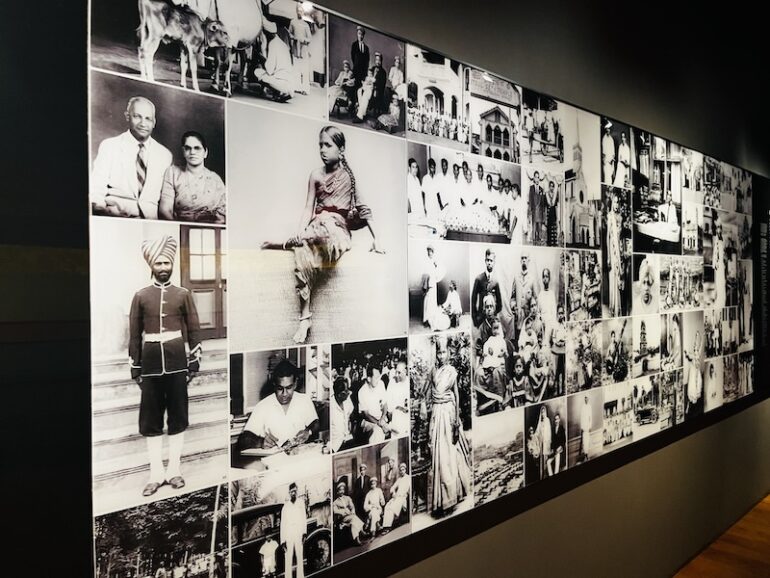
Vanakkam – Namaste – Saab Sri Akal – Assalamu Alaikum – Welcome!
These six words, printed on the wall just inside the entrance, set the tone for everything that follows. The Indian Heritage Centre in Singapore is not just a museum about one community. It is an invitation to understand how Singapore was built – by Tamils and Punjabis, Muslims and Hindus, Chettiars and Chulias, merchants and coolies, poets and politicians.
 I visited the IHC on the afternoon of May as part of my Singapore media trip for Asian Itinerary. I had already spent the morning at the Chinatown Heritage Centre, so I arrived with high expectations.
A Building That Speaks Before You Enter
From the outside, the Indian Heritage Centre is impossible to miss. Located at 5 Campbell Lane in the heart of Little India, its four-storey glass façade shimmers like a diamond – reflective by day, glowing with colour at night. Designed by architects Gaurang Khemka and Greg Shand, the building draws inspiration from the traditional Indian baoli (stepwell), with a dramatic staircase that connects the upper and lower levels while offering aerial views of the surrounding district.
The architects wanted the building to be “visually and physically permeable at ground level” – and it works. You do not feel like you are entering a fortress of culture. You feel invited.
A Decade of Heritage
 Opened in May 2015 by Prime Minister Lee Hsien Loong, the Indian Heritage Centre was the first museum in Southeast Asia dedicated to the Indian community’s diverse heritage. PM Lee called it “a timely gift from the Indian community to Singapore” – and indeed, 2015 marked both Singapore’s 50th year of independence and 50 years of diplomatic ties between Singapore and India.
Since then, the centre has welcomed over 1.6 million visitors. In 2025, to mark its 10th anniversary and Singapore’s SG60 celebrations, the Indian Heritage Centre introduced 60 new artefacts across its permanent galleries – many displayed for the first time.
How to Visit: Start at the Top
 The best way to experience the museum is simple: take the elevator to the fourth floor and work your way down. This is the key to understanding the Indian Heritage Centre’s curatorial logic. The introductory video at the entrance of the fourth floor is excellent and prepares you for what you are about to see. I followed this advice. It worked perfectly.
Level 4: Early Contact & Origins
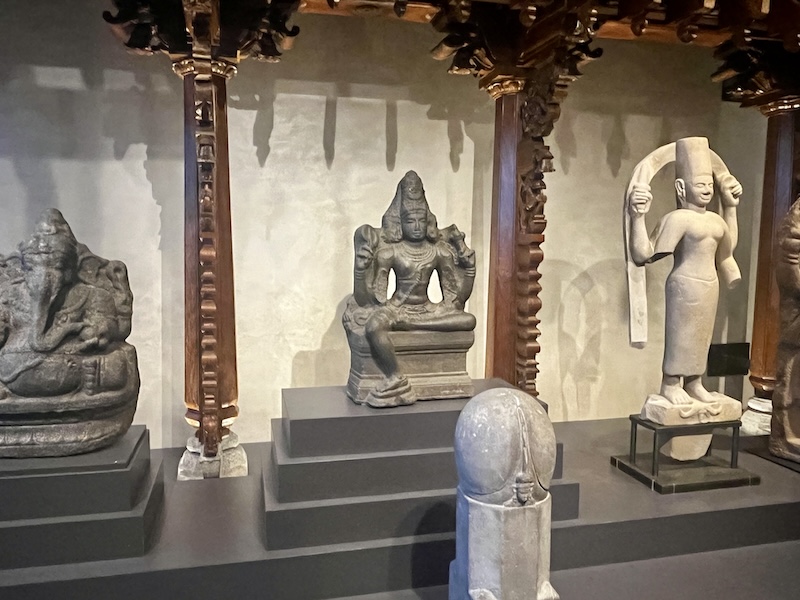
The fourth floor houses the permanent exhibition “Indians in Singapore: Past to Present” , which traces the history of South Asian presence in Southeast Asia from the 1st century CE all the way to the present day. The first gallery, “Early Contact: Interactions between South and Southeast Asia,” reveals something that many visitors do not expect. Indian cultural influence in this region did not begin with colonialism. It began more than 2,000 years ago.
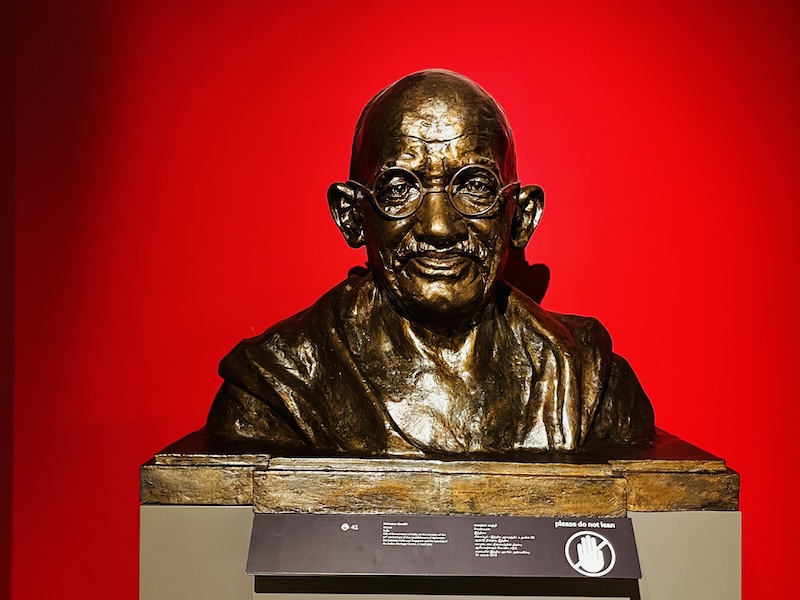 As the gallery texts explain: “South Asian and Southeast Asian cultures have interacted from the beginning of the Common Era (and possibly earlier). Through traders, monks, political emissaries and missionaries, interactions between the two regions flourished.”
The evidence is everywhere: Hindu and Buddhist temples across Southeast Asia, Sanskrit inscriptions in Vietnam and Indonesia, and Tamil trade records mentioning Kalagam (now Kedah, Malaysia) dating back to the Sangam era.
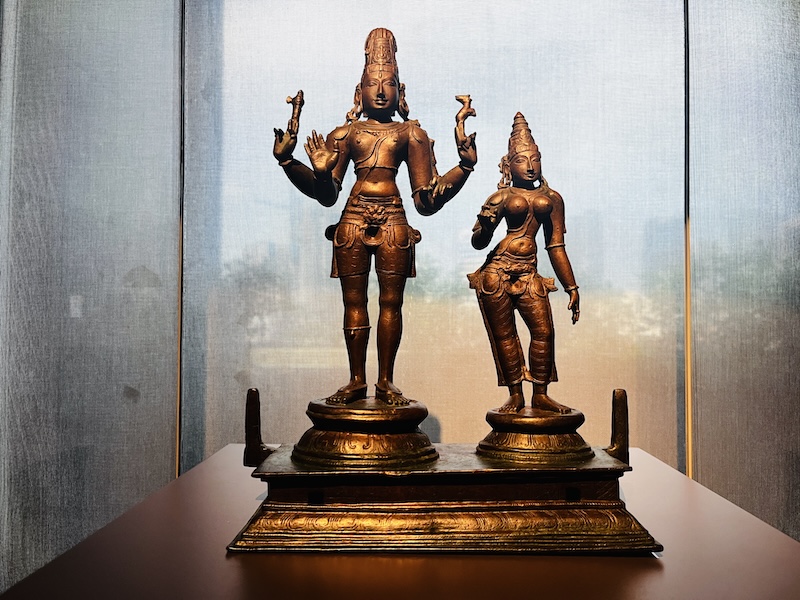
Another gallery, “Roots and Routes: Origins and Migration,” showcases artefacts from the Pallava, Chola and Pala periods – including a rare gilt-covered bronze figure of Arthanarishvara (the androgynous form of Shiva and Parvati) from Nepal, dating back to the Kushan period (1st–3rd century CE).
Level 3: Faith, Trade & Community Life
 The third floor is where history becomes intimate. Here you will find galleries dedicated to the religions that arrived in Southeast Asia via South Asia: Hinduism, Buddhism, Islam and Christianity. One of the most fascinating objects on display is a bezoar stone container from late 17th-century Goa. Bezoar stones – extracted from the digestive systems of sheep and goats – were believed to be antidotes to poison and were often worth more than their weight in gold.
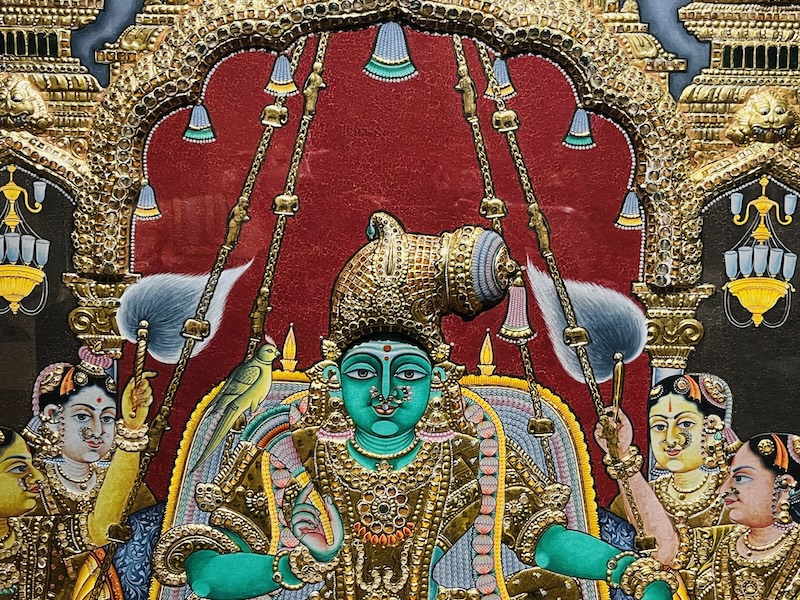
Another highlight is a 19th-century ivory sewing box from Vizagapatnam, crafted by Kamsali artisans for the Dutch and British East India Company markets. The box is styled like a house, painted with architectural details on all sides, and opens to reveal a neatly compartmentalised interior for sewing accessories. 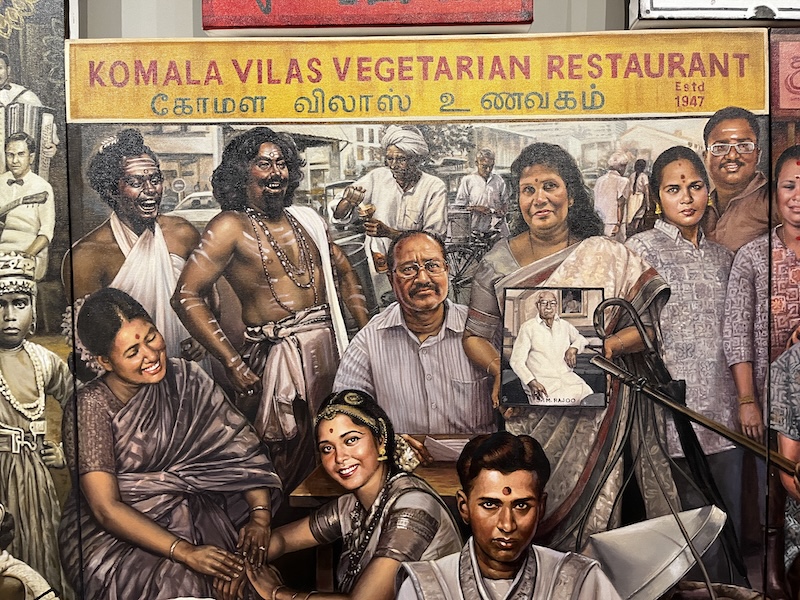 Then there is the Kalamkari hanging from Masulipatnam (circa 1800) – a hand-painted cotton textile featuring Persian-inspired medallion designs with fine lines of applied gold. It is exquisite.
But the third floor is not just about artefacts. Walking through the galleries, I noticed Indian-Singaporean families pointing at objects and whispering, “My grandmother had one just like this.” This is the power of the Indian Heritage Centre. It does not just display history. It brings it to life.
 Level 2: Changing Exhibitions & Interactive Spaces
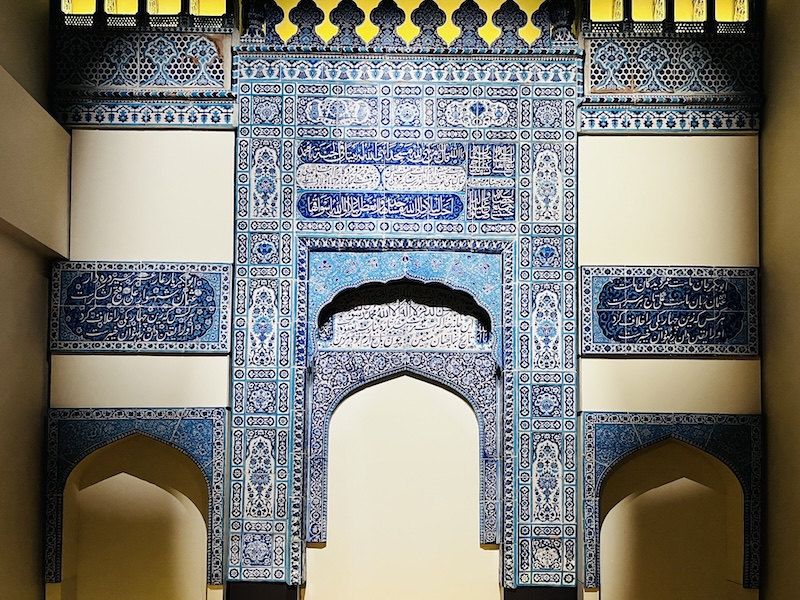
The second floor hosts temporary exhibitions that change throughout the year. During my visit, there was no special exhibition on display. Part of this floor is dedicated to children’s learning, with interactive paths and playful objects designed to introduce young visitors to Indian culture in a fun and engaging way. It is a great solution for families visiting the museum with young children.
Level 1: The Three Sculptures
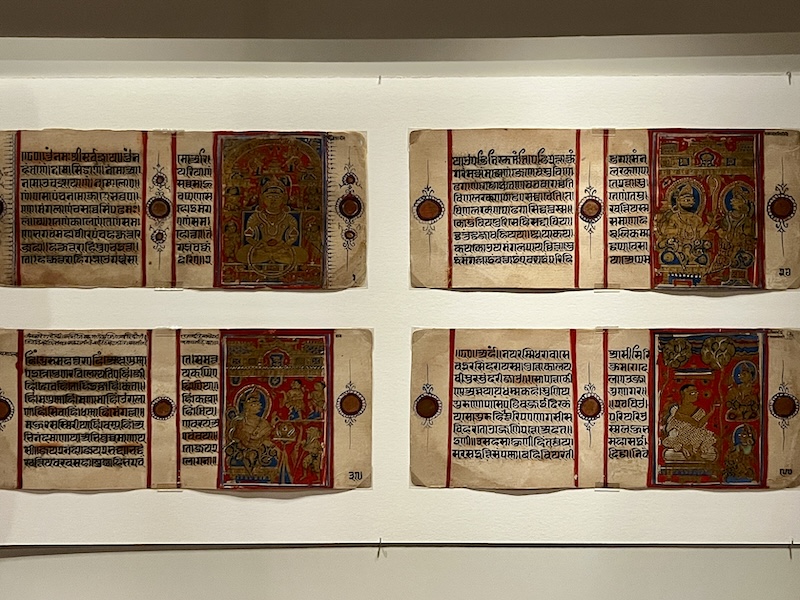 Back on the ground floor, before you exit, do not miss the three sculptures displayed just outside the entrance. They depict Masala – a chilli, a clove, and a nutmeg with mace – representing the spice trade that first connected South Asia and Southeast Asia.
What to Do Nearby
After the Indian Heritage Centre, explore Campbell Lane and Serangoon Road. Just a few steps away:
- Sri Veeramakaliamman Temple – one of Singapore’s oldest Hindu temples (dedicated to Goddess Kali)
- Little India Arcade – shops selling spices, jewellery, textiles and souvenirs
- Tekka Centre – authentic Indian and Ceylonese food (try the masala dosa or biriyani)
- Mustafa Centre – 24-hour shopping for literally everything
Practical Information
|
Detail |
Information |
|
Name |
Indian Heritage Centre |
|
Address |
5 Campbell Lane, Singapore 209924 |
|
Nearest MRT |
Little India MRT (Exit E – 3–5 minute walk) |
|
Opening Hours |
Tuesday – Sunday, 10:00 AM – 6:00 PM (Last admission: 5:30 PM) |
|
Closed |
Every Monday (including public holidays falling on Monday) |
|
Telephone |
+65 6291 1601 |
|
Website |
|
|
|
Contact form on website |
|
Admission |
SGD 8 for foreign adults. Free for Singapore citizens/PRs. Children under 6 free. |
|
Recommended Time |
1.5 – 2 hours |
|
Accessibility |
Lift to all levels. Wheelchair accessible. |
|
Photography |
Allowed without flash |
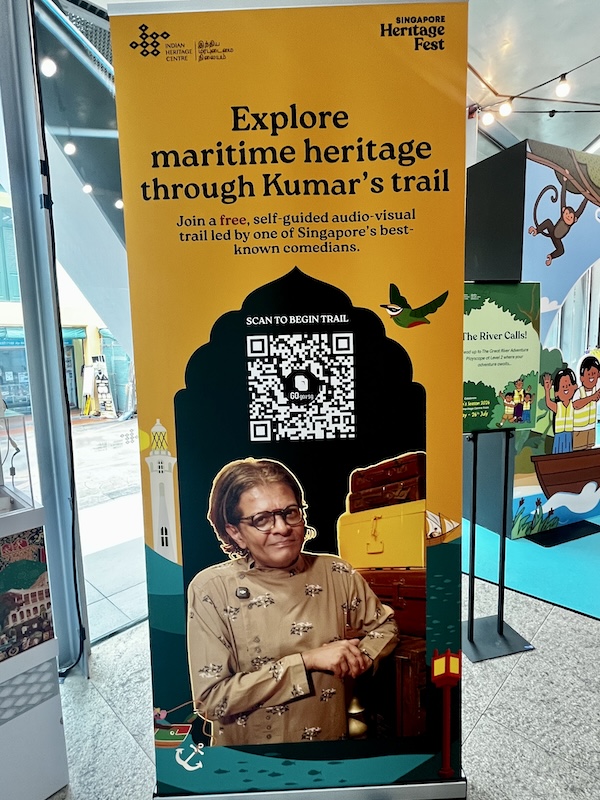 Getting There:
- MRT: Little India Station (Downtown Line – Blue, or North East Line – Purple), Exit E
- Bus: Services 23, 64, 65, 66, 67, 131, 139, 147, 857 (stop 07031 on Serangoon Road, opposite Tekka Centre)
Disclosure & Thanks
My visit to the Indian Heritage Centre was hosted as part of my media trip to Singapore. I would like to extend my sincere gratitude to the Indian Heritage Centre for their warm welcome and for their essential mission of preserving and sharing these important stories. The IHC is small, layered, and full of flavour. This article is for Asian Itinerary and, as always, all opinions, words and images are my own.


