
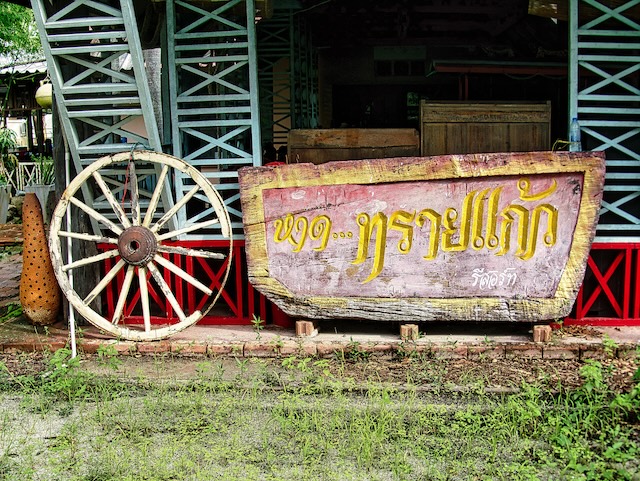
There is a particular kind of museum that does not announce itself with grand architecture or state-of-the-art lighting. It waits quietly by the sea, in a modest one-storey building that was once a family home, and it tells a story so deeply personal that it becomes universal. This is the Hat Sai Kaew Museum—a place that exists because one woman could not bear to let the past be thrown away.
During our recent media trip to Nakhon Si Thammarat to compile a guide for the Tourist Authority of Thailand, we found ourselves on the sands of Hat Sai Kaew beach in Tha Sala district. The museum sits within the grounds of the Hat Sai Kaew Resort, steps from the water, unassuming but filled with over ten thousand objects that span centuries of trade, devotion, and daily life.
The Collector Behind the Collection
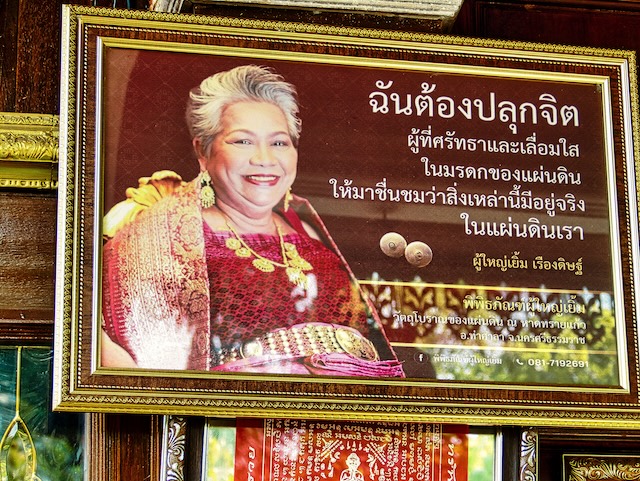 To understand the museum, you must first understand Yerm Ruangdit. The former village head of Ban Thakuen, now in her late sixties, is a woman whose life story reads like a testament to resilience. The eldest of nine children, she grew up poor, selling food on the streets, hawking goods at flea markets, and even working as an inter-provincial bus conductor to help support her parents. That early struggle gave her what she calls a sharp eye for opportunity—and a profound appreciation for things others discarded.
Her collecting began more than forty years ago, when she dropped out of school to sell food for a living. She would stumble upon objects people had thrown away: monk’s robes, old European irons, rusty rifles, broken lamps. She took them all. “I take in everything,” she told a reporter from the Bangkok Post, “and it’s been a habit of mine since I was little.”
What began as a childhood habit became a lifelong mission. She bought chinaware salvaged from sunken Chinese junks by local fishermen, often bartering with rice and chicken for ceramic bowls and plates . She sold land to buy expensive pieces. “Some people think I’m mad,” she admitted. But she takes pride in preserving fragments of history that would otherwise be lost.
A Collection That Spans Millennia
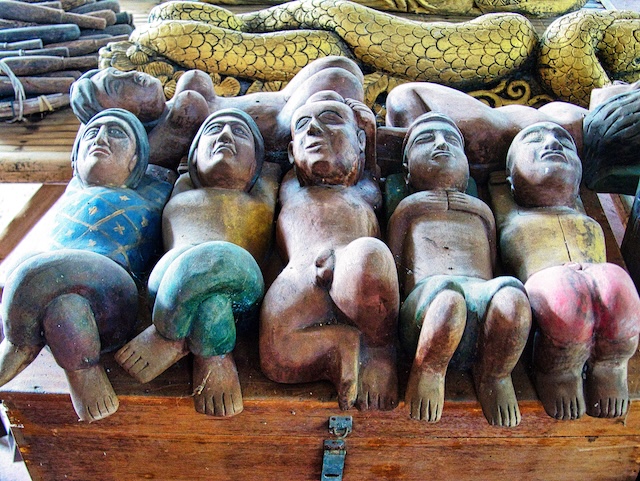
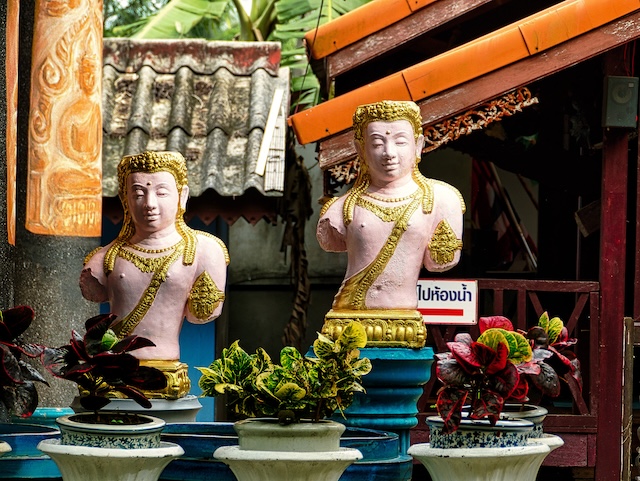 The museum’s holdings are astonishing in their breadth, even if the display space is modest. The collection includes ancient earthenware and everyday tools tied to the fishing and farming life of this coastal stretch, but it goes far beyond that.
Among the treasures are fabrics woven with gold and silver thread, once belonging to the rulers of the South—Yerm possesses more than two hundred museum-quality textiles, some dating back three centuries. There is a gold-engraved Kris dagger that belonged to the family of a Pattani ruler. There are beads of many sizes and colours, including ancient Surya Dev beads, some with origins as far back as Roman times. A statue of a deity from the Srivijaya period, more than 1,200 years old, watches over the room. Vessels recovered from sunken Chinese junks speak to the region’s bustling maritime trade centuries ago.
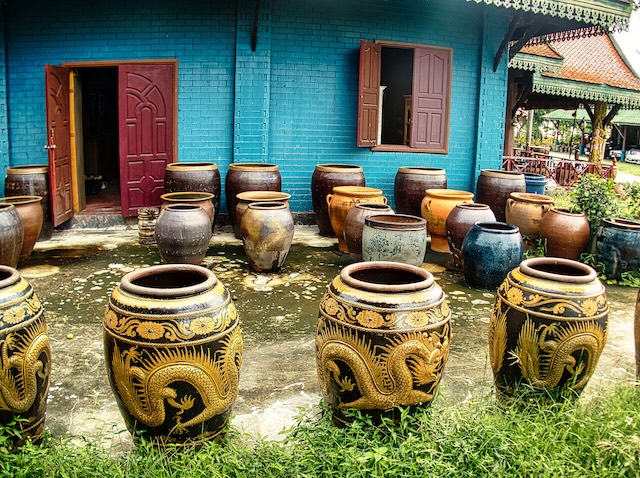 Perhaps the most telling object in her collection is one she no longer owns. Some years ago, when Princess Maha Chakri Sirindhorn visited Nakhon Si Thammarat, Yerm presented her with what appeared to be a simple jar-like water holder. Those around her were puzzled—why give the Princess a jar of shrimp paste? But palace staff later called to convey the Princess’s thanks. The gift was in fact an intricate vessel from the Srivijaya period, predating even the early Sukhothai kingdom. “The princess was able to see beyond the surface,” Yerm said, “and understand what it was really worth.” That moment of recognition gave her the encouragement to pursue her dream of a proper museum.
The Dream of a Real Museum
For now, the collection is housed in a space that Yerm herself admits is too small. The building is simple, one storey, with objects categorised but lacking captions . There is no entrance fee—only a donation box by the door . Yerm or her elderly uncle-in-law, Ta So, often serve as the guides, sharing stories that no label could capture.
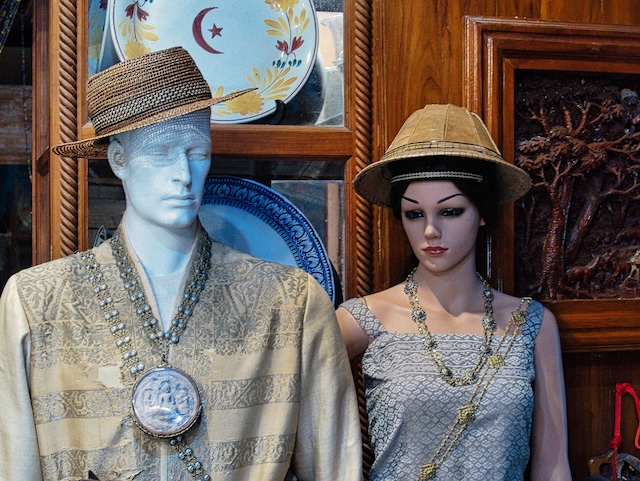 But she envisions something more. She wants to build a proper museum on the seafront land, a professionally managed institution that could cost as much as ten million baht. She imagines sections dedicated to traditional fabrics, underwater finds, and the maritime trade that once made this coast prosperous. The museum could serve as a learning centre, a place where schoolchildren and travellers alike could understand the deep history of Nakhon Si Thammarat.
Practical Information for Visitors
For travellers exploring Nakhon Si Thammarat’s coast, the Hat Sai Kaew Museum offers a quiet, deeply human counterpoint to the region’s larger attractions. It is not a polished national museum; it is a community-run labour of love, and it should be approached with that spirit.
-
Location: Within the grounds of Hat Sai Kaew Resort, Hat Sai Kaew beach, Tha Khuen sub-district, Tha Sala district, Nakhon Si Thammarat
-
Opening Hours: Generally open daily from 10:00 AM to 5:00 PM, though hours can vary; it is advisable to call ahead
-
 Admission: Free, with a donation box available
-
Contact: 081-719-2691
-
Getting There: Tha Sala district sits north of Nakhon Si Thammarat city along Highway 401. A car or motorbike is the most practical way to reach the museum, as public transport to Tha Khuen sub-district is limited
-
Time Needed: Most visitors spend 30 to 45 minutes exploring the collection; it works well as a stop paired with the beach or other Tha Sala attractions
A Final Thought
The Hat Sai Kaew Museum is not trying to compete with the great institutions of Bangkok or Chiang Mai. It is something rarer: a place where one person’s lifelong passion has become a gift to the public. Yerm Ruangdit may not have a degree in archaeology or a team of curators. But she has something perhaps more valuable—an unwavering belief that these objects matter, that they belong to everyone, and that they deserve to be seen.
As she put it herself: “These are national treasures. They belong to everyone and everyone should conserve them.” Standing among her beads and fabrics and sunken treasures, with the sea breeze drifting through the open door, it is hard to disagree.
Photos by Guglielmo Zanchi (Pluto)


