
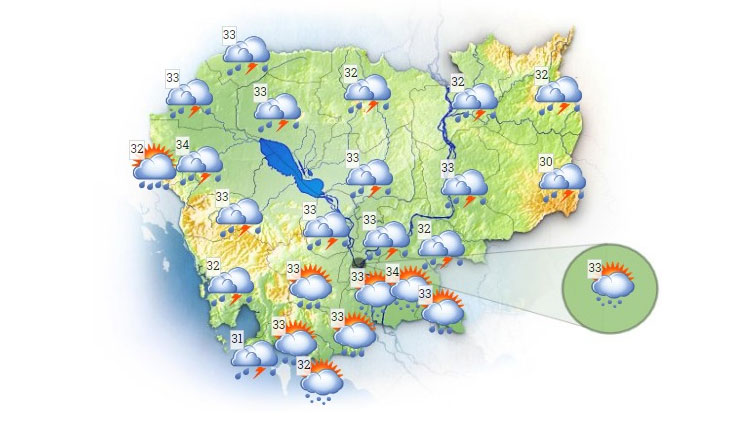
Cambodia sits close enough to the equator that it never really has a cold season, but it splits neatly into two distinct weather patterns shaped by monsoon winds. Anyone planning a trip needs to understand these two seasons, because they change everything from road conditions to rice paddy scenery to how crowded Angkor Wat feels at sunrise. Here’s how the wet and dry seasons actually compare, month by month and detail by detail.
The Basic Climate Pattern
Cambodia’s weather is governed by two monsoon systems. From roughly November through April, dry winds blow in from the northeast, producing the dry season. From May through October, the wind reverses and pulls in moisture from the southwest, bringing the wet season. This isn’t a subtle shift — the difference in humidity, rainfall, and landscape color is obvious within weeks of the seasonal change.
Temperatures stay warm year-round, generally between 75°F and 95°F (24°C to 35°C), so the real variable isn’t heat but moisture and rainfall patterns.
The Dry Season: November to April
best time to visit Cambodia
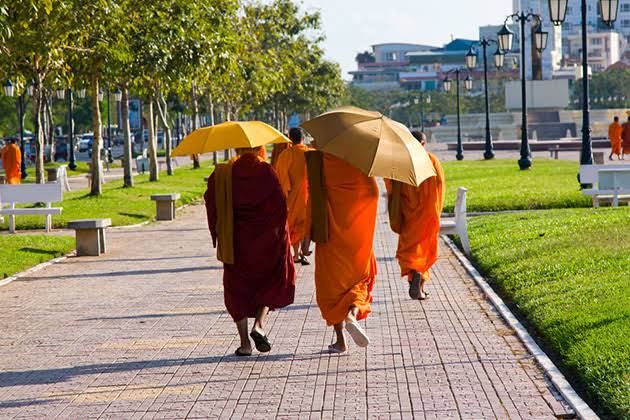
The dry season splits into two noticeably different halves. November through January is the most comfortable stretch, with lower humidity, clear skies, and daytime temperatures that feel manageable even for extended walking tours. This is peak tourist season, and destinations like Siem Reap and Phnom Penh see their highest visitor numbers.
February through April flips that comfort on its head. Humidity climbs, rainfall stays near zero, and temperatures often push past 100°F (38°C) in April, historically Cambodia’s hottest month. Rivers and lakes recede noticeably, and the countryside turns brown and dusty. Farmers wait out this period before the rains return to prepare their fields.
The Wet Season: May to October
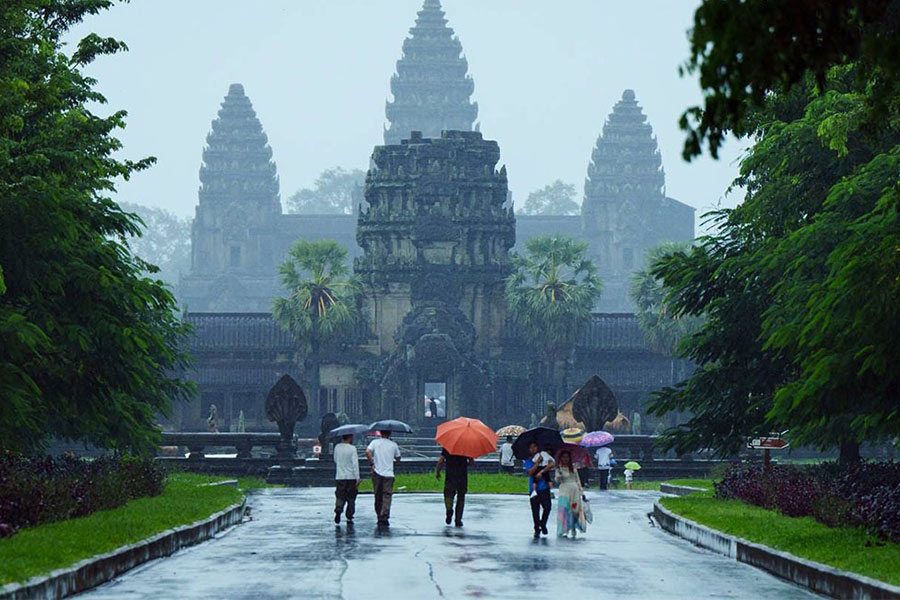 Rain during Cambodia’s wet season rarely means an entire day lost indoors. Storms typically arrive in the afternoon or evening, last one to three hours, and clear out to leave the rest of the day sunny. Mornings are frequently dry and pleasant, which makes early starts to temple visits or river excursions perfectly workable.
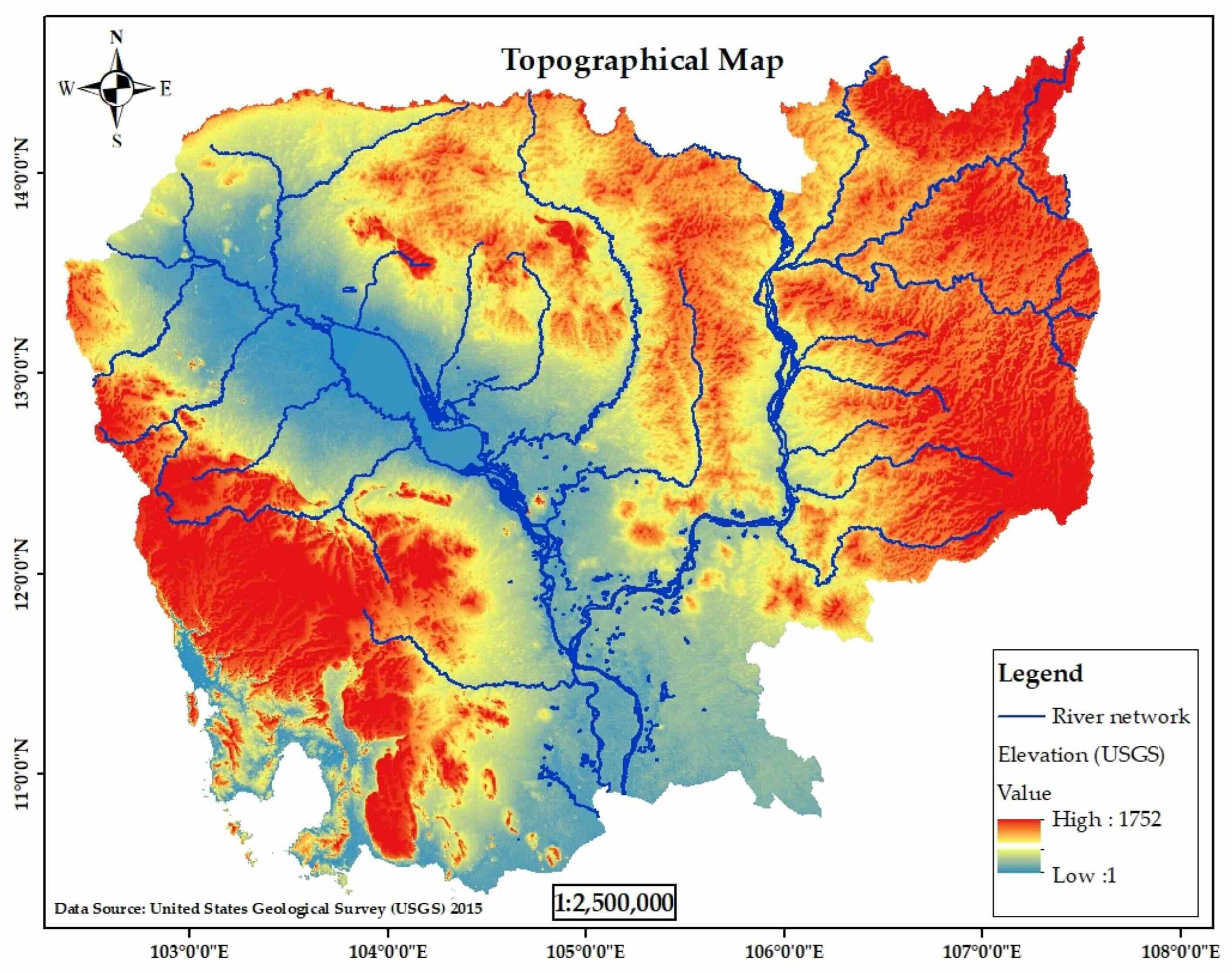
June through August tend to bring moderate, predictable rainfall, while September and October are the wettest months, when the Tonle Sap lake swells to several times its dry-season size. Roads in rural areas can become difficult to navigate during peak rains, particularly in provinces like Mondulkiri or Ratanakiri, so travelers heading off the main circuit should build flexibility into their itineraries.
Temple Visits in Each Season
Angkor Archaeological Park behaves differently depending on the season. During dry months, the sandstone structures photograph beautifully against blue skies, but midday heat at exposed sites like Angkor Wat’s central towers can be intense enough to limit exploring to early morning and late afternoon. Dust also becomes a factor by March and April.
In the wet season, the surrounding jungle turns a deep green, moats fill up, and the moody skies before an afternoon storm make for dramatic photography. Crowds thin out considerably, since many travelers avoid Cambodia during these months, which means shorter lines at popular temples like Ta Prohm and Bayon.
Angkor Wat and Water Levels
Water levels matter more than most travelers expect. The moat around Angkor Wat and the reservoirs known as barays hold water most reliably during and just after the wet season, from roughly September through December. By March and April, some of these features can dry down to mud flats, changing the reflective photos many visitors hope to capture at sunrise.
The Tonle Sap Lake tells a similar story on a larger scale. Its size roughly quadruples during peak wet season, transforming floating villages and flooded forests into some of the best boat excursions in the country. Visiting in April, by contrast, shows a much smaller lake and exposes fishing communities relying on very different daily routines.
Which Season Fits Your Trip
 Dry season, particularly November through January, suits travelers prioritizing comfort, easy road travel, and classic temple photography. It’s also the busiest and most expensive time to visit, so booking accommodations and guides well ahead matters.
Wet season suits travelers who don’t mind adjusting plans around afternoon showers in exchange for lush scenery, lower prices, and fewer crowds. It’s also an excellent time to consider luxury Cambodia tours, since many upscale properties offer better rates and more personalized attention during these quieter months, without sacrificing comfort or access to key sites.
Packing and Practical Tips
Regardless of season, lightweight, breathable clothing and sun protection are essential. Dry season travelers should add a hat and extra water for the hotter months, while wet season travelers benefit from a compact rain jacket, quick-dry fabrics, and waterproof bags for electronics.
Footwear matters more in the wet season, when unpaved paths around rural temples and villages can turn muddy fast. A sturdy pair of sandals or lightweight hiking shoes handles both dust and puddles better than what most travelers pack by default.
The right season for visiting Cambodia depends less on avoiding rain entirely and more on deciding which trade-off suits the trip: peak comfort with peak crowds, or quieter exploration with a predictable afternoon shower built into the day.


