
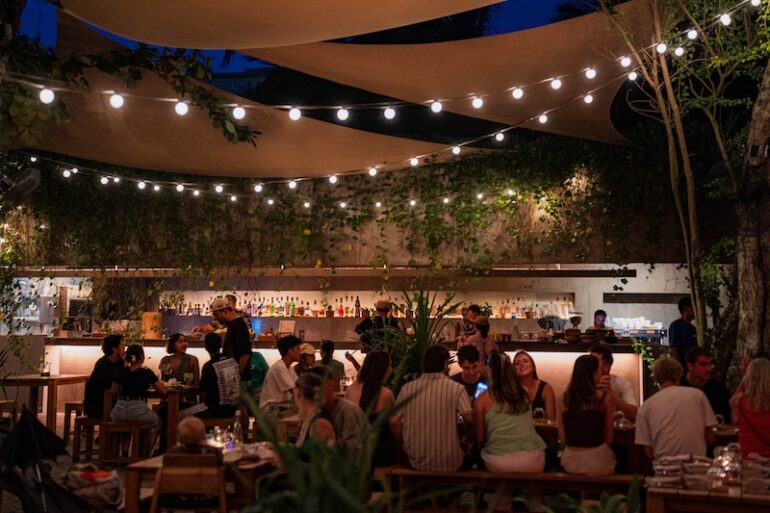
Desa Potato Head, the creative and culinary village set on the shores of Petitenget Beach, Bali, is proud to announce the reopening of Ijen into a new beachfront kitchen defined by wood-fire and the ocean. Marking the next chapter in its evolution, Ijen will relaunch in an expansive new beachfront setting at the Desa, bringing its ocean-to-table philosophy and open-flame cooking closer to the shoreline that inspires it.
Originally launched in 2017, Ijen made history redefining sustainable dining through thoughtful sourcing, whole-catch utilisation, and a commitment to circular design. Nine years on, the restaurant returns with renewed energy, serving line-caught seafood paired with bright accompaniments, offering an honest approach to coastal dining in an understated, open-air setting.
Ocean-to-Table, Refined by Fire and Salt
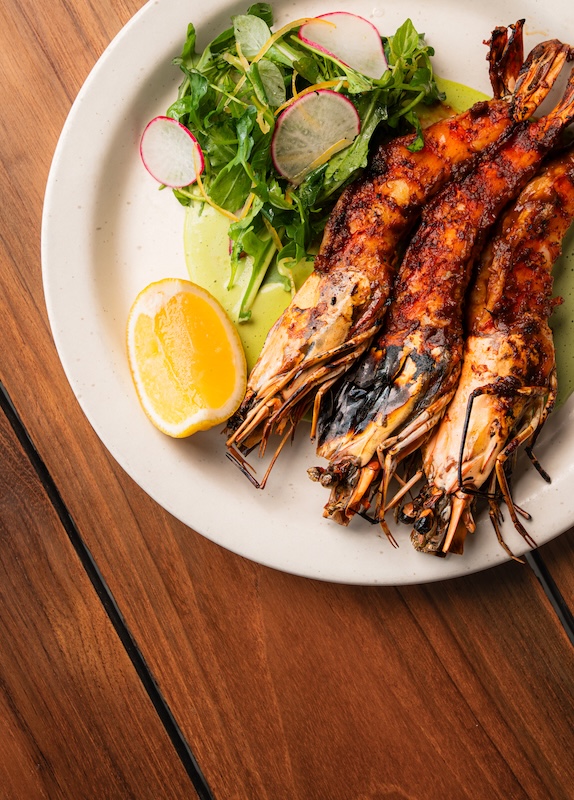 At the heart of Ijen is a simple idea: responsibly sourced seafood cooked over fire, with minimal intervention allowing natural flavours to shine. Working closely with local fishermen who practise traditional hand-reeling methods, the kitchen serves the day’s catch alongside organic produce from Potato Head’s farm and regenerative growers across Bali.
Head Chef Albert Susanto has composed a menu that evolves with the ocean’s fresh catch, designed for sharing and conviviality. The daily catch will be presented with a choice of bright zesty accompaniments, from classic Balinese gulai, to kecombrang chilli glaze, or simply sea salt with virgin coconut oil and fresh lime.
Core dishes will include fish rillettes with toast and pickles; shaker prawns with house-made kosho and lacto shallot seasoning for starters, and main courses focused around either the daily catch or staples of the Balinese seaside like chargrilled octopus with romesco and lime.
“For me, it always starts with sourcing. If the fish has been handled with care — line-caught, respected, properly rested — then our job in the kitchen is simply not to interfere. Fire, salt, acidity… These are tools to honour the ingredient, not disguise it. Cooking this close to the ocean sharpens that mindset. The menu moves with the catch, with the season, with what our fishermen bring in that morning. It keeps us honest, and it keeps the food alive.”
Radically good ingredients over open flame – the approach is elemental, generous, and deeply connected to place.
Wine List: Salt and Fire
The wine list is structured around two elemental forces: Salt and Fire.
-
Salt focuses on ocean-shaped wines — clean, precise and mineral, with a fresh finish that complements seafood and brightness on the plate.
-
Fire explores volcanic soils and structured terroirs — wines with texture, depth and tension, selected to stand alongside dishes touched by flame.
Each section is organised by minerality (Salt) and terroir (Fire), making pairings intuitive and aligned with the menu.
Waste Lab
 Ijen operates with Desa Potato Head‘s meticulous waste-separation system, dividing organic and inorganic waste into five distinct streams. Food remnants are composted onsite or sent to local farms for animal feed; shellfish shucks are powdered for fertiliser and feed; and dry goods are recycled through Bali’s responsible waste management service, EcoBali.
On the menu, a Fish Bone Noodle dish brings this philosophy to life: the noodles themselves are made using finely milled fish bones, transforming what would traditionally be discarded into a nutrient-rich, textural element on the plate.
This new chapter for Ijen reinforces Desa Potato Head’s global benchmark in regenerative hospitality. Having proudly achieved 0.5% landfill waste in 2025, Potato Head embraces a nose-to-tail, root-to-fruit approach at its ecosystem of eight restaurants – 55% of all products are organic, with a target of 75% by the end of 2026.
At Potato Head, sustainability is not an aesthetic gesture, but a fully integrated operational philosophy, true to its ‘Good Times, Do Good’ ethos.
Oliver Truesdale Jutras, Director of Food & Beverage at Potato Head says, “Ijen has always had strong bones – great sourcing, serious intent, no shortcuts. Moving it to the beachfront just makes the story clearer. You’re eating fish while looking at the water it came from. There’s no theatre needed. Across Desa, whether it’s Kaum, Dome, Tanaman or Ijen, the goal is the same: cook with integrity, support the right producers, waste as little as possible, and make it taste good enough that people come back for seconds. Sustainability is important, but flavour comes first. Always.”
From authentic Indonesian flavours at Kaum; natural wine at Dome; or imaginative plant-based cooking at Tanaman, Potato Head also works with local regenerative farmers to source organic ingredients, nurturing the local farming community whilst influencing positive change in Bali’s supply chain.
With its move to the beachfront, Ijen strengthens its identity as a restaurant shaped by its surroundings – open to the elements, guided by the daily catch, and committed to circular hospitality at every stage.


