
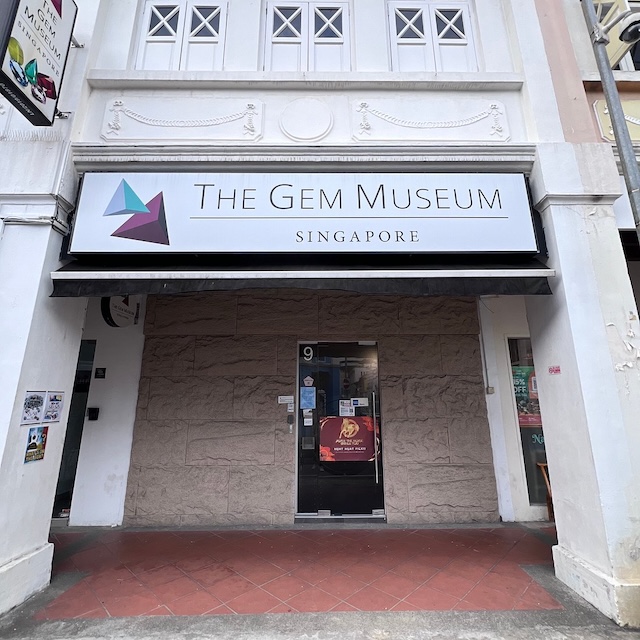
I have always loved stones. Not for their price. For their secrets. When I enter a place like the Gem Museum in Singapore, something happens to me. My skin tingles. My eyes widen. I forget about time. Because gems are not just pretty objects – they are chemistry frozen into art, geological history compressed into crystal, and light trapped inside matter.
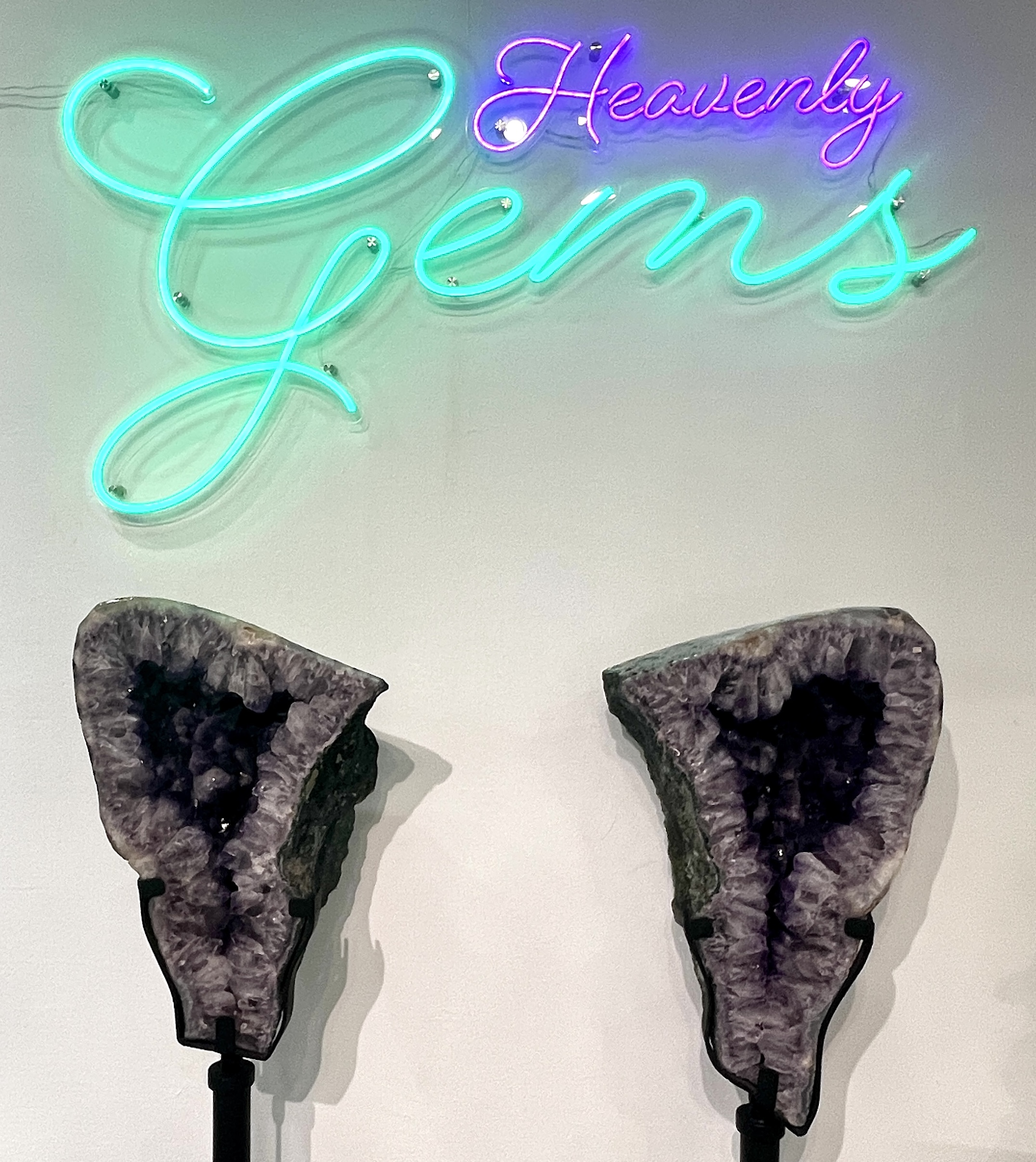 This tiny private museum, hidden inside a three-storey shophouse at 9 Perak Road, is Singapore’s first and most comprehensive gemology museum. It is also one of the most unusual museums I have ever visited – partly because you cannot simply walk in. Entry to the museum is free but you must register online and receive confirmation via email before visiting.
Normally, only the ground floor is open to the public. The upper two floors remain restricted. But on the day of my visit, as part of my Singapore media trip for Asian Itinerary, I was given rare access. A kind lady named Jo, who supervises the museum, took me upstairs to see the laboratory and the private collections that are still closed to most visitors. What I saw – and what I felt – I will not forget.
A Family of Gems
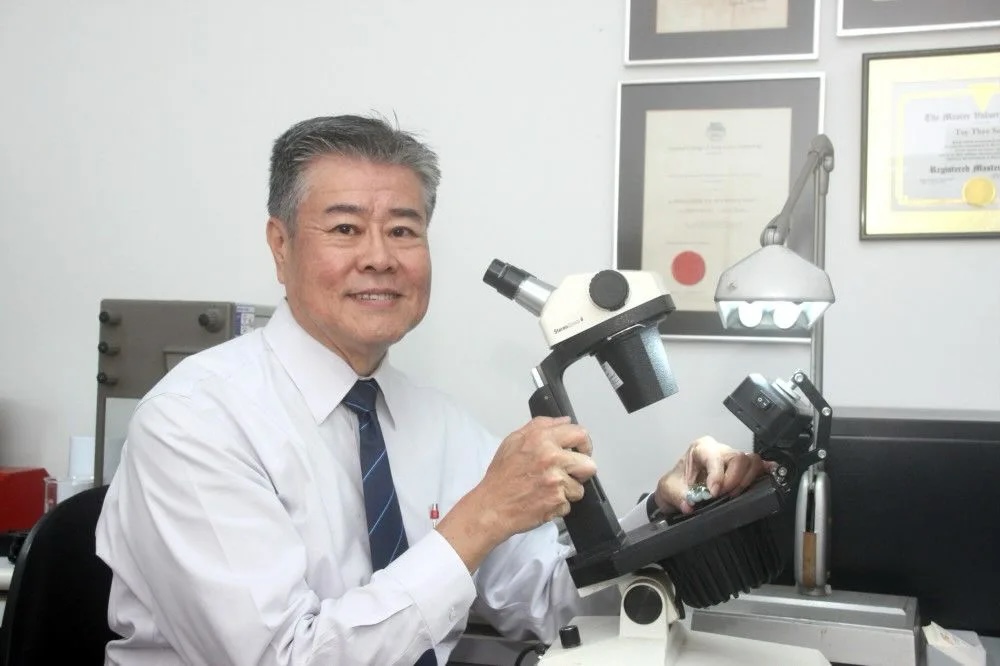
Mr Tay Thye Sun is an honorary recipient of the Fellowship of the Gemological Association of Great Britain
The Gem Museum is a family affair. It was founded by Mr Tay Thye Sun, a certified gemologist who has been in the gem trade for over 40 years. His son, Mr Tay Kunming, and daughter-in-law, Ms Loke Huiying, both certified gemologists themselves, now run the museum together.
The museum first opened in 2015 in a conserved building on Queen Street. In 2025, it moved to its third and current location on Perak Road – a move that allowed the family to consolidate their ventures under one roof: the elder Tay’s gemological laboratory and institute, and the younger Tay’s bespoke jewellery business.
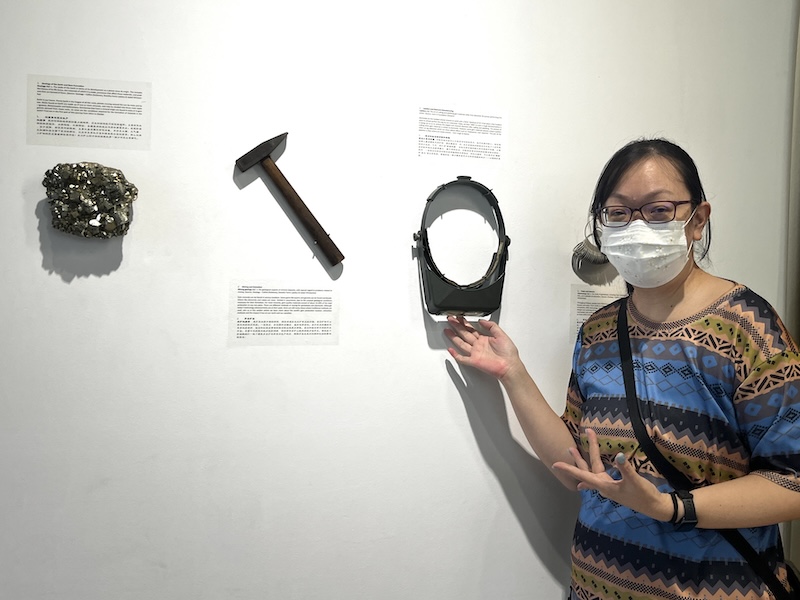
Jo is the kind of guide every museum dreams of having
The Gem Museum is privately owned, but it is also part of Singapore’s Museum Roundtable – a collective of museums and heritage galleries that collaborate on exhibitions and programmes.
A One-Hour Journey
I spent about one hour at the museum, most of it with Jo. She is the kind of guide every museum dreams of having: knowledgeable without being pedantic, passionate without being overwhelming, and genuinely excited to share what she loves.
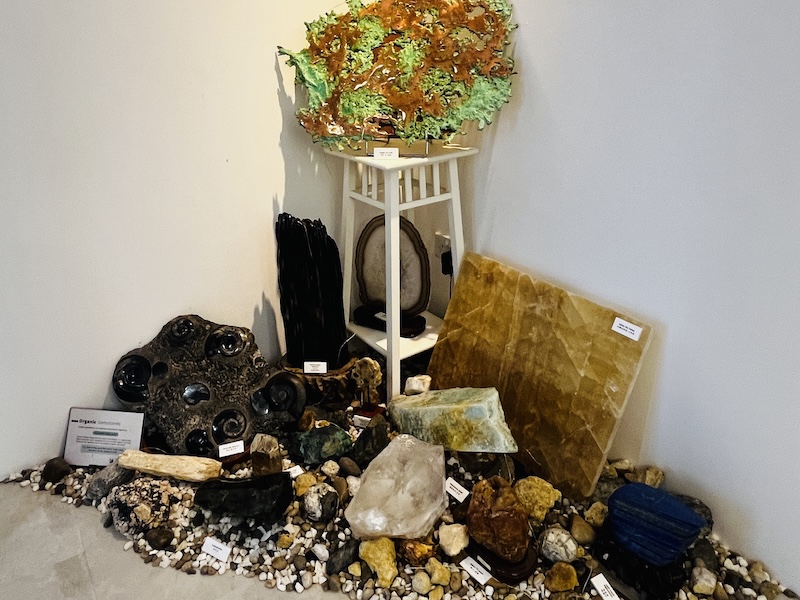 Jo explained the museum’s layout simply. The route follows the journey of a gemstone from mine to market in four stages: formation, mining and extraction, cutting and polishing (lapidary), and finally the trade and industry.
On the ground floor, I saw raw specimens from around the world. On the upper floors – the ones not yet open to the public – Jo showed me the laboratory where gems are tested and authenticated. I saw equipment I did not recognise, and stones so small they could fit on a fingertip, yet worth fortunes. But the most magical moment came when Jo turned off the lights.
UV Light: The Hidden World of Gems
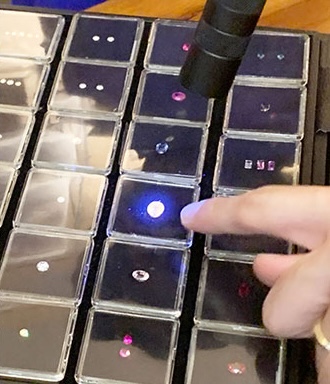
Jo used a UV torch to get the gems to change color and glow
Jo picked up a UV torch – sometimes called a black light or an ultra torch. She aimed it at a row of ordinary-looking rocks. And suddenly, they were not ordinary anymore. Some glowed bright blue. Others flashed neon green. A few turned deep fiery red. This was fluorescence – the ability of certain minerals to absorb invisible ultraviolet light and re-emit it as visible colour. In normal daylight, these stones look dull, even boring. Under UV, they become magical. I stood there like a child watching fireworks. Jo smiled. She had seen this reaction many times before.
 She explained that different qualities of gems – iridescence, luminescence, phosphorescence – all depend on their chemical composition. A ruby from Myanmar glows red under UV because of chromium. A diamond from Africa might glow blue because of boron. The same mineral can look completely different depending on where in the world it was formed.
This is what fascinates me most about gems. They are not just beautiful: they are geological postcards from specific places on Earth, each with its own chemical signature, each telling a story of heat, pressure, time and luck.
From the Earth to the Hand
The museum does an excellent job explaining the four stages of a gem’s journey.
Stage 1: Geology and Formation
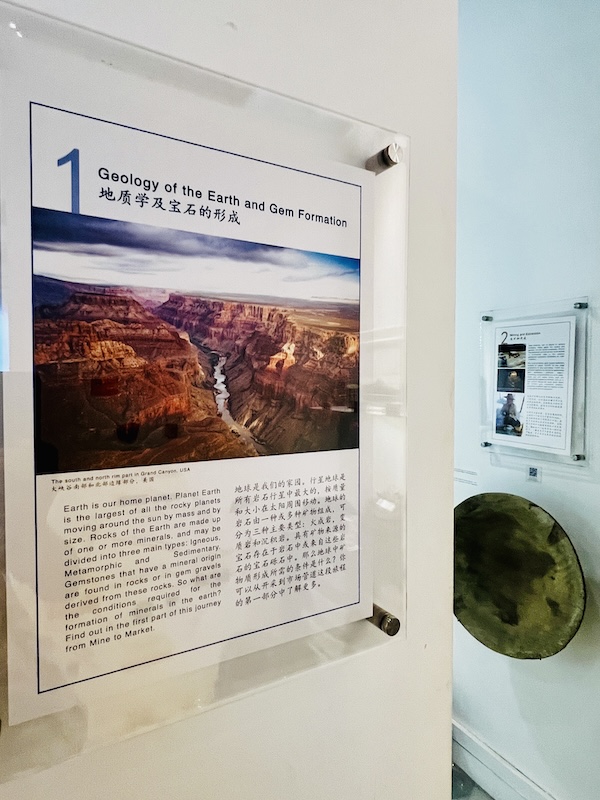
 The Earth’s rocks are divided into three types: igneous, metamorphic and sedimentary. Gemstones of mineral origin are found in rocks or in gem gravels derived from those rocks. Some gems, like quartz and garnets, can be found worldwide. Others, like diamonds and rubies, are rare because they require very specific geological conditions – intense heat, immense pressure, and just the right chemical mix.
Stage 2: Mining and Extraction
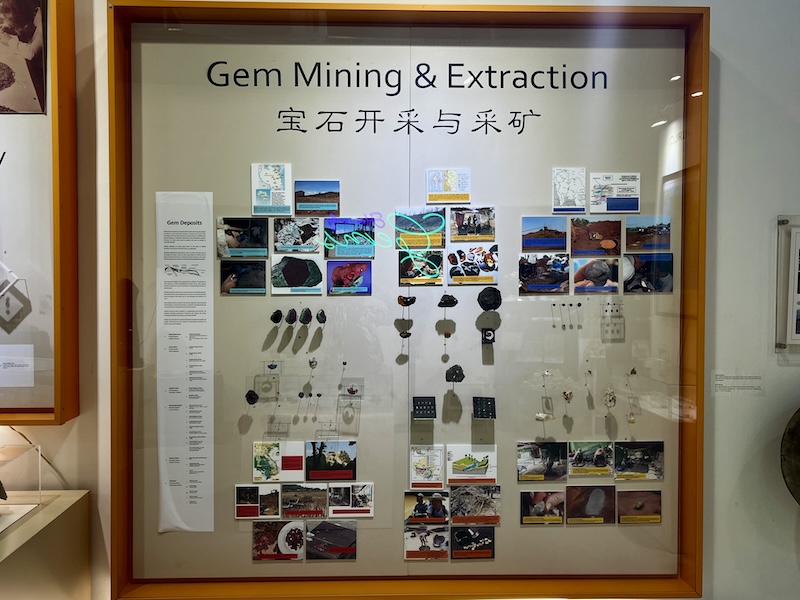
For most minerals, only about 10–20% of total production at any given site is of gem quality. Mining methods vary from modern industrial operations to traditional techniques that have not changed in centuries. In Sri Lanka, miners still work underground by hand. In Myanmar, rubies are retrieved from marble matrices using simple tools. The museum displays photographs of these mines, and I found myself staring at the faces of the miners – tired, dusty, but somehow proud.
Stage 3: Cutting and Polishing (Lapidary)
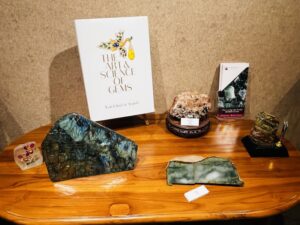
This is where raw stone becomes a gem. The museum displays both uncut crystals and finished stones side by side, so you can see the transformation. A rough diamond looks like a dull piece of glass. After cutting, it explodes with fire. The skill of the lapidary – the cutter – is almost as rare as the gem itself.
Stage 4: Trade and Industry
Finally, gems enter the global market. Singapore, as a major trading hub, plays an important role in this stage. The museum explains how gems are graded, certified and sold – from the mine to the jeweller’s window.
What I Learned from Jo
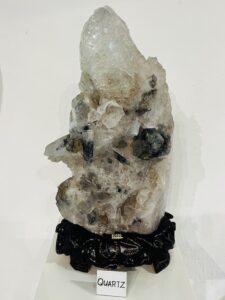
As we walked through the upper floors, Jo told me about the museum’s geologists. They travel often – to Africa, to South America, to remote parts of Asia – in search of perfect stones. Not perfect in the commercial sense (flawless and expensive), but perfect in the geological sense: rare formations, unusual colours, crystals that teach us something new about how the Earth works.
The owner of this private museum, Mr Tay Thye Sun, has dedicated his life to gemstones. So did his father. Two generations of gem lovers. That kind of passion cannot be faked.
I asked Jo if she ever gets tired of showing the same stones to visitors. She laughed and said no – because every visitor sees something different. A child sees colours. A scientist sees chemistry. A jeweller sees value. And someone like me, a gem enthusiast, sees magic.
Practical Information
|
Detail |
Information |
|
Name |
The Gem Museum |
|
Address |
9 Perak Road, Singapore 208130 |
|
Nearest MRT |
Rocher MRT (Downtown Line – Blue) |
|
Opening Hours |
By appointment only. Register online via website. |
|
Admission |
Free (ground floor). Upper floors restricted. |
|
Recommended Time |
1 hour (with a guide like Jo, 1.5 hours) |
|
Website |
thegemmuseum.gallery |
|
|
Use contact form on website |
|
Parking |
Sheltered carpark at Tekka Place. Roadside parking on Mayo Street and Perak Road. |
|
Special Notes |
No walk-ins accepted. Must register online and receive confirmation before visiting. Free tours run hourly. |
 Getting There:
- MRT: Rocher Station (Downtown Line – Blue), Exit B. The museum is right beside the station.
- Bus: Several services stop along Jalan Besar or Serangoon Road, a short walk away.
Final Verdict
The Gem Museum is not for everyone. It is small. It requires advance planning. It does not have blockbuster exhibitions or interactive gimmicks. But for anyone who loves gems – truly loves them, not for their price but for their beauty and their science – this museum is a hidden treasure or, as Jo liked to put it, “a hidden gem”.
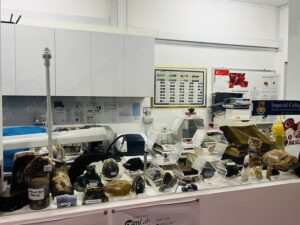
I spent one hour with Jo but I could have stayed three. I saw rubies from Myanmar, amethysts from Mexico, diamonds from Africa, and a hundred other stones whose names I have already forgotten but whose colours I will remember forever.
And when Jo turned on that UV torch, and the rocks began to glow in the dark, I felt something I have not felt in a long time: pure, childlike wonder. That is what a good museum does. That is what the Gem Museum did for me.
Disclosure & Thanks
My visit to the Gem Museum was hosted as part of my media trip to Singapore. I would like to extend my sincere gratitude to Jo for her time, her patience, and her passion. This article is for Asian Itinerary and, as always, all opinions, words and images are my own.
 The Gem Museum
Address: 9 Perak Road, Singapore 208130
Telephone: +65 6734 3172
Email: info@fegj.com.sg
Website: thegemmuseum.gallery
Facebook: The Gem Museum Singapore
YouTube: The Gem Museum Singapore


