

Gamelan is one of the most fascinating and representative aspects of Indonesia’s musical culture, especially on the islands of Java and Bali. This musical tradition, rich in history and spirituality, offers a unique experience that captures the heart of anyone lucky enough to hear it live. In this article, you’ll discover what makes Gamelan from Java and Bali so special, the differences between the two traditions, and why this music deserves a prominent place in your Indonesian travel itinerary.
 What is Gamelan?
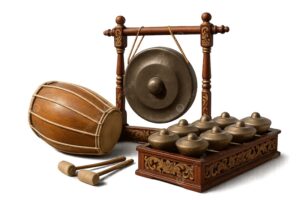
The term “Gamelan” refers to a set of traditional musical instruments, mainly percussion, consisting of gongs, metallophones, xylophones, bells, and other brass and bronze instruments. This music, which can be sacred or secular, is performed in ensembles of various sizes, often accompanying religious ceremonies, cultural rituals, dances, and theatrical performances. Its unique sound, characterized by rich, resonant, and hypnotic tones, creates an atmosphere of spirituality and meditation.
Gamelan of Java

Javanese Gamelan, also known as “Gamelan Jawa,” is one of the oldest and most complex in the country. It features instruments such as the gong ageng (large gong), the gender (keyboard metallophone), the bonang (series of bells), and the kendang (drum). Javanese music is deeply rooted in the island’s religious and cultural traditions, often associated with Hindu and Buddhist ceremonies, traditional dances, and theatrical performances like wayang kulit (shadow puppets).
Javanese Gamelan is distinguished by its intricate structure and tightly synchronized rhythms, creating a rich tapestry of nuances and dynamics. The music is often accompanied by symbolic movements and dances that tell mythological stories, making each performance a truly spiritual experience.
Gamelan of Bali
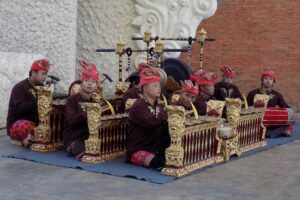
Balinese Gamelan, on the other hand, is known for its vibrant energy, fast rhythms, and more aggressive melodies compared to Java’s. In Bali, Gamelan is closely tied to religious celebrations, purification rituals, and public events such as festivals and traditional dances. Main instruments include the gangsa (metallophone), kendang, bells, and other percussion instruments.
One of the defining features of Balinese Gamelan is its role in sacred dances like Barong and Legong, accompanied by lively and engaging music. Balinese music often features improvisations and spontaneous variations, reflecting the island’s energetic and spiritual essence.
Differences Between Javanese and Balinese Gamelan
Although both types of Gamelan share instruments and basic characteristics, there are key differences:
- Sound and rhythm: Javanese Gamelan tends to have a softer tone, with slower, more structured melodies, while Balinese Gamelan is faster, more aggressive, and dynamic.
- Usage: Javanese Gamelan is often linked to religious ceremonies and formal theatrical performances, while Balinese Gamelan is more lively, used in festivals and public celebrations.
- Instruments: Both traditions use similar instruments, but playing techniques and arrangements differ, resulting in unique and recognizable sounds.
Why Listen to Gamelan During Your Trip to Indonesia?

Watching a Gamelan performance from Java or Bali is an unmissable experience for visitors to these stunning islands. Traditional music offers a deep immersion into Indonesia’s cultural, religious, and artistic roots, providing insight into its ancient traditions. Many tourist spots and temples host public or private concerts, perfect opportunities to discover and appreciate this unique art form.
Conclusion
Java and Bali’s Gamelan represent an invaluable cultural heritage capable of conveying emotion and spirituality through ancient sounds. Whether you’re passionate about music, culture, or spirituality, witnessing a Gamelan performance will undoubtedly be a memorable highlight of your Indonesian journey. Don’t miss the chance to explore this captivating musical tradition and let yourself be transported by its deep, ancient melodies.


