
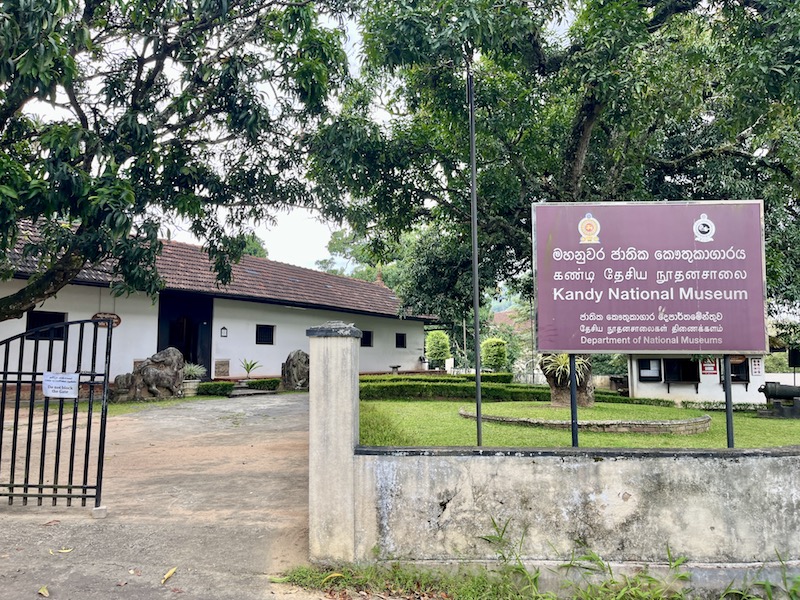
 Nestled in the heart of Kandy, the National Museum of Kandy is a captivating journey into Sri Lanka’s royal past and cultural grandeur. Located next to the revered Temple of the Tooth, this museum offers travelers a unique glimpse into the Kandyan kingdom’s history, art, and traditions. Whether you’re a history buff or a casual explorer, the museum provides an engaging experience that deepens your understanding of Sri Lanka’s rich heritage.
An Overview of the Museum
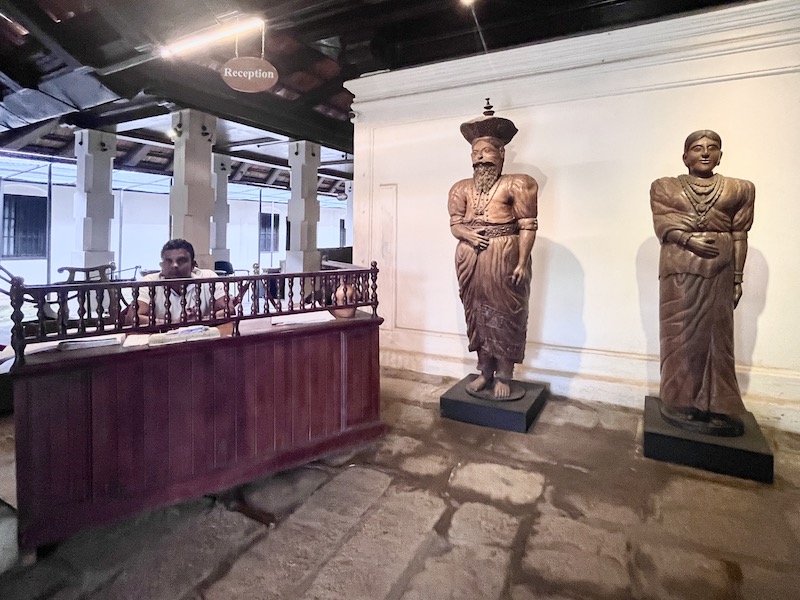
National Museum of Kandy entrance
Housed in the historic Palle Vahala building, the museum is a beautiful blend of traditional Kandyan architecture and colonial influences. Built in 1840, this structure was originally the residence of Kandyan queens and is a testament to the craftsmanship of local artisans. The museum’s collection spans over 5,000 artifacts from the 17th to 19th centuries, showcasing weapons, jewelry, textiles, and everyday tools used during the Kandyan era.
The museum is a vital cultural institution maintained by Sri Lanka’s Department of National Museums. It not only preserves artifacts but also narrates the story of Kandy’s resistance to colonial rule and its significance as the last independent kingdom of Sri Lanka.
The Historical Significance of the Museum
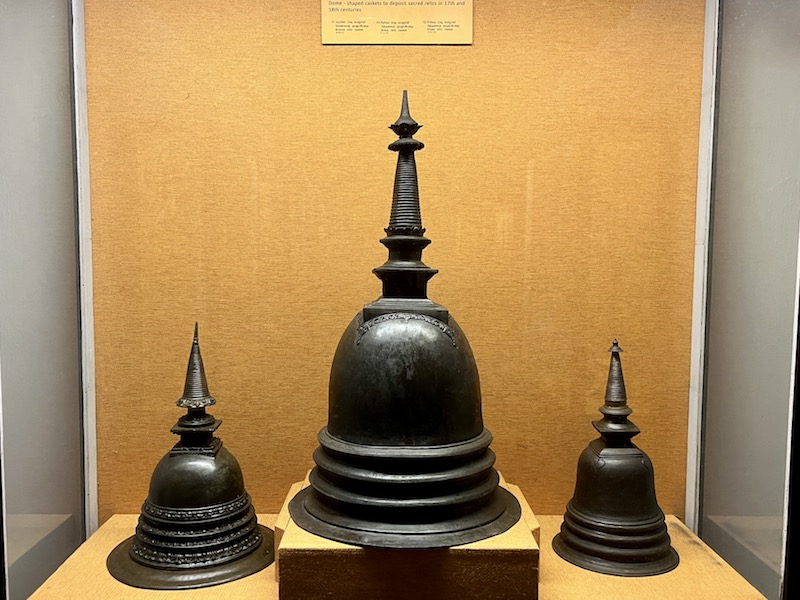
Dome shaped caskets used for storing relics
The origins of the National Museum of Kandy lie in its historic building, which served as part of the Royal Palace complex and was once home to the Kandyan queens. After the fall of the Kandyan Kingdom in 1815, the building transitioned from royal residence to colonial administrative office before becoming a museum in 1942.
Today, the museum stands as a symbol of Sri Lanka’s resilience and cultural identity. It vividly recounts the kingdom’s history through its extensive collections, including a copy of the 1815 treaty that marked the end of Kandyan independence and the beginning of British rule.
 What to See and Do
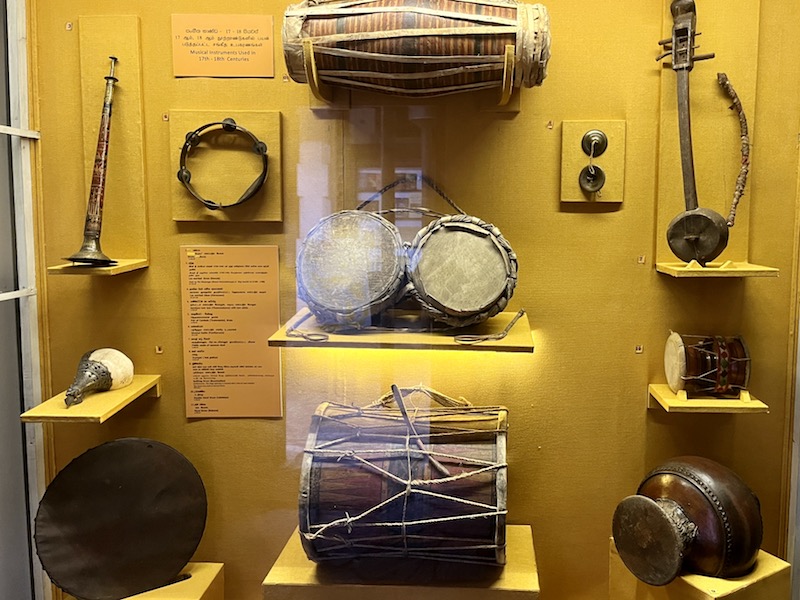
The museum is organized into eight sections, each dedicated to different aspects of Kandyan history and culture:
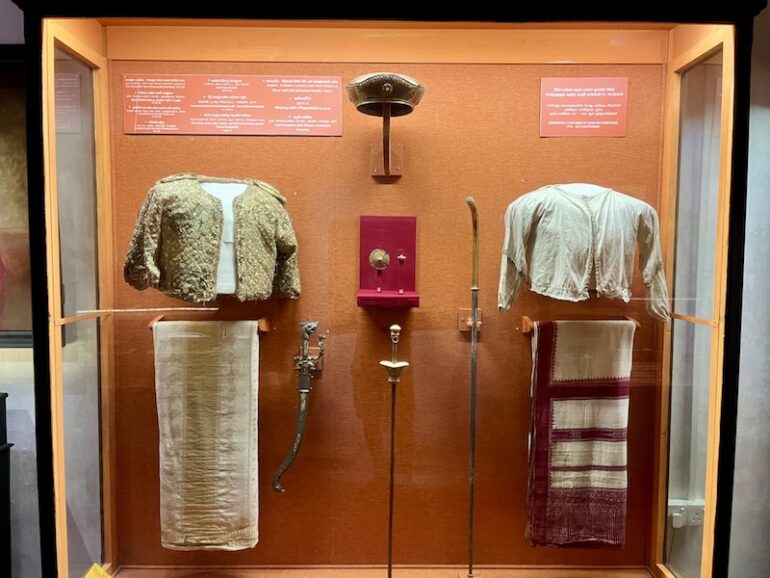
- Royal Ornaments and Dresses: Admire traditional crowns, jewelry, and regal attire worn by Kandyan royalty, including the attire of notable figures like Keppetipola Adigar.
- Culinary Tools: Discover ancient cooking vessels, utensils, and ceramics that reveal Kandyan culinary traditions.
- Weapons Gallery: Explore swords, shields, and cannons used in warfare and royal ceremonies, showcasing the craftsmanship of Kandyan artisans.
- Industries: Delve into local crafts such as woodwork, metalwork, and lacquer industry, with tools and artifacts that highlight daily life and trades.
- Artifacts and Sculptures: View exquisite ivory carvings, Buddha statues, and religious sculptures that embody spiritual and artistic expression.
- ’Pethikada’ and Coins: Learn about traditional storytelling through painted wooden planks and trace the evolution of currency in Sri Lanka.
- Special Exhibitions & Educational Programs: Participate in guided tours, lectures, and workshops that bring Kandyan history to life.
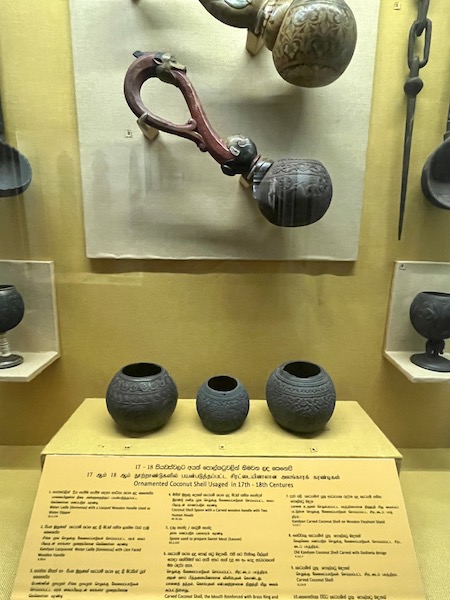
Ladles and cups made from coconut shells
Practical Information
The museum is open from Tuesday to Saturday, 9:00 AM to 5:00 PM. Entry fees are affordable, with prices for locals and foreigners clearly listed. It’s conveniently located near the Temple of the Tooth and Kandy Lake, making it easy to include in your sightseeing itinerary.
- Address: Kande Vihara Road, Kandy, Sri Lanka
- How to Get There: Walk from central Kandy, take a tuk-tuk, or visit as part of a guided tour.
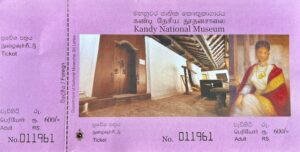
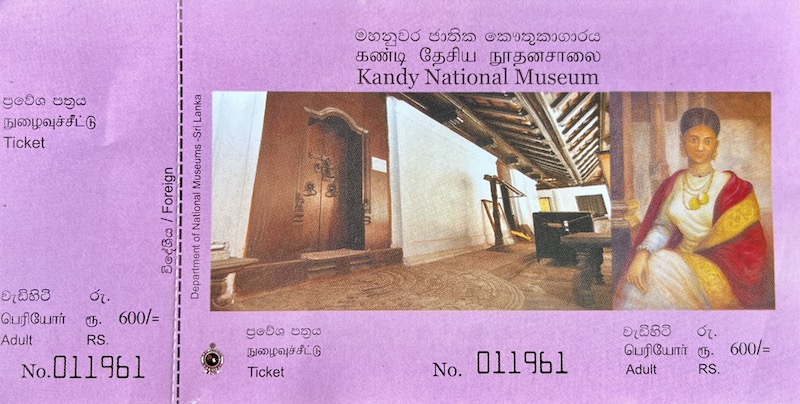
- Entrance ticket for foreigners: 600 LKR ($2)
Tips for Visitors
- Allocate at least 1-2 hours to explore the museum thoroughly.
- Don’t miss the intricate royal regalia and ancient manuscripts.
- Combine your visit with nearby attractions like the Temple of the Tooth and Kandy Lake for a full cultural experience.
 Final Thoughts
Visiting the National Museum of Kandy is more than just sightseeing—it’s an immersive experience into the island’s regal past and cultural resilience. It’s a must-visit for anyone eager to understand the historical roots of Sri Lanka’s proud heritage. For more information and travel planning, visit the Sri Lanka Tourism Official Website
View 360 Hotel by Queens Mount
 The Asian Itinerary team was kindly hosted by View 360 Hotel by Queens Mount, which offers family rooms with air-conditioning, private bathrooms, and modern amenities. Each room includes a work desk, TV, and free WiFi, ensuring a pleasant stay.
Visit their FACEBOOK page HERE.
Metro Tours & Rent A Car

Asian Itinerary explored Sri Lanka by car, courtesy of Metro Tours & Rent A Car, proudly serving travelers across the island since 2005. With over 20 years of experience and a 4.9-star rating from 220+ Google reviews, they are a trusted name in car rentals, known for quality service and customer satisfaction.
WEBSITE: https://metrotours.lk/
EMAIL: metrotoursrentacar@gmail.com
WHATSAPP: +94 777327285


