
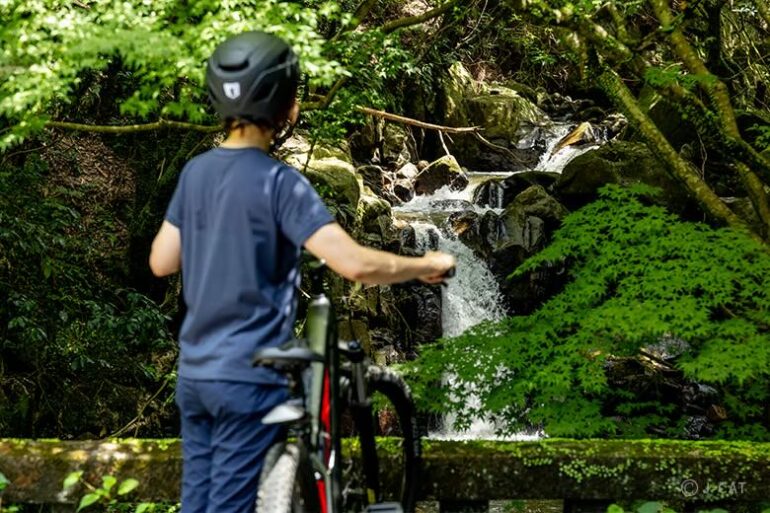
Cycle about 18 km through the hills and villages of Kasagi, a quiet corner of southern Kyoto, with a guide who knows the route well. At Kasagidera Temple, a temple near the top of Mt. Kasagi built around giant granite boulders, the vice head priest shows you the grounds, with optional sutra or Buddha tracing. Then ride on to Itto-seki, a boulder split clean in two that legend links to the Yagyu samurai clan.
Mountains and Rivers on Kyoto’s Southern Edge
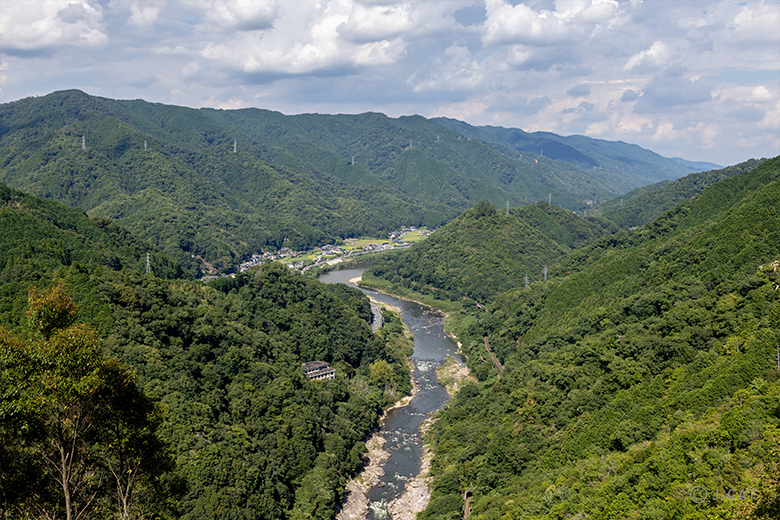
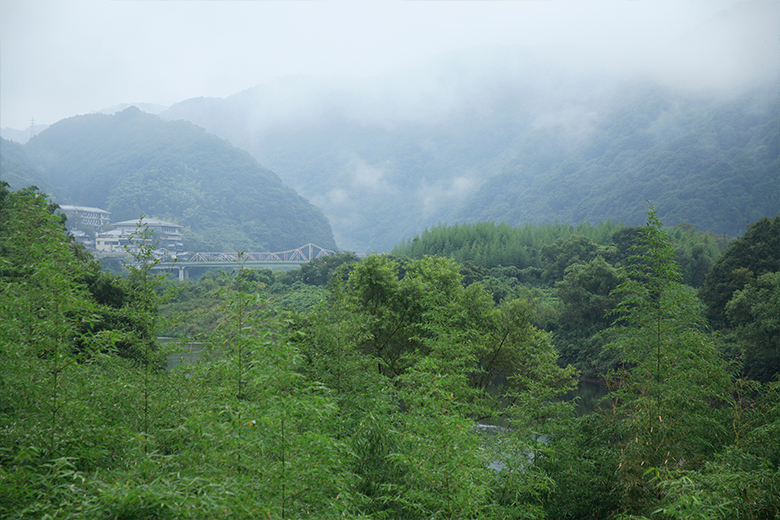
“The greatest appeal of this tour is experiencing authentic Japanese scenery and nature. Since it’s off the typical tourist track, you can enjoy a quiet environment without the crowds,” say Kevin and Yukie Lucas, who run cycling tour company Cycle Kasagi. The tour is based in Kasagi, a small town on Kyoto Prefecture’s southern border with Nara. It is about 50 km from central Kyoto and Osaka, around 90 minutes by train, and surrounded by forested mountains and rivers.
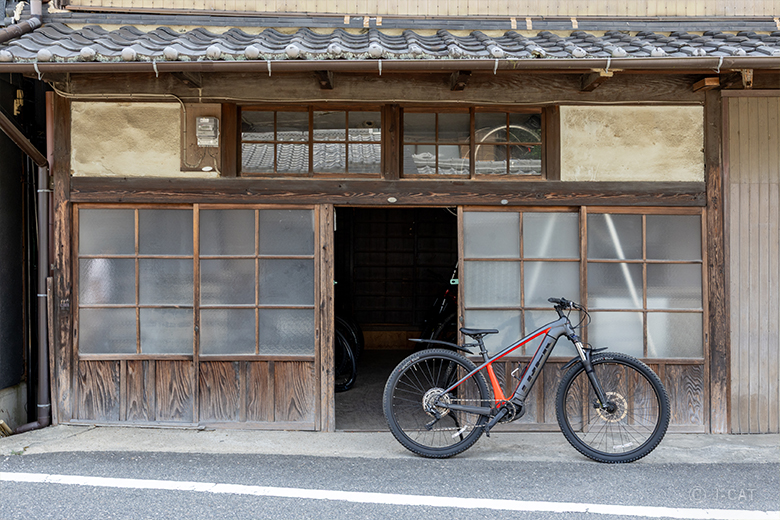
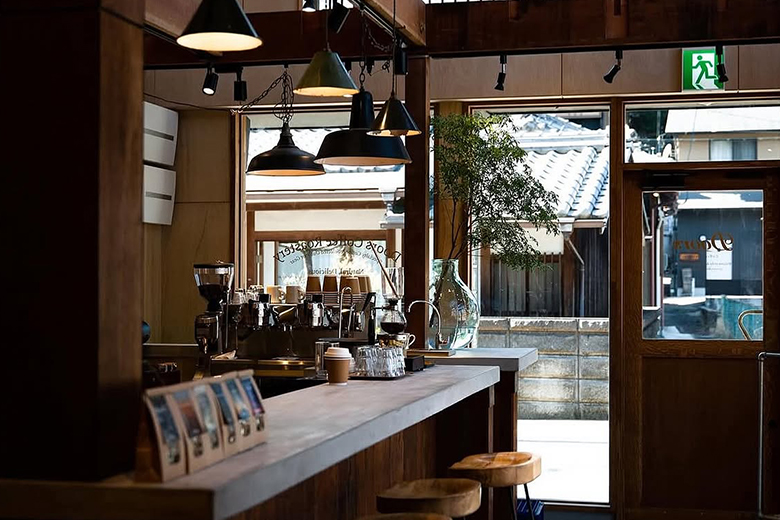
After meeting at JR Kasagi Station, it is a one-minute walk to Doors Coffee Roastery, where the bikes are kept beside the café and the smell of roasting coffee drifts over the racks. Here, your Cycle Kasagi guide, fluent in English, runs through the route and the bikes. These are electric-assist mountain bikes (e-MTBs) from a leading American brand, with 10 gears and a strong electric assist that makes steep mountain roads far more manageable.
Through the Village and Up Into the Forest
Once your saddle is adjusted and your helmet is on, you will practice getting on, getting off, and riding on a flat stretch of road. Then you set off for the first stop: Kasagidera Temple, near the summit of 288 m Mt. Kasagi.
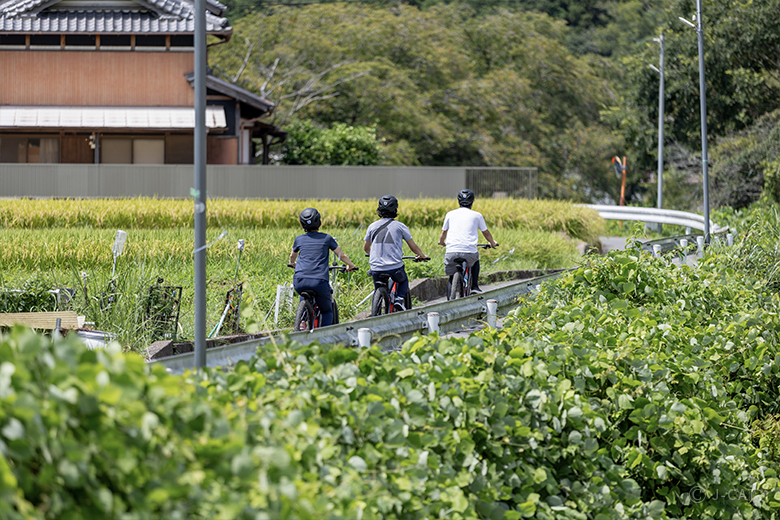
The route passes through a quiet, old-fashioned village before the road starts to climb. Within minutes you are among the trees, riding through cool forest air, with sunlight catching the clear stream beside the road.
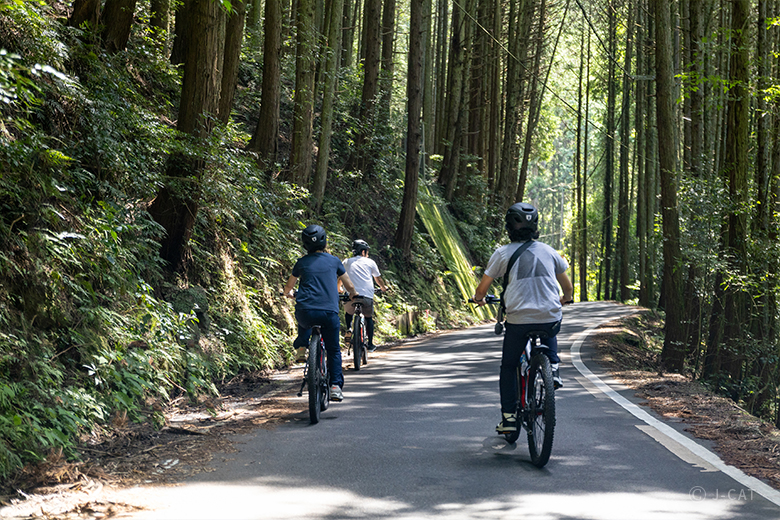
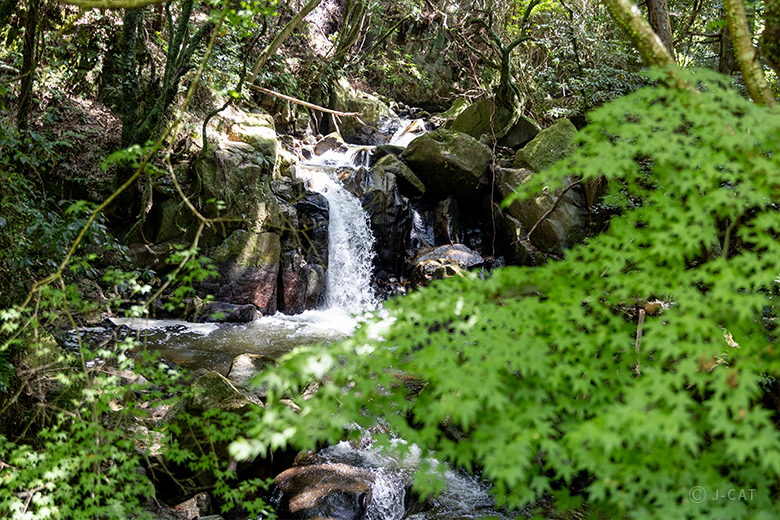
After about 15 minutes you stop at a small waterfall, a good spot to cool off and drink some water while listening to the falls and the birds. By the time you set off again, you will have the hang of the gears, and the steeper sections get easier.
Kasagidera Temple and Its Cliff-Carved Buddha
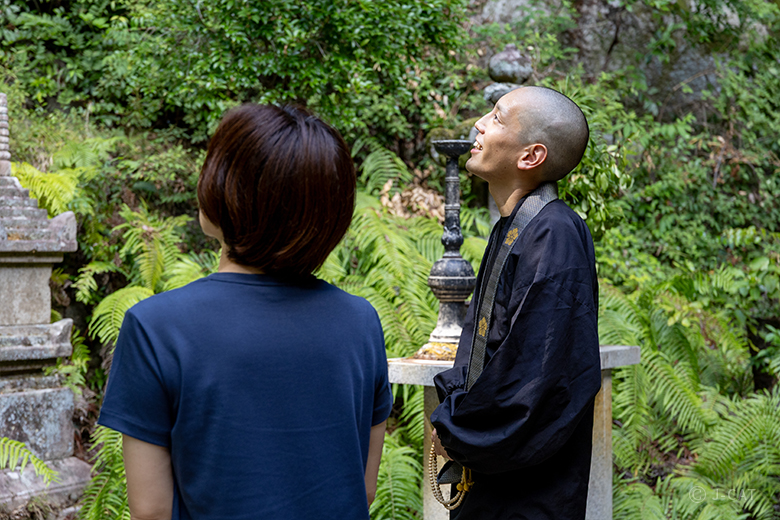
About 30 minutes later you reach Kasagidera Temple, known as the “Temple of Megaliths and Seas of Clouds.” Vice Head Priest Keiga Kobayashi welcomes you with a cup of tea in the main temple quarters. Tradition dates the temple to the 7th century, and its ascetic trail has drawn monks since ancient times. After telling you something of its history, he shows you around the grounds.
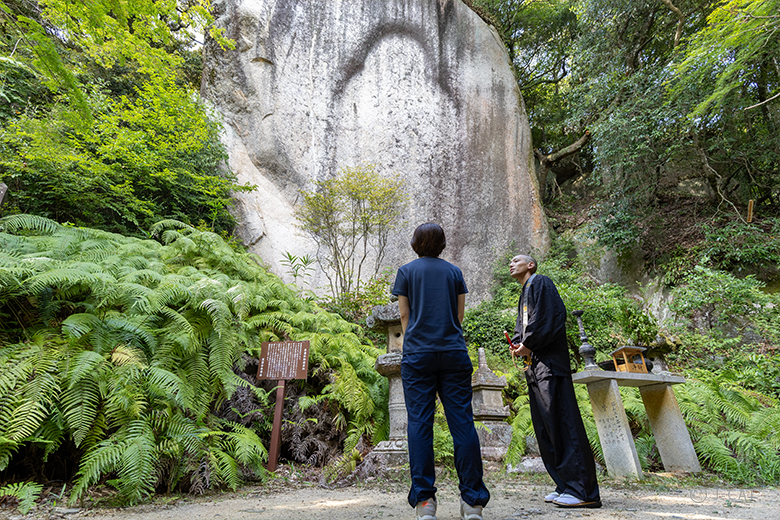
Mt. Kasagi is solid granite, and huge boulders are scattered across it. The temple’s main image, the Miroku Buddha, is carved into a rock face more than 15 m high. The figure itself was destroyed by fire during medieval warfare, but its deeply cut halo remains, and it is still a striking sight. With its Buddhist sites set among raw mountain landscape, the temple recalls the Kumano Kodo pilgrimage trails in Wakayama.
The Ascetic Trail, and Sutra or Buddha Tracing (Additional Option)
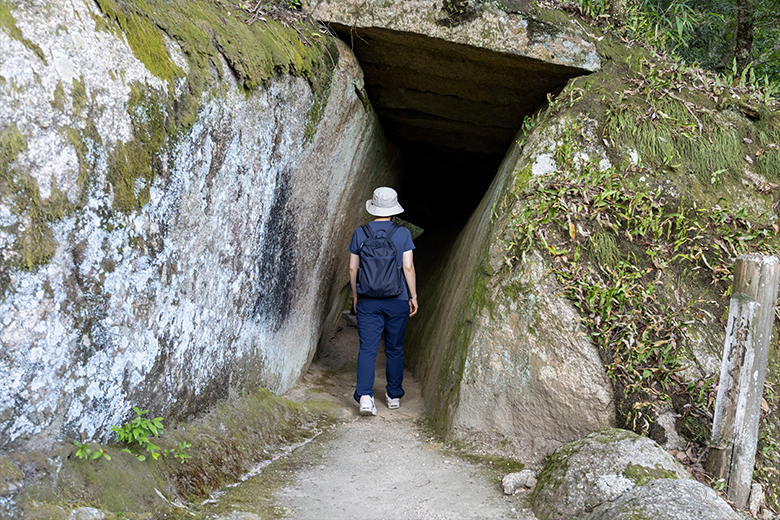
A short walk along the trail beyond the Miroku Buddha brings you to Kokuzo Bosatsu, a bodhisattva incised into the rock in fine, flowing lines. Further on is Tainai-kuguri, the “womb passage,” a cave where mountain ascetics once purified themselves. It was traditionally the starting point of their training, and passing through it was said to leave you reborn.
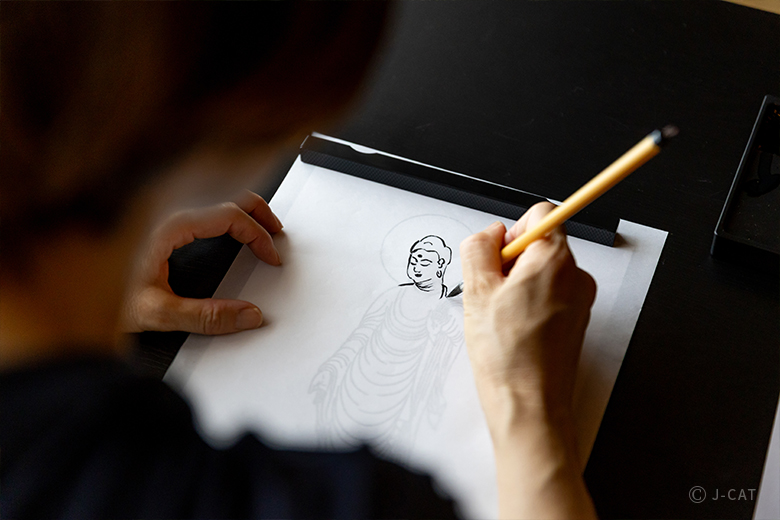
Back in the main temple quarters, you can try sutra or Buddha tracing (optional, extra cost)*. With the vice head priest guiding you, you will either trace the Miroku Buddha you have just seen or copy the Ten Good Precepts (Juzen-kai), the ten basic moral rules of Buddhism, using a fine brush and sumi ink. It is slow, quiet work, and a small taste of the practice monks have kept up here for centuries.
*You can choose sutra or Buddha tracing on the day.
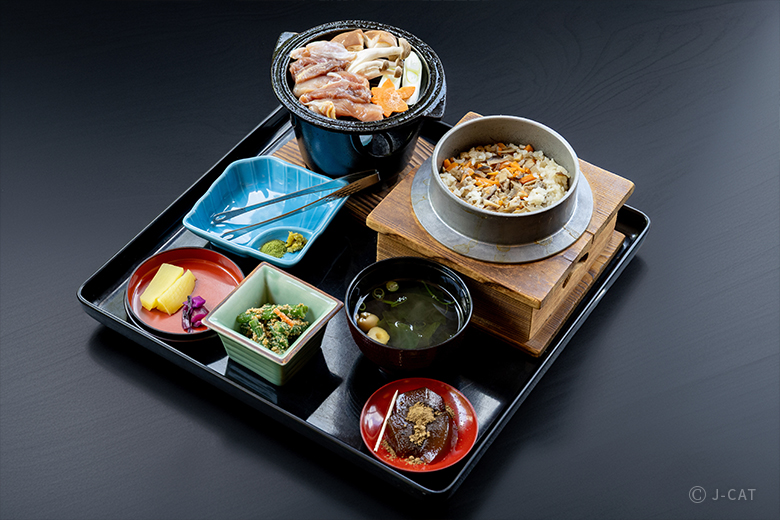
Before you leave, you will receive a goshuin, the handwritten seal temples give to visitors, and then it is time for lunch. Matsumototei, a ryokan restaurant just outside the temple gate, serves pheasant and beef set lunches, which you can add to your booking from four menus (extra cost). The pheasant is cooked teppanyaki-style or in a hot pot, and the meat is firm, with a delicate, savory flavor. If you choose not to book lunch, be sure to bring your own before meeting, as there are no shops selling food or drinks near the temple or Kasagi Station.
Itto-seki, the Samurai’s Split Rock
After lunch, a long downhill run takes you to a fork on the Yagyu Kaido, an old road through the mountains. From there you ride wooded mountain roads toward Yagyu, home of the Yagyu clan. In the Edo period (1603 to 1868) they taught swordsmanship to the Tokugawa shoguns, served as senior retainers to the shogunate, and were among the most celebrated swordsmen in Japan. The tour then goes deeper into the hills, to Itto-seki, a split boulder at Amano Iwatate Shrine that takes some effort to reach on your own.
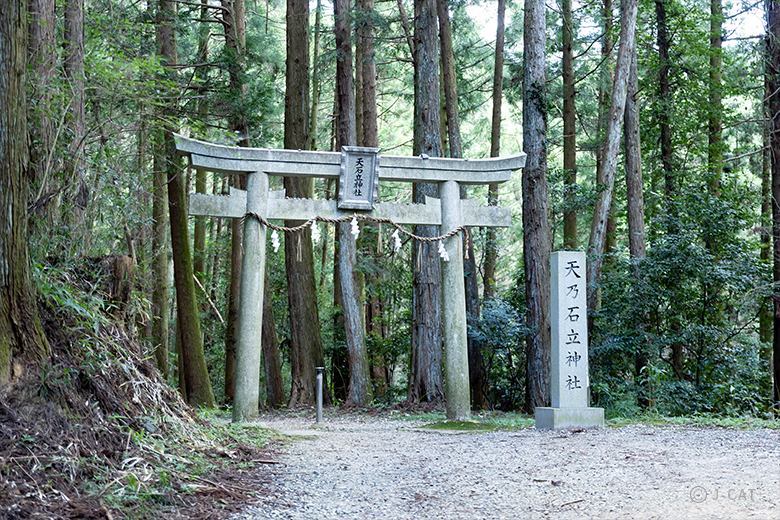
This old shrine sits in cedar forest on 330 m Mt. Toiwa. The approach becomes a steep path over exposed tree roots, so you leave the bikes here and walk the rest of the way.
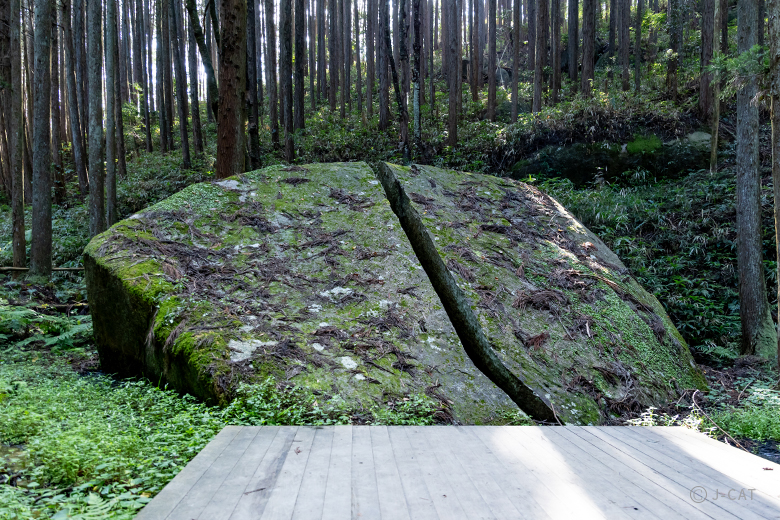
Behind the sacred boulders is Itto-seki, a huge rock split cleanly in two, as if by a single sword stroke. Legend says Yagyu Sekishusai, an ancestor of the Yagyu clan, cut it while fighting a tengu, a mountain spirit from Japanese folklore. Fans of the anime Demon Slayer believe it inspired the boulder the hero cuts in two during his training.
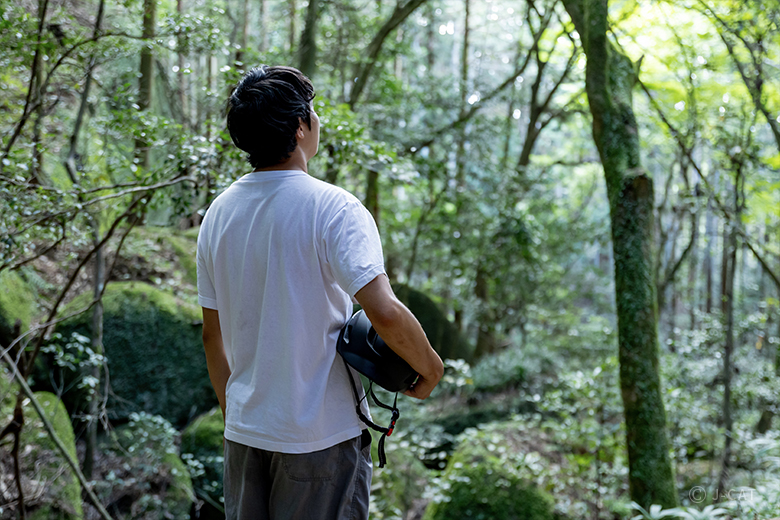
There is usually no one else here, just thick forest and silence. Kasagidera and Itto-seki are both built around sacred rocks, but where the temple feels open and almost bright, this place is closer in spirit to Shinto’s reverence for nature.
Back Along the River
From Itto-seki, the return route follows a hiking trail along the Nunome River. There is generally no car traffic, so you can ride at your own pace beside the water, and the unpaved stretches make it a proper off-road ride. After about 5 km, you turn west where the Nunome meets the Kizu River, with the finish just ahead.
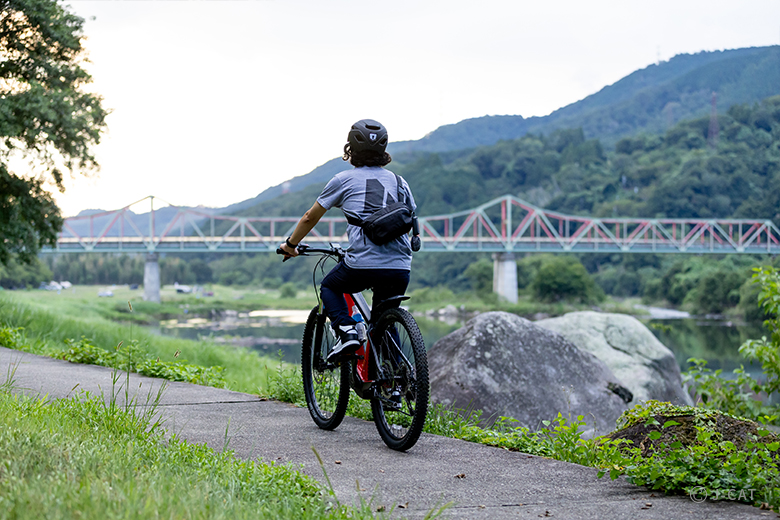
About 4.5 to 5 hours after setting off, you are back at Doors Coffee Roastery to return your bike and helmet. Between the mountain roads, the temple and its cliff Buddha, and the split rock at Yagyu, it is a full and varied day in a part of Japan few visitors see.
It is a long day, and your legs will know it by the end. Seeing the area this way, slowly and with a guide who knows the roads, is a very different trip from a day of sightseeing in Kyoto, and it may well be the day you talk about most when you get home.
Find out more or book the experience through Wabunka’s official website.
Cycle Kasagi / Shikasagizan Kasagidera Temple
Cycle Kasagi
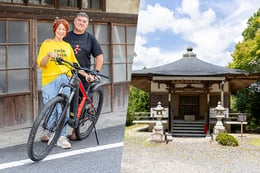
Kevin Lucas, from the UK, and his wife Yukie founded Cycle Kasagi in 2025. They run guided cycling tours in Kyoto City and around Kasagi, showing international visitors Japan from the saddle. Their Kasagi tour is especially popular with travelers who want more than the usual sights, since it reaches places that are hard to get to on your own.
Shikasagizan Kasagidera Temple
Kasagidera is a Shingon Buddhist temple on Mt. Kasagi, at the southern edge of Kyoto Prefecture. According to the Konjaku Monogatarishu, a 12th-century collection of tales, the mountain got its name when a son of Emperor Tenji placed his hat (kasa) there. The grounds include an ascetic trail once walked by Shugendo mountain ascetics, and the temple is known for its autumn leaves and for the seas of clouds visible from near the summit from autumn into early winter.


