
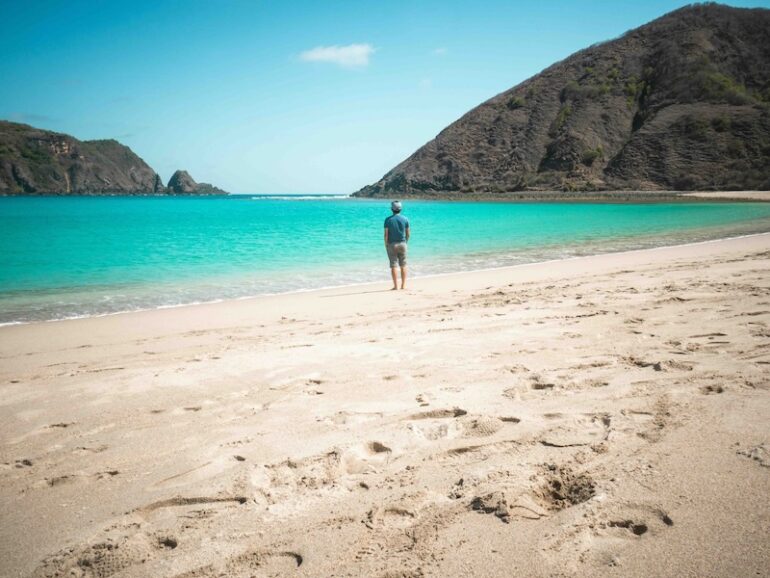
There is a moment, somewhere between the last view of Bali’s crowded coastline and the first outline of Lombok rising from the sea, when something inside you quiets down. Not dramatically. Not in the way travel brochures promise transformation. More like a subtle exhale. As if the island ahead is not asking for your attention—but simply offering space.
Lombok has always lived in the shadow of its louder neighbor. Less mythologized, less performed. And yet, for those who arrive—whether for a few days or a longer drift—it reveals itself in layers that feel at once familiar and distinctly its own.
The New Frontier of Short-Term Paradise
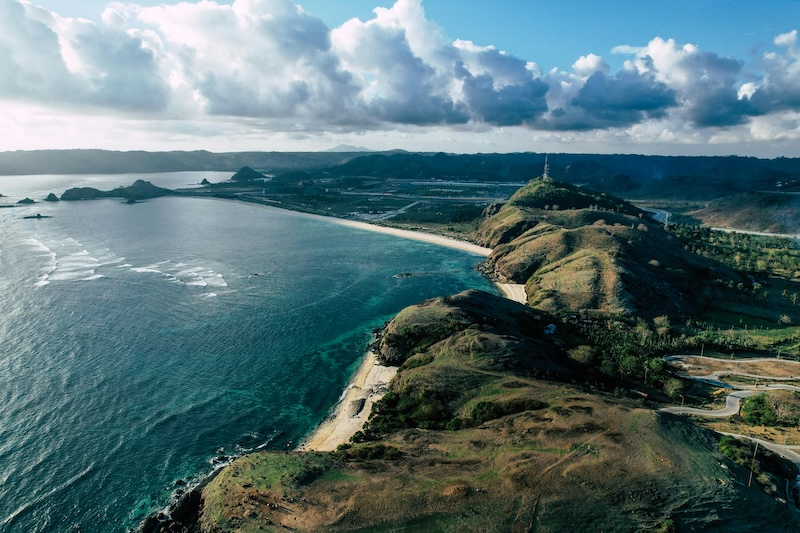
Breathtaking aerial capture of Lombok’s pristine Mandalika beach and coastline
In recent years, Lombok—especially the southern coast of Lombok Tengah—has begun to attract a different kind of visitor. Not backpackers chasing the cheapest bungalow, but short-term residents of comfort: families from the Middle East, urban travelers from Jakarta and Singapore, and an increasing number of international tourists looking for a curated escape.
Private villas now sit on hills overlooking the Indian Ocean, minimalist in design, infinity pools spilling toward the horizon. High-end compounds with staff, chefs, and drivers. At the same time, just a few bends down the dusty road, surfer hostels buzz with a completely different rhythm—shared rooms, early mornings, boards stacked against the walls, salt still in the air from yesterday’s session. It’s a coexistence that feels almost accidental, yet somehow works.
Mandalika — Vision Meets Asphalt
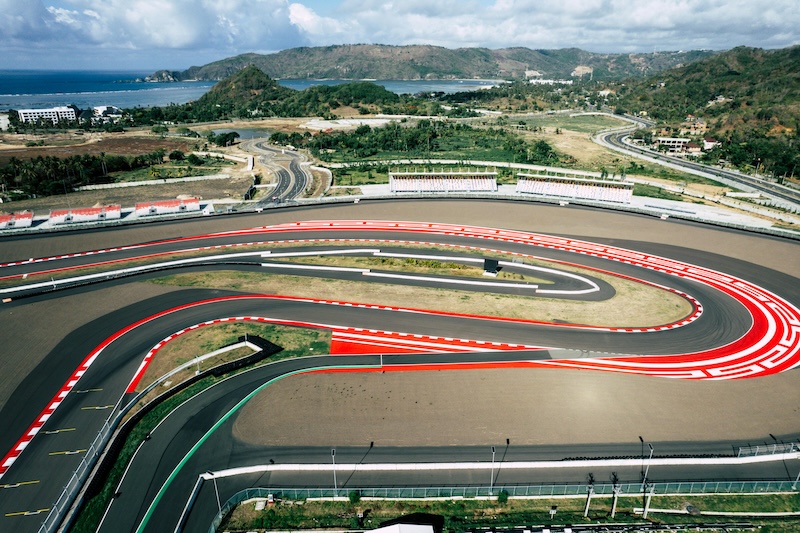
A stunning aerial shot of the Mandalika Circuit in Lombok
At the heart of this transformation lies Mandalika. What was once a quiet stretch of coastline has been reimagined as a flagship tourism project—wide roads, planned zones, security gates, and, most visibly, the Mandalika International Street Circuit. MotoGP has arrived, and with it, a vision of Lombok stepping onto a global stage.
The circuit itself feels like a statement carved into the landscape: ambition, speed, spectacle. And yet, just beyond its curves, the older Lombok remains. Fishermen pulling in nets. Cows grazing where engines roar just weeks before. It is this contrast that defines Mandalika—not just what has been built, but what continues to exist beside it.
The Gilis — Between Party and Stillness
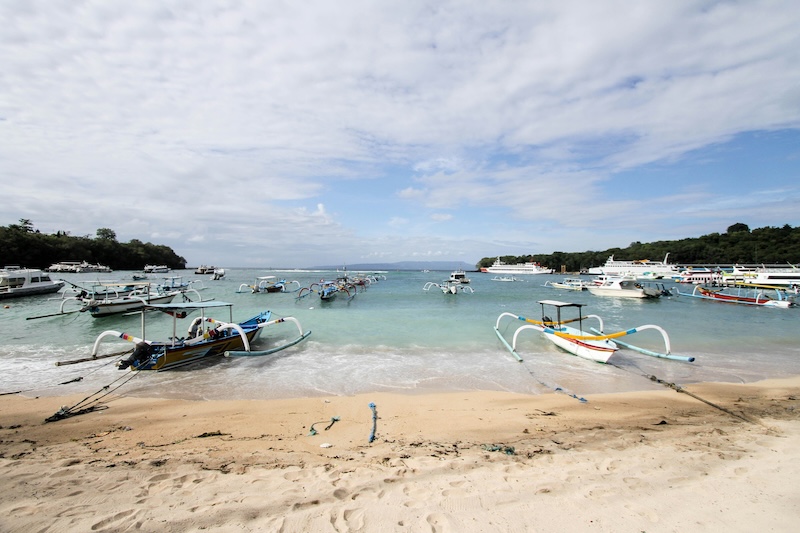
Gili Trawangan, Gili Indah, North Lombok
Off Lombok’s northwest coast, the three Gili Islands—Trawangan, Air, and Meno—float like fragments of different moods.
Gili Trawangan is the extrovert. Nights that stretch into mornings, beach bars pulsing with music, travelers dancing barefoot in the sand. It is a place where time loosens its grip.
Gili Air softens the edges. A balance between movement and pause. Yoga in the morning, snorkeling in clear water where turtles glide past without urgency, dinners by candlelight.
Gili Meno, the quietest of the three, feels almost like a retreat into absence. Fewer voices, more space. The kind of silence that reminds you how loud you have been elsewhere.
Senggigi — Echoes of an Earlier Era
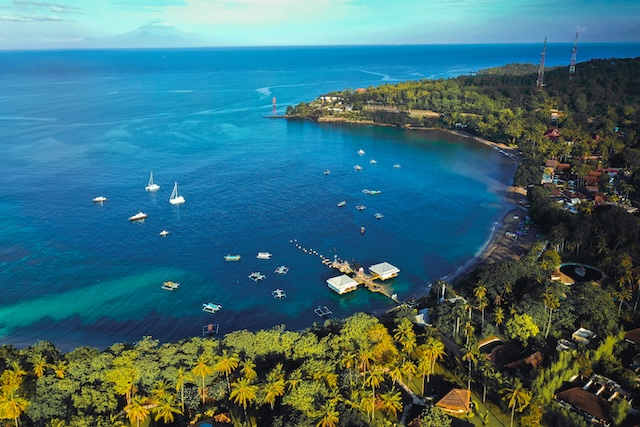
Senggigi Beach, West Lombok
Before Mandalika, before Kuta Lombok found its rhythm, there was Senggigi. From the 1980s to the early 2000s, this stretch of coast was Lombok’s introduction to tourism. Hotels lined the shore—some ambitious, some modest—welcoming travelers who wanted proximity to Bali, but without its intensity. Today, Senggigi carries a different energy. Slightly faded, yes—but not without charm. A place where time has not rushed forward quite as aggressively. Where older hotels still stand, telling quiet stories of an earlier wave of discovery.
Into the Interior — Where Lombok Breathes Deep
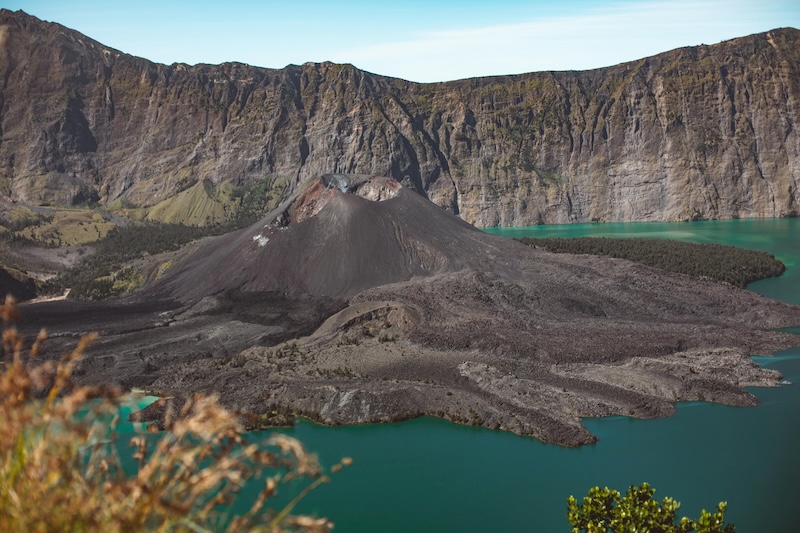
Majestic view of Mount Rinjani’s volcanic crater with turquoise lake on Lombok Island
If the coast is where Lombok meets the world, the interior is where it returns to itself. Mount Rinjani rises not just as a peak, but as an experience that demands commitment. Trekking up its slopes is not a casual undertaking. It is a slow negotiation with altitude, fatigue, and awe. Nights spent at the crater rim, tents pitched against the wind, stars stretching across a sky unpolluted by city light. Below, the crater lake rests in stillness, almost unreal.
Elsewhere, in Tetebatu, the pace shifts again. Jungle paths, waterfalls hidden behind layers of green, hot springs, small villages where daily life unfolds without performance. It is here that Lombok feels least interrupted—where the island’s rhythm predates tourism and will likely outlast it.
The Sasak — Culture in Continuity
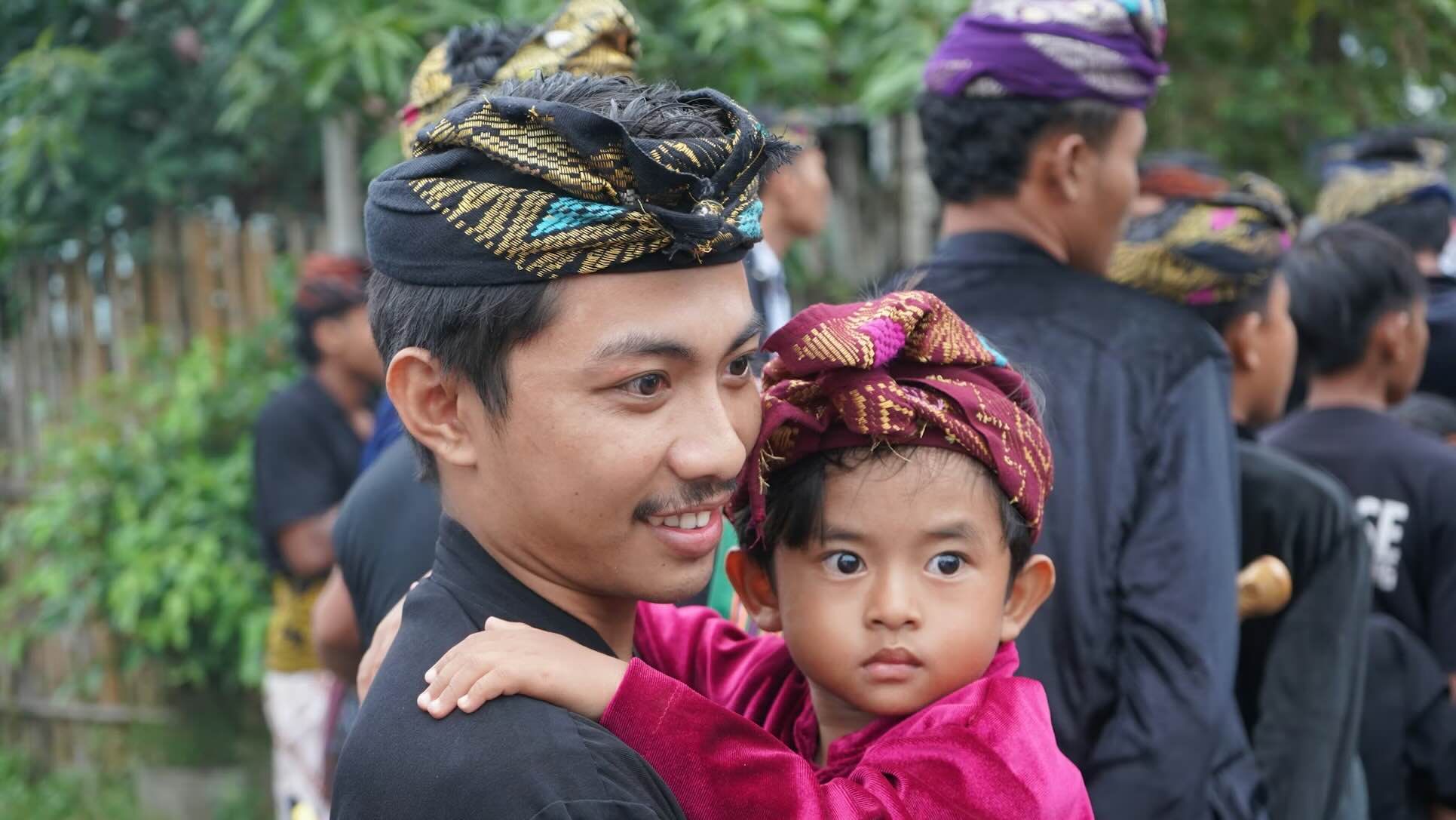
A father and son dressed in traditional Sasak attire share a quiet moment during a village wedding in Lombok, Indonesia
At the heart of Lombok are the Sasak people. Their villages—simple, grounded, shaped by tradition—offer a glimpse into a way of life that has adapted, but not disappeared. Houses built with natural materials, communal spaces, rituals that continue not for display, but because they belong.
And yet, Lombok is also deeply Islamic. Mosques are present in every village, the call to prayer marking the day with a steady rhythm. But this is not an Islam that feels imposed on the visitor. It is, as one might call it, a Lombok Islam—practiced, present, yet accommodating.
Tourists ride motorbikes in shorts and bikinis, beach bars serve cold beer, and nightlife exists without friction. It is a balance that is neither fully explained nor formally structured—but lived.
Waves, Roads, and the Western Comfort Zone
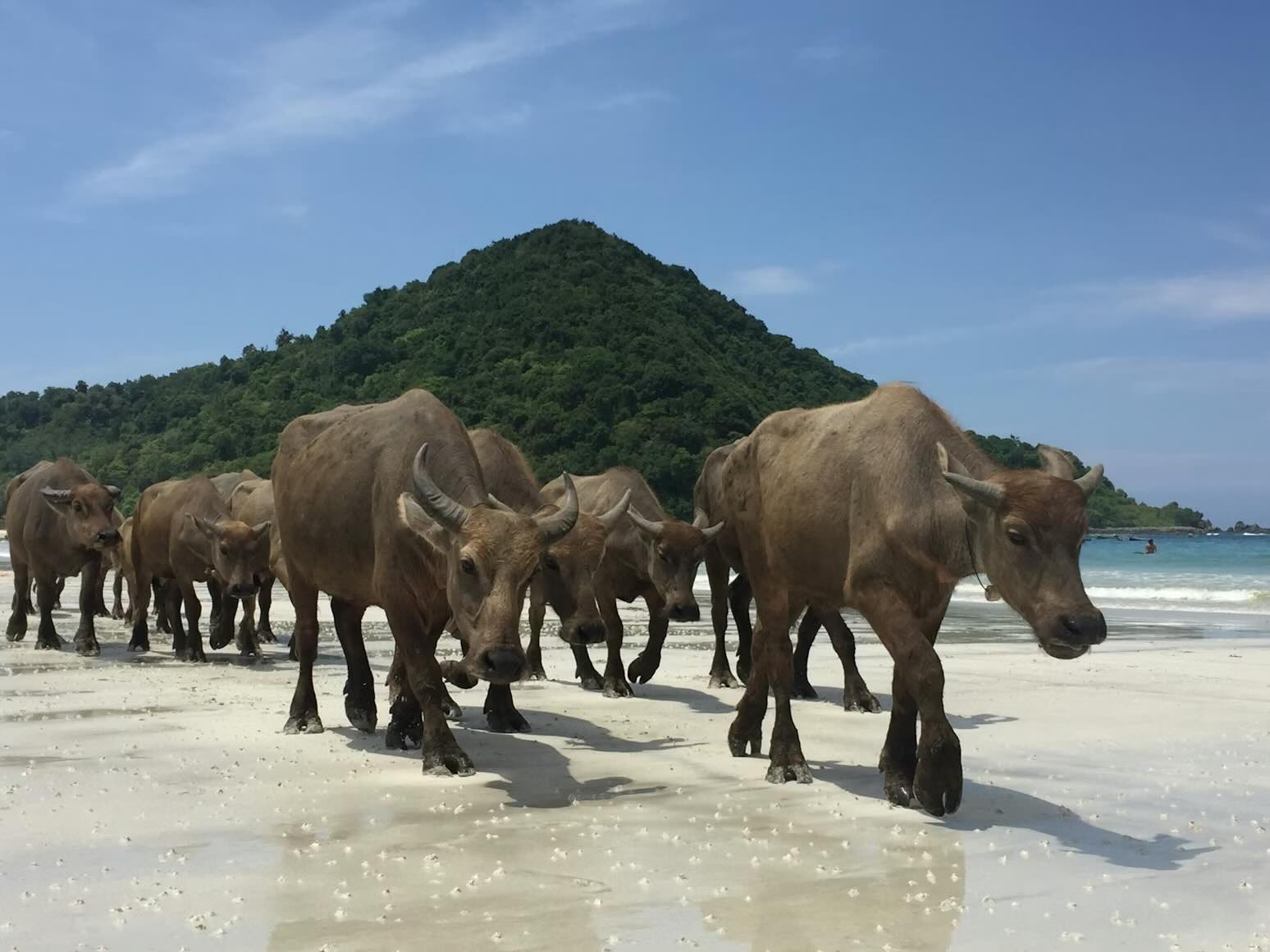
Water buffalo on Selong Belanak beach, Lombok
For surfers, Lombok is not an alternative—it is a destination. From the breaks around Kuta to Selong Belanak, from the more remote spots in the Ekas region to well-known waves that carry names whispered with a certain respect—Desert Point, Inside Ekas, Outside Ekas—the island offers consistency, power, and space.
Back in Kuta Lombok, the infrastructure has quietly grown. Restaurants serving everything from local dishes to international cuisine, cafés with strong coffee and stronger Wi-Fi, bars with live music in the evening, small shops lining the streets. It is not Bali. Not yet. And perhaps that is precisely the point.
Between What Is and What Comes Next
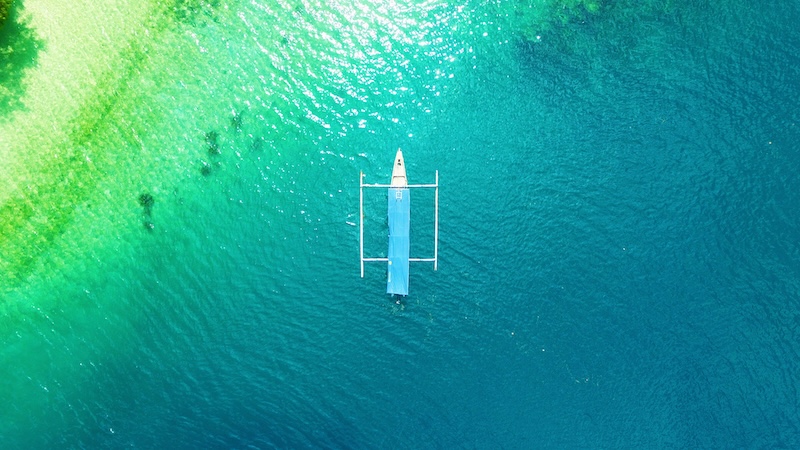
Lombok travel guide beyond Bali
Lombok exists in a delicate in-between. Between development and restraint. Between global attention and local continuity. Between the desire to become—and the risk of becoming too much.
When living in Bali gets overwhelming and the future of overload has already settled in – I escape to Lombok – there I can find my type of Bali as I have loved it in the year 2000. A timeless vibrant nature, local life, that is enough in itself, that doesn’t need performances and glamour, combined with western amenities, all the way up to high end accommodation.
For the traveler, it offers something increasingly rare: choice without total saturation. You can arrive for a week in a villa and never leave your pool. Or you can find yourself on a mountain ridge, questioning why you ever needed so much structure to begin with.
And somewhere in between, on a motorbike, moving through heat, dust, prayer calls, ocean air—you begin to understand that Lombok is not trying to be the next Bali.
It is simply becoming more of itself.


