
Being asked often by foreigners and by locals alike: “What do you see as the most drastic change during the past 35 years?”, my answer is free of doubt: The most drastic transformation in Bali over that time span may not be the tourist villas or the traffic jams — but globalization.

Bali local palm wine (tuak)
Before the year 2000, people spent their evenings in small groups, gathering at the balai (public gazebos). The young played cards, listened to music, drank local palm wine (tuak), or sat on the beach. They talked — mostly small talk or village gossip — but they were engaging with one another. They wore sarongs and T-shirts. No one thought about followers or Photoshop for Instagram posts. There were no selfies and no online updates, because there was no internet to update. Girls only wore makeup during temple ceremonies, along with their ceremonial kebaya and golden sashes.
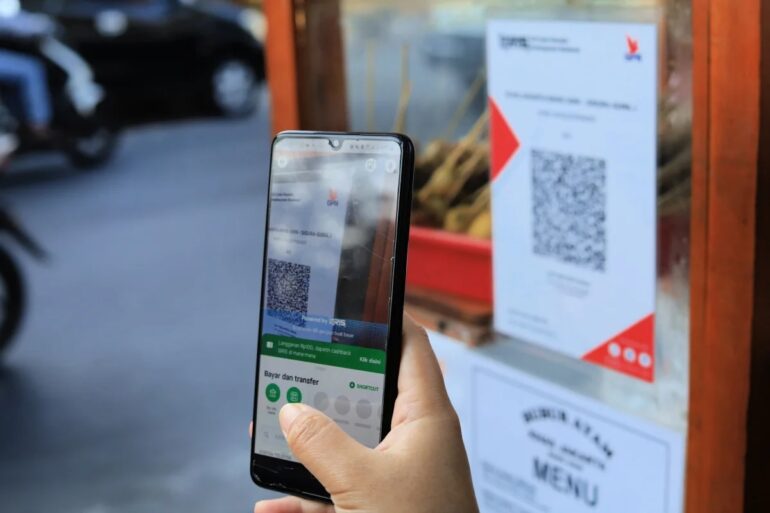
Today, in 2026, every woman and girl wears expensive makeup, follows global fashion, and clutches her smartphone — even while riding a motorbike, scrambling across rocks at the beach, going to bed, or sitting on the toilet.

Some clutch their smartphone even while riding a motorbike
Their vision is locked at 30 cm, both thumbs endlessly scrolling. Men and women drive with one hand on the wheel and the other holding a phone—even if they’re not making a call. Construction workers keep their phones in their back pockets or next to the cement mixer, playing pop music while hammering and drilling.
The information flowing from these devices is a steady stream of global topics, global tastes, global marketing for global products. What people see on TikTok, Instagram, Facebook, or local apps isn’t very Balinese, nor even distinctly Indonesian. It may be in the Indonesian language—but the content and message are global.
That is the biggest influence. The greatest change.
People are being shaped by what they see and hear every day.

The people of Bali have become global citizens
Deep in their hearts, they may still hold on to superstition, religion, belief in fate, black magic, and moral consequences—but in their lifestyle, they’re losing something sacred: the serenity and quiet dignity of the Balinese spirit.
The people of Bali became global citizens, or to put it more correct: global consumers in a huge global Mega Mall. The unique Bali culture is still engraved. Social conditioning in how to do things and how not to do is still present, but the layer gets thinner and the ‘global citizen’ is a challenge and a distant longing.


